
Share this @internewscast.com
In a significant crackdown on counterfeit pharmaceuticals, nearly 2,000 doses of fake weight loss drugs were confiscated from two locations in Lincolnshire and Nottingham. Authorities intercepted these illicit products just hours before they were set to be distributed to unsuspecting consumers.
The operation was spearheaded by the Criminal Enforcement Unit (CEU) of the Medicines and Healthcare products Regulatory Agency (MHRA). Their coordinated effort targeted an organized crime ring that has been under investigation for its role in the production and sale of unlicensed weight loss medications.
According to details released by the MHRA, the effort was a collaborative one, drawing on resources from the CEU, Lincolnshire Police, Immigration Enforcement, and Lincolnshire Trading Standards. Their joint action underscores the seriousness of the threat posed by these unlawful activities to public health.
During the raids, authorities uncovered not only the counterfeit weight loss drugs but also a cache of related paraphernalia. This included manufacturing equipment, suspected pharmaceutical ingredients, packaging materials, and commercial vehicles used in the operation.
The targeted locations—a farm near Sleaford in Lincolnshire and a residential property in Grantham, Nottinghamshire—were believed to be central to the production and distribution network for these unlicensed medications. Among the seized substances were retatrutide and tirzepatide, along with various peptide products.
Health Innovation and Patient Safety Minister, Dr. Zubir Ahmed, commented on the successful operation, stating, “This week’s raids have effectively removed dangerous, unregulated products from circulation, safeguarding public health.”
‘These medicines are made with no regard for safety and pose serious risks. We will not allow criminals to profit by exploiting people looking for help with their weight.
‘Do not buy weight-loss medicines from unregulated sources. Safe, effective, licensed treatments can make a real difference for those who need them – but they must come from a registered pharmacy, with a valid prescription.’

All the affected pens identified to date are 15mg pens with batch number D873576 dispensed by the online pharmacy
The MHRA’s #FakeMeds website offers helpful guidance and advice for staying safe when buying medicines online.
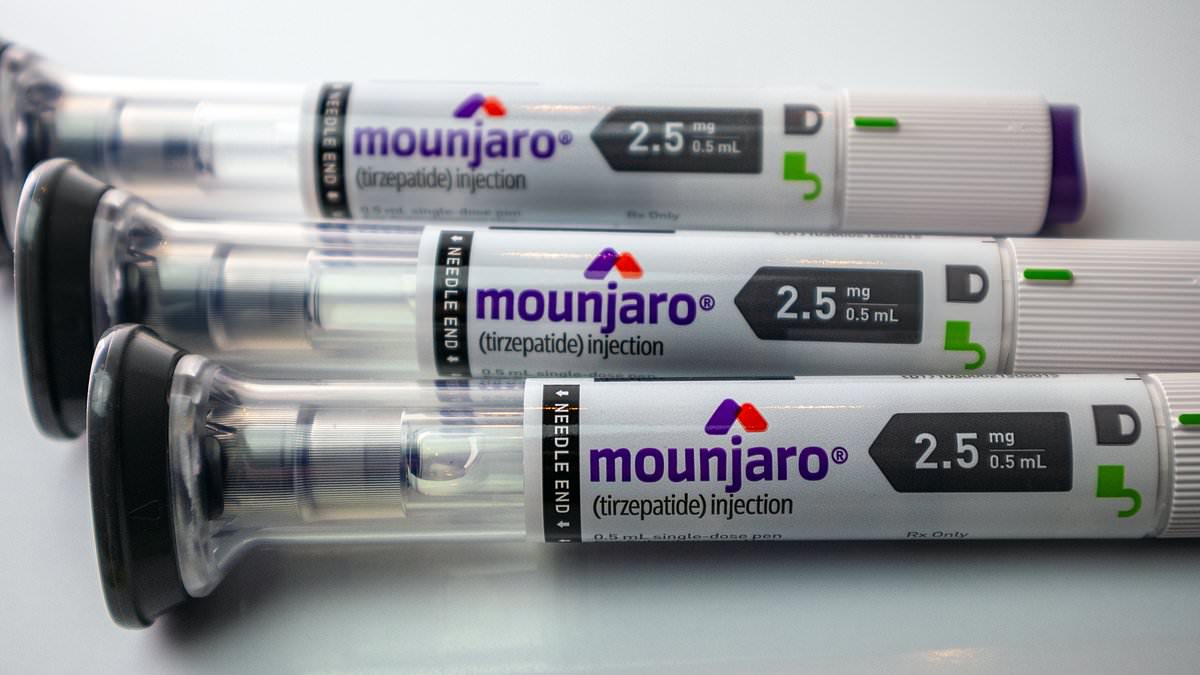
It comes just hours after health officials sounded the alarm over fake Mounjaro weight loss jabs sold via an online pharmacy.
The Medicines and Healthcare Products Agency (MHRA) has advised people who have purchased 15mg KwikPens to check to see if it has batch number D873576 – and if so, to stop using it immediately.
At present, the warning is only thought to affect people who have bought the medicine from Birmingham-based retailer The Private Pharmacy Clinic.
Dr Alison Cave, Chief Safety Officer at the MHRA said in a statement that testing had revealed that the tested pens did include the active ingredient of the medicine, tirzepatide, but because the batch number on the pens doesn’t match up with official manufactuerer data, there are concerns over its sterility.
She said: ‘Testing has confirmed that the identified fake pens do contain tirzepatide, the active substance in Mounjaro, but because the manufacturing conditions are unknown, we cannot confirm that the contents are sterile.
‘Check the batch number and strength of your KiwiPen. If you have one of the affected pens, stop using it straight away.’
Whilst the watchdog insists the risk is low to those who may have already taken the medication, because the drug is administered via injection, health officials are concerned that if the contents aren’t sterile and have not been stored correctly, there is risk of infection.
Possible signs include redness, swelling or warmth at the injection site, pain or discomfort, fluid leakage and a mild fever, fatigue and a sore throat.
Among other concerns, the MHRA says the fake jabs carry the risk of allergic reaction that could pose a danger to health, or even death.
Symptoms may include a rash, itching or difficulty breathing.
In rare cases, a user may experience anaphylaxis, a rare and severe allergic reaction that happens very quickly.
As well as rapid organ failure, this can restrict oxygen to the brain, resulting in brain damage and even death. Anyone who experiences any symptoms is advised to seek urgent medical attention.
Dr Cave added: ‘If you suspect that you’ve had a side effect as a result of using these affected pens, or suspect it’s not a genuine product, or have a defective pen, you can report it to our MHRA Yellow Card scheme.
‘It is important you do not try to extract any of this medicine if a pen is defective in any way.’
The MHRA has not yet received any reports of anyone requiring treatment after taking this batch of medication.
The issue was only identified due to faults with the pens, where part of the pen fell off while in use.
Health officials were made aware of the counterfeits by manufacturers of the genuine product, Eli Lily, which has received five reports of faulty pens.
Anyone who suspects they have received a counterfeit medicine is advised to report it directly to the Yellow Card Scheme, which safeguards medicines quality and efficacy in the UK.
Patients who have a 15mg pen with a different batch number, or a 7.5mg pen with the same batch number, are urged to continue taking their medication as directed by their prescriber.
The General Pharmaceutical Council have served a ‘notice of conditions’ on The Private Pharmacy Clinic – whose website is currently ‘under maintenance’ – and the MHRA will continue to monitor the situation.
A Drug Safety Update for healthcare professionals has also been published, which includes detailed advice on identifying the affected product and managing patients who may have received it.
Weight loss jabs, known collectively as GLP-1 drugs, work by mimicking hormones released after eating.
Under current NHS rules, only patients with a BMI over 35 and a weight-related health condition – or those with a BMI between 30 and 34.9 referred to specialist services – should receive the drugs.
An estimated 2.4 million people are taking weight-loss drugs in the UK but severe rationing by the NHS means the vast majority are forced to buy them privately at a cost of around £200 a month.