Share this @internewscast.com
For many in the UK, the joy of Christmas is often overshadowed by feelings of bloating and nausea. Each year, millions find themselves in this uncomfortable predicament.
Research suggests that the average Brit consumes up to 6,000 calories on Christmas Day alone. This figure is three times the National Health Service’s recommended daily intake of 2,000 calories for men and four times the advised 1,500 calories for women.
Moreover, guidelines on daily consumption of sugar and fat—limited to 30 grams each—are frequently ignored during the festive season, often starting well before December 25.
Considering a typical Christmas Day menu, it’s easy to see why. Many begin with Buck’s Fizz, smoked salmon, and scrambled eggs for breakfast. Throughout the day, cocktails and wines flow freely. The centerpiece is a grand roast dinner, supplemented by an array of desserts, snacks, chocolates, a cheeseboard, and a finishing touch of Baileys.
Given this indulgence, it’s little wonder that many people trade holiday merriment for stomach cramps, heartburn, and bloating that rivals the size of a classic Christmas pudding.
Nutritionist Adrienne Benjamin from ProVen Biotics explains to the Daily Mail that the traditional holiday meal sets the stage perfectly for digestive discomfort.
‘Most people eat far more than usual, eat more frequently (grazing through the day), and often combine rich foods that they wouldn’t normally eat with alcohol and sugar,’ she says.
‘Meals are also eaten at irregular times, routines are disrupted, and stress levels can be higher, all of which affect how well the gut functions.

Christmas bloating can totally derail the big day—but these tips can help bring relief
‘The digestive system thrives on consistency and moderation, and Christmas tends to challenge both.’
Lucy Kershaw, Nutrition Expert from vitamin brand Nature’s Best, says it’s not just the amount we eat, but the rate.
‘In social settings, people eat much faster without realising it,’ she tells the Daily Mail.
‘Pausing between bites gives your stomach time to signal fullness and helps reduce bloating.
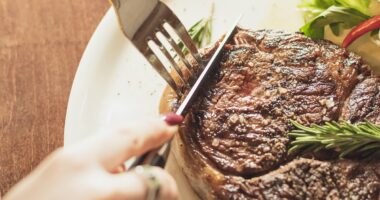
‘Putting your fork down between bites, or chatting more while you eat, can help your body keep up.’
With a day of boozing and eating ahead of us, we asked the experts what causes Christmas bloating, and what can be done to relieve symptoms of trapped wind, indigestion and heartburn… without needing to root through the medicine cupboard desperately looking for pills.
What is bloating?
Mark Gilbert, nutritionist at The 1:1 Diet by Cambridge Weight Plan, says that most gastro issues can be traced back to our gut microbiome—the community of friendly bacteria and funghi which in our intestines and help us to digest food and absorb its nutrients.
‘Bloating, constipation and diarrhoea are primarily caused by the approximately 35 trillion microbes living in your digestive tract producing gases and adapting to new sources of nutrition,’ he says.
‘The microbes produce these gases, mostly in the colon, because they survive by consuming fibre, which humans do not absorb from the diet.
‘Think of it like this; when you change your diet, you also change the diet of the little microbes in your gut and some will thrive from the change, whilst others will wither.
‘Some will produce different gasses in the gut, which cause bloating.
‘Gasses produced include hydrogen, carbon dioxide, methane, and hydrogen sulfide, depending upon the microbe and the fibre it has access to.
‘These changes take the microbiome time to adjust to, and this causes bloating, constipation and diarrhoea.’
Why do so many people get bloated at Christmas?

Tucking into so many rich foods is the main cause of festive bloating
However, you can’t just blame your painfully distended stomach on your gut microbiome.
Belle Amatt, Nutritional Therapist at W-Wellness, tells the Daily Mail that the quantity of food we are ingesting also plays a huge part.
‘There is a common expectation at Christmas to overindulge, and this is often the main cause of digestive discomfort,’ she says.
‘Large meals rich in protein, fat, and sugar are eaten in quick succession, often accompanied by alcohol.
‘Overfilling the stomach delays digestion because the hydrochloric acid, which is essential for breaking down food, becomes overwhelmed by the sheer volume.’
Eating and drinking until you’re fit to burst can also trigger acid reflux, where stomach acid escapes into the throat, causing extreme pain.
She adds: ‘The mass of food also puts pressure on the lower oesophageal sphincter, the valve designed to keep stomach contents where they belong and prevent them from refluxing into the throat, triggering heartburn and discomfort.’
But it’s not just the volume of food we’re eating that causes issues, it’s also the type and the other foods they’re ingested with.
‘One of the biggest reasons people struggle with feeling uncomfortable during the festive season is due to the sudden increase in rich foods,’ says Ms Kershaw.
‘Cheeseboards, creamy foods, fried canapés, and sugary desserts can overwhelm the digestive system, especially when eaten closely together or in large portions.’
How to get rid of bloating quickly without pills
For quick relief after a heavy meal, you don’t need pills. Simple lifestyle measures can make a real difference, says Ms Amatt.
‘Walking gently stimulates digestion and reduces bloating, while sipping warm water or herbal teas such as fennel or ginger can soothe the stomach.
‘Give your system a break by eating smaller, less frequent meals. Avoid snacking as the gastrointestinal tract works more optimally when given periods of rest.’
Registered Dietitian Yusra Aydin, head of Nutrition Vivere said: ‘Not chewing foods and talking too much causes bloating.
‘Drink water, warm drinks and go on walks. You can also massage your belly clockwise. This will help with bowel movements to reduce the bloat quickly.’
1. Be mindful of booze

Try to alternate alcohol with water, say our experts
Yes it’s tempting to wash down every meal of the day with a glass of bubbly, but your gut would be much happier if you didn’t.
Ms Kershaw explains that the entire Christmas period sees people often drink more, whether that’s at after work drinks, family parties, or a friendsmas get together.
‘It’s easy for discomfort to build,’ she says. ‘Alcohol can irritate the gut lining and slows down digestion, which contributes to bloating and sluggishness the next day.
‘When you’re at a work party or family gathering, you’re often standing, chatting, and eating without noticing how fast you’re consuming food.
‘This makes it so much easier to overeat, swallow excess air, and overload your digestion.’
Instead, alternate alcoholic drinks with water, avoid drinks which are extra sugary as this can give the microbes more to feed on, and opt for drinks that are still rather than fizzy or sparkling.
‘Fizzy drinks and beer introduce additional gas,’ warns Ms Amatt.
2. Avoid trigger foods

Brussels sprouts are renowned for causing bloating and gas
Typical gas trigger foods served as part of a Christmas meal include Brussels sprouts, cabbage, and onions. They all contain resistant starches that are not fully digested in the small intestine.
‘When these reach the colon, especially in large amounts, they are fermented by gut bacteria with the consequence of gas production that leads to bloating,’ says Ms Amatt.
‘Rich, fatty foods slow digestion, prolonging abdominal distension, and sweeteners such as sorbitol in puddings or mince pies can also contribute to excess gas.’
Ms Benjamin adds that the refined carbohydrates found in bread, stuffing, pastries, and desserts can also be difficult to break down for some people.
She says: ‘Fizzy drinks introduce excess air into the digestive system, while salty foods cause the body to retain water, both of which contribute to that uncomfortable swollen feeling.’
3. Don’t add fuel to the fire
When it comes to bloating, heartburn and other gastro issues, prevention is the best cure, but if it’s too late for that… try not to make it worse by eating and drinking even more.
Ms Kershaw advises practising moderation where possible.
‘It’s not about avoiding festive favourites, it’s simply being mindful of how much your body feels comfortable with,’ she says.
‘Try taking small tastes of multiple desserts rather than full servings.’
4. Stay hydrated
As well as drinking plenty of water and herbal teas throughout the day, Ms Amatt advises reaching for other herbal tinctures which have been shown to reduce bloating.
‘Digestive bitters or herbal aids taken before or after a meal can support digestion,’ she says.
‘Ingredients commonly used in these blends include Wild Yam, Chamomile, Dandelion Root, Artichoke, Lemon Balm, Mugwort, and Gentian.
‘One of my favourites is Artah Digest and Debloat, a wonderful tincture for post-meal comfort.’
Another herbal tea which can bring relief is peppermint tea, which helps to relax the gut muscle and ease cramping.
Similarly, ginger has been used as a remedy for indigestion for centuries.
Simply add some freshly cut and peeled slices to hot water and steep before drinking.
5. Get moving
A short walk after a heavy meal can stimulate digestion, with just a 10 to 15 minute stroll found to be enough to help your body process food more efficiently and encourage gas to move through the intestines.
Dr Emma Derbyshire, an advisor to PrecisionBiotics, adds that performing ‘knee-to-chest stretches helps shift trapped gas’ as does focusing on your breathing.
‘Try deep, slow breathing which reduces the tightening of the gut-brain axis during stress.’