
Young people should be on high alert for the signs of a deadly cancer that’s rising in the under 50s, experts have warned—and it’s not bowel cancer.
Cases of appendix cancer in US 30-somethings have risen by a shocking 71 per cent over the last two decades, a recent study showed.
The research, published in the Annals of Internal Medicine, revealed millennials, aged between 29 and 44, are now the age group most likely to develop the cancer, which kills half of those with advanced disease within five years.
The experts, from Vanderbilt University in Nashville, suggested the surge may be due to lifestyle factors like increasingly poor diets.
But medical professionals and campaigners have previously warned the public to watch out for signs of the disease, which can be easily mistaken for benign digestive issues.
Speaking in a TikTok video, Dr Ryan Ince, a GP based in Texas, said bloating and chronic abdominal pain are telltale signs that can help you spot the disease in its earliest stages.
However, he warned that most patients are spotted at later stages, when the cancer may have spread to the liver, causing shortness of breath, a flushed face and diarrhoea.
The appendix is a small pouch of tissue connected to the bowel in the lower right side of the abdomen.

The above graphic shows the symptoms of appendiceal, or appendix, cancer. Doctors are detecting a mysterious rise in cases of the disease
The organ forms part of the intestines and helps remove waste from the body. While its exact function is unknown, researchers say it may help support the immune system.
However, the organ can also produce cancerous cells, which start to divide uncontrollably, forming tumours.
These can either grow from cells that line the appendix, or from the chemicals involved in digestion.
In many cases, it is only when doctors remove the organ suspecting appendicitis—the swelling and infection in the appendix—that the cancer is diagnosed.
If the cancer is caught early, patients have an optimistic 67 to 97 percent likelihood of surviving more than five years after their diagnosis.
But for those whose cancer is not caught until stages three or four, when it has spread to other parts of the body, survival rates are dramatically lower, with studies estimating the figure to be around 50 per cent.
The disease can spread to different parts of the abdomen, leading to severe pain.
Cancer can also cause the appendix to burst, which is a very serious condition that can lead to a number of complications including sepsis, the NHS warns.
Rebecca Hind, from Cumbria, was diagnosed with disease in 2019, aged 33, after suffering from severe stomach pain, which she dismissed as food poisoning.
What followed was years of painstaking surgeries to remove 13 of her organs, more than eight grueling rounds of chemotherapy and medically-induced menopause at just 35-years-old.
Heartbreakingly, the latest round of treatment failed to keep the cancer at bay and doctors have told her the disease is terminal.
Whilst it is not entirely clear what is behind the uptick in appendix cancer, researchers described what is known as a ‘birth cohort’ effect—where a disease becomes more common among successive generations.
The idea is that people born after a certain time have had similar exposure to environmental triggers that older generations were not exposed to.
Overall, the study found that millennials born between 1981 and 1996 were up to seven times more likely to be diagnosed with the cancer than those belonging to the so-called Silent Generation, or those aged 43 to 80 years-old.
Researchers suggested that risk factors associated with colon cancers—such as obesity, diet, alcohol and smoking—could also play a role in appendiceal cancer.

Rebecca Hind before cancer, September 2015 at work in the Ogwen Valley, The Outward Bound Trust
They said: ‘Well established risk factors of colon and rectal cancer, including early-life experiences, environmental exposures, anthropometric and lifestyle factors (for example, obesity, diet, alcohol, and tobacco), as well as the interaction between these factors and genetic features may also contribute to appendiceal cancer.’
The slight upward trend in the disease appears to be faster than that for colon cancer.
Among adults aged 20 to 39 years-old, estimates suggest cases have risen by two percent per year on average.
In those aged 30 to 39 years old, cases rose by five percent per year overall.
Yet, over the last 30 years, young diagnoses of colon cancer have shot up by 80 per cent across the globe, research suggests.
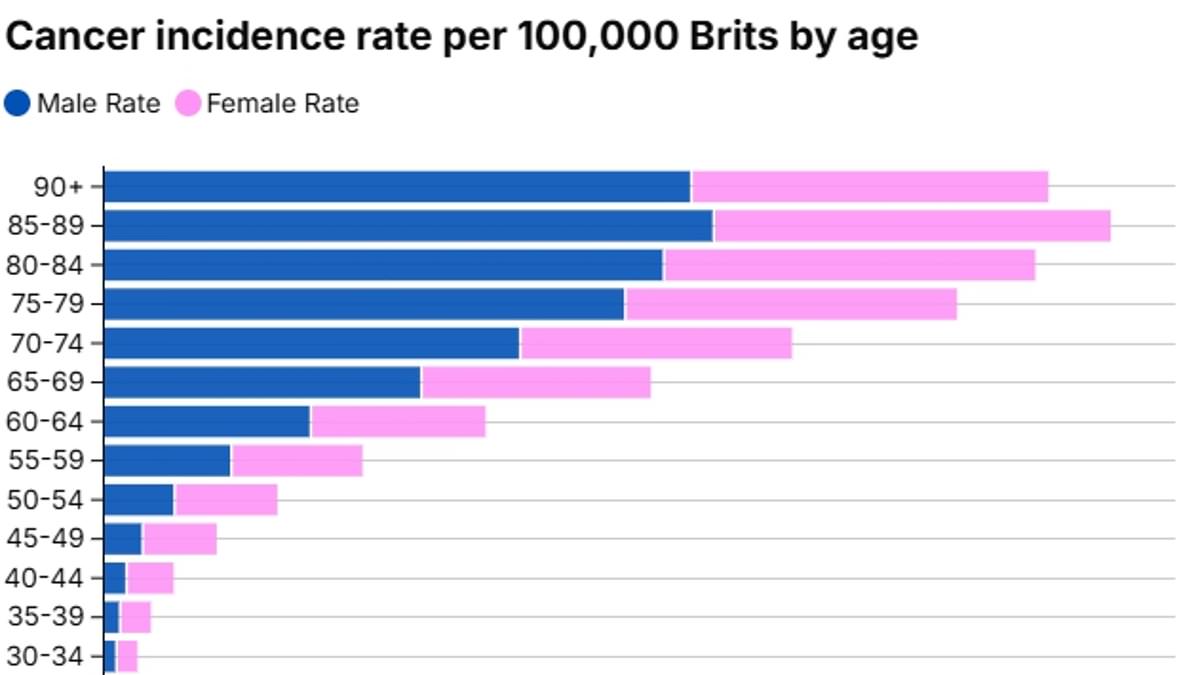
There are around 2,600 new bowel cancer cases in people aged 25-49 in the UK every year.
Symptoms of the disease are similar to that of appendiceal cancer but there may also be blood in the stool.
The disease kills almost 17,000 people in the UK each year, with the death toll rising to about 50,000 in America.
Overall, just over half of bowel cancer patients are expected to be alive 10 years after their diagnosis.