
Share this @internewscast.com
One aspect of daily life that often goes unnoticed is our sitting posture. We rarely think about the way we sit.
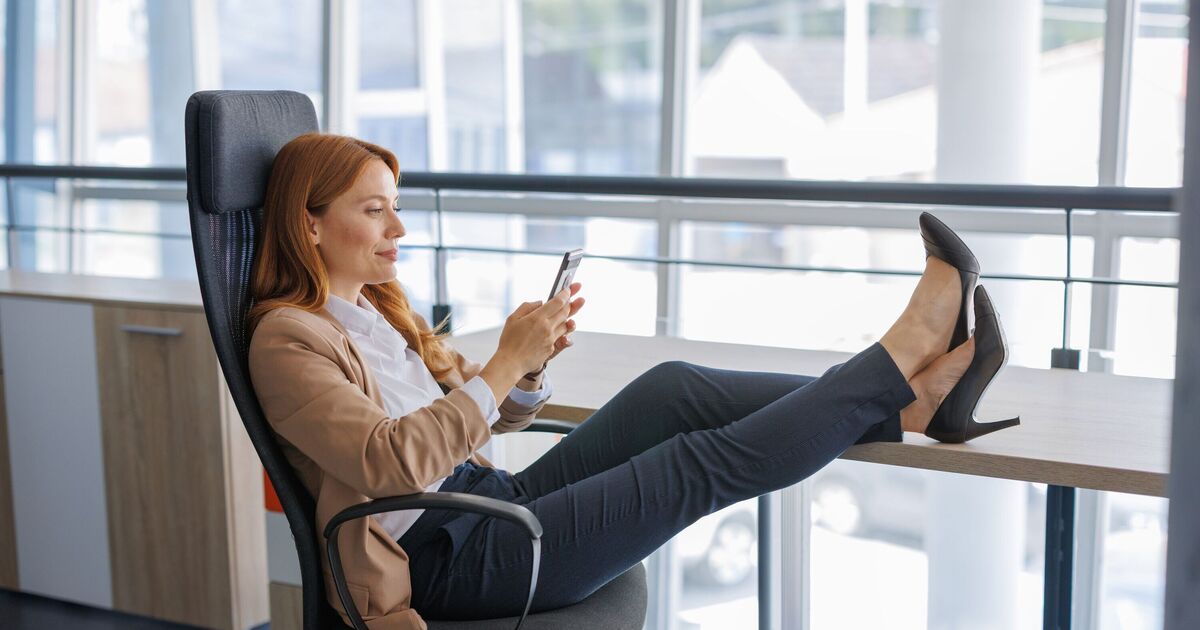
Whether it’s crossing our legs, sitting with one leg over the other, sitting sideways, or stretching our legs out, there are numerous ways we sit. However, one particular position can be quite harmful.
A health expert cautions against sitting with crossed legs for prolonged periods, as this common posture could lead to a serious and potentially life-threatening health condition.
Tristan Hulbert, Managing Director at Vivid Care, warns that sitting with crossed legs for long durations may increase the risk of forming dangerous blood clots.
In an exclusive discussion with the Express, Hulbert shared his professional insights. He highlighted that many office and remote workers remain unaware of the significant health risks associated with this prevalent sitting habit.
Hulbert explained that sitting with crossed legs can greatly restrict blood flow in the lower body and may result in a condition known to experts as ‘e-thrombosis’.
The health expert said: “When you cross your legs whilst sitting, you’re essentially creating a tourniquet effect on your blood vessels. The pressure from one leg pressing against the other can reduce blood flow by up to 30%, turning your desk chair into a potential health hazard.”
He explained: “What concerns me most is how normalised this dangerous sitting habit has become. Walk into any office or café and you’ll see people with their legs crossed, completely unaware they’re potentially compromising their circulation.”
Hulbert advised individuals to take regular breaks every 90 minutes at a minimum and move about to boost blood circulation.
“I recommend the 90-minute rule because that’s roughly when your body starts to really feel the effects of restricted blood flow. Set a reminder, stand up, walk to the window – even 30 seconds of movement can reset your circulation.”
His guidance mirrors research published in the Thrombosis Journal by Lonnberg and colleagues from the Karolinska Institute in Sweden.
In their 2024 study of over 359,000 patients who visited emergency departments in Stockholm County, the researchers confirmed that venous thromboembolism (VTE) is considered the third leading cause of vascular disease after heart attack and stroke.
Hulbert shared: “We’ve all heard about economy class syndrome on flights, but desk-bound workers face a similar threat daily. The difference is, at least on a plane you know the journey will end – many people sit this way for years without realising the cumulative damage.”
Now, the health specialist has suggested three straightforward practices to minimise the risk of blood clots while sitting.
“First, keep both feet flat on the floor when sitting. Second, stand up regularly throughout your workday. Third, stretch your legs and rotate your ankles periodically when you must sit for longer periods,” the expert advises.
He continues: “The good news is this is entirely preventable. I tell people to think of their legs as they would their posture – keep them neutral and natural. Your circulation will thank you, and you might even find you’re more comfortable and alert throughout the day.”
The expert observed that gamers encounter comparable dangers, sharing: “Online gaming sessions often last several hours, with players rarely changing position. Taking regular breaks might seem annoying, but your health matters more than reaching the next game level.”
A 2007 study conducted in Sydney, Australia suggested that regular foot exercises while seated, such as rotating the ankles and flexing the toes, can aid blood circulation in the lower legs.
Hulbert concludes that despite the seriousness of the risk, it can be easily mitigated by making minor adjustments to one’s daily routines.
The health specialist notes: “The beauty of this health risk is that it’s completely within your control. Unlike many medical conditions, preventing circulation problems from poor sitting habits requires nothing more than awareness and a willingness to move regularly.”