
Share this @internewscast.com
Canadian officials and health experts are raising alarms over the reliability of information from U.S. health and science institutions, particularly concerning vaccinations. They express concerns that misinformation from the Trump administration might undermine Canadians’ trust in healthcare systems.
“I can’t envision a scenario where this misinformation doesn’t seep into Canadian awareness, creating doubt,” stated Dawn Bowdish, an immunologist and professor at McMaster University in Ontario.
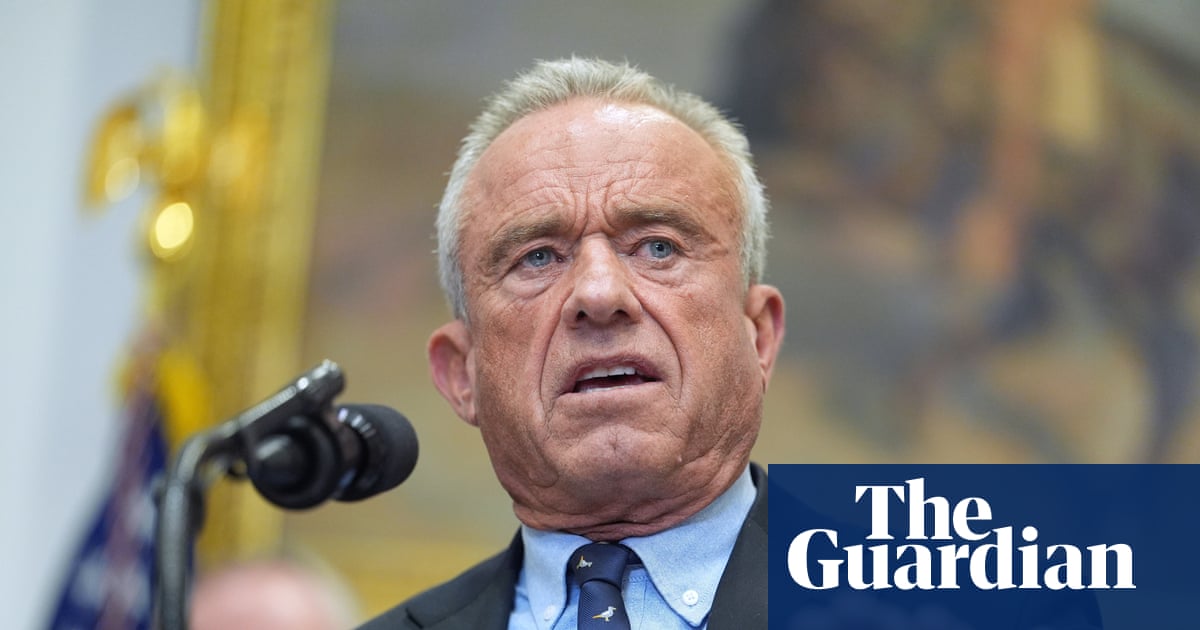
These concerns have intensified as U.S. Health Secretary Robert F. Kennedy Jr. pushes an anti-vaccine agenda. In December, a committee appointed by Kennedy voted to revoke the long-standing recommendation by the U.S. Centers for Disease Control and Prevention (CDC) for all newborns to receive the hepatitis B vaccine.
Further fueling the issue, in November, the CDC, under Kennedy’s direction, updated its website to suggest that “studies have not ruled out the possibility that infant vaccines cause autism.” Leading public health experts have strongly criticized this claim as untrue.
According to Bowdish, the CDC’s shift towards misinformation and away from its role as a public health leader complicates efforts to combat vaccine skepticism in Canada.
In December, Canada’s Health Minister Marjorie Michel cautioned that U.S. health and science agencies can no longer be viewed as reliable sources of information. She told the Canadian Press, “I cannot trust them as a reliable partner, no.”
Michel also told CBC News that “some” Canadians could be influenced by Kennedy.
The minister’s comments come at the conclusion of a disastrous year for measles in Canada, as the country was stripped of its measles elimination status in November after more than 5,000 cases were reported across the country.
Physicians pointed to drops in childhood vaccination rates, limited access to family doctors and surging misinformation in the aftermath of the coronavirus pandemic as just some of the factors fuelling the spread.
Meta’s ban on the sharing of news in Canada, due to an ongoing dispute over legislation between the tech company and the government, also impedes reliable public health messaging, said Bowdish.
In 2021, Canada published the results from a national survey on childhood immunisation and found 2.1% of two-year-olds had not received any vaccinations, an increase from 1.7% in 2019. Parents cited safety concerns or beliefs that vaccines did not work as their reasons for refusal.
Bowdish said in 2021 that these reasons often were connected to not having a family doctor and were related to access rather than skepticism. But in the last four years she suspects misinformation has surged, and new data is not available.
A December poll on vaccination hesitancy by research firm Leger Healthcare found that while most Canadians (74%) have confidence in vaccines, hesitancy has increased primarily due to fears around safety driven by social media and government mistrust.
The survey also found that 17% of those who expressed a lack of confidence in vaccines say they get their information from US government websites.
Kumanan Wilson, a doctor and professor of medicine at the University of Ottawa, said Canada can combat concerns about changes at the CDC by cooperating with other public health systems worldwide and taking the helm on developing health surveillance while US institutions languish.
“If we build this system, it’s not only going to be great for Canada. We can provide really valuable information to the world,” he said.
But Michel Grignon, a professor and health economist at McMaster University, warned that increased mistrust in vaccinations in Canada is the country’s own doing.
He said the federal government instead needs to look at the homegrown causes of vaccine distrust, rather than focusing too much on the US.
As Canada’s social safety nets have eroded over many decades, the pandemic was a further catalyst that disrupted social cohesion, pushing people to the margins of society and sowing distrust in government, he said.
Grignon pointed to the 2022 trucker protests against Covid restrictions as a manifestation of the collapse of trust.
“We are the source of our own problem, and our vaccine hesitancy has not much to do with the US. It has to do with us,” he said.