
Share this @internewscast.com
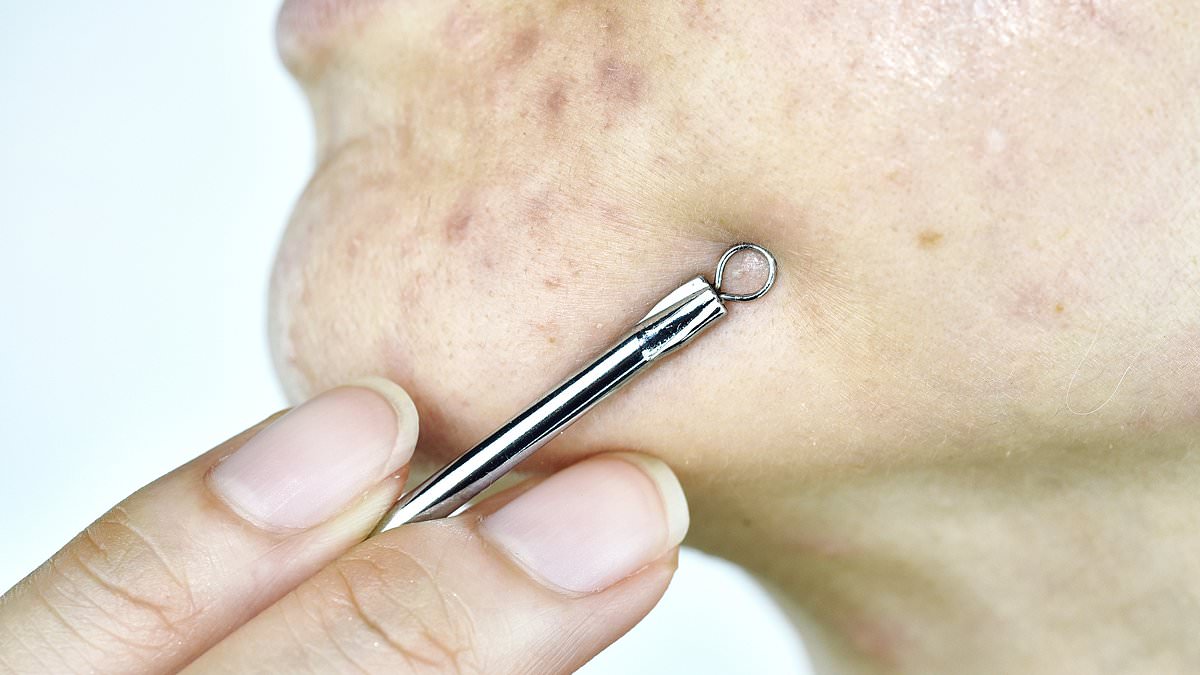
Popping an unsightly pimple before a big social event or work presentation may seem like a simple solution.
But while this might seem like a good idea at the time, it’s a bad habit that can do more than just scar you, a skin expert has warned.
According to Dr Conal Perrett, a dermatologist at The Devonshire Clinic on Harley Street, London, popping spots can risk spreading infection or requiring pricey follow-up care, often costing hundreds of pounds, to fully clear.
Instead, he suggested targeted treatments and gentle skincare to support natural healing for spots.
Acne is one of the most common inflammatory skin conditions in adolescents. More than 80 per cent of teenagers battle with pimples.
The condition is caused by hair follicles becoming plugged with oil or dead skin cells, which can be a result of shifts in hormones, or using cosmetic products and certain medications.
It can also occur later in life for a number of reasons.
Dr Perrett advised: ‘Refrain from picking or squeezing any blemishes, as this can worsen inflammation and lead to permanent marks.’

The correct way to treat a troublesome spot depends on the type you have, the doctor warned
‘For stubborn scarring, advanced treatments such as chemical peels, laser and microneedling can be the best way forward.’
‘Using the right skincare ingredients, alongside daily sun protection, can make a significant difference.
‘For more persistent or severe acne, seeking professional advice is the best way to protect the skin and support a smooth, healthy complexion in the future.’
Dr Perrett also urged people, in particular acne sufferers, to look out for the five main types of spots: blackheads, papules, pustules, nodules and cysts.
Dark spots on your face are likely blackheads, Dr Perrett noted, which can be treated and prevented with products containing salicylic acids and gentle retinoids—because they keep pores clear.
Such products are available on the high street, often as serums.
Small, red inflamed bumps without visible puss-filled heads, meanwhile, are likely papules—which occur when clogged pores trigger deeper inflammation.
This redness can be reduced by products containing benzoyl peroxide, niacinamide, topical retinoids, alpha hydroxy acids and azelaic acid.

While the doctor warned never to squeeze your spots, some in particular he explained have a higher risk of scarring
Spots that look similar to papules but have a red base and white or yellow tip, are likely pustules which carry a higher risk of scarring if popped.
These troublesome spots can be treated with the same way as papules, but in some cases prescription-strength retinoids and oral antibiotics may be needed.
Another, nodules, are large, painful and sit deep within the skin.
These have a significant chance of leaving permanent scarring, so they also require prescription-strength retinoids and oral antibiotics.
Cysts, meanwhile, have the highest likelihood of scarring and are large, soft, pus-filled lumps that sit deep below the skin’s surface.
‘It is crucial to never squeeze cysts, as this can dramatically increase scarring and spread infection,’ Dr Perrett warned.
If patients have painful cysts and nodules, steroid injections such as corticosteroid to quickly reduce swelling, redness and pain.
However, he added, if pimples stubbornly persist patients should see a dermatologist.
For those with acne scars he said wearing a hydrating SPF can, minimise how visible they are.
‘Sun exposure stimulates melanin production, which can make scars appear darker and more pronounced,’ he said.
‘A broad-spectrum sunscreen with SPF 30 or higher should be applied every morning and reapplied throughout the day.
‘Pairing sun protection with a good moisturizer enhances skin repair by maintaining hydration, which is crucial for cell turnover and barrier function.’
This is especially important for those taking the acne medication Roaccutane, as it makes them more sensitive to ultraviolet radiation from the sun, he warned.
Research has suggested diet may also play a role in acne prevention.
Experts advise avoiding sugar and focusing on a healthy, well-balanced diet with high amounts of nuts, legumes, fish, red meat, fruits and vegetables.
Some studies also suggest there is a higher risk of acne with frequent milk consumption, but more research is needed before dietary recommendations can be made.
For this reason, experts recommend keeping a diary to see if any of foods directly aggravate acne and avoid them if this is the case.