
Share this @internewscast.com
Although it rarely exhibits noticeable symptoms, a particular condition significantly heightens the chances of heart attacks, strokes, kidney failure, and even dementia.
This condition, high blood pressure or hypertension, affects 14 million adults in the UK, and the numbers continue to climb. Its stealthy progression means many remain unaware of their condition until it leads to severe health issues.
Recently, thanks to ongoing health campaigns emphasizing its dangers, there’s been a growing awareness about the risks posed by high blood pressure, which occurs due to the narrowing of essential blood vessels. In the past year, searches for hypertension information on the NHS website surged by 40 percent, propelling it from the 30th to the second most viewed health topic in the UK.
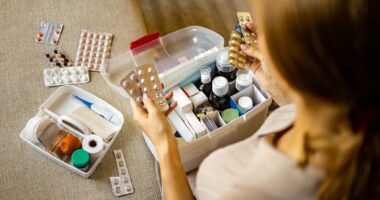
Despite this increased awareness, experts note that managing hypertension is not always straightforward. Patients may need to take up to four different medications daily, yet studies show that 80% of individuals fail to adhere to their treatment plans, jeopardizing their health.
According to experts speaking to The Mail on Sunday, millions could potentially benefit from a highly effective dietary approach that can reduce blood pressure in less than three weeks without medication.
Developed in the 1990s, the DASH diet is designed to be low in salt, fat, and sugar while rich in essential nutrients like potassium, magnesium, calcium, and fiber.

Studies show a lack of exercise and excessive alcohol intake are two of the leading lifestyle factors linked to high blood pressure. Pictured: File photo
One major study of the diet – DASH stands for Dietary Approaches to Stop Hypertension – published in 2019, found it cuts the risk of cardiovascular disease, such as stroke, heart attack and coronary heart disease, by 20 per cent.
And experts say the DASH diet is easy to follow because it is not restrictive – meaning it typically involves adding foods to meals rather than removing them.
‘The DASH diet can significantly lower blood pressure,’ says Sasha Wilkins, head of health at meal plan company Mindful Chef. ‘It’s about adding the right food to your plate in order to crowd out unhealthy ingredients.’
So what is the DASH diet – and why does it have such an effect on blood pressure?
First, it is important to understand the nature of the condition it treats.
Blood pressure is the force of blood pushing against the walls of the arteries. This pressure is created by the heart: each time it beats, it squeezes blood into the arteries so it can circulate around the body, delivering oxygen and nutrients to organs and tissues.
A certain level of pressure is needed to move blood and oxygen around the body, and this naturally rises and falls throughout the day depending on activity, stress and sleep.
When blood pressure is consistently too high it puts strain on the arteries. Over time they can become damaged and narrower, making it easier for fatty deposits to build up. This raises the risk of serious problems, such as heart attacks and strokes, and also forces the heart to work harder to pump blood around the body.
Blood pressure is measured in two numbers. The first, called systolic pressure, shows the pressure in the arteries when the heart contracts and pumps blood out. The second, the diastolic pressure, measures pressure in the arteries when the heart relaxes between beats. A normal reading is usually around 120 for systolic pressure and 80 for diastolic, written as 120/80. Readings that are consistently above 140/90 are classed as high blood pressure and usually require treatment or lifestyle changes to bring them down.

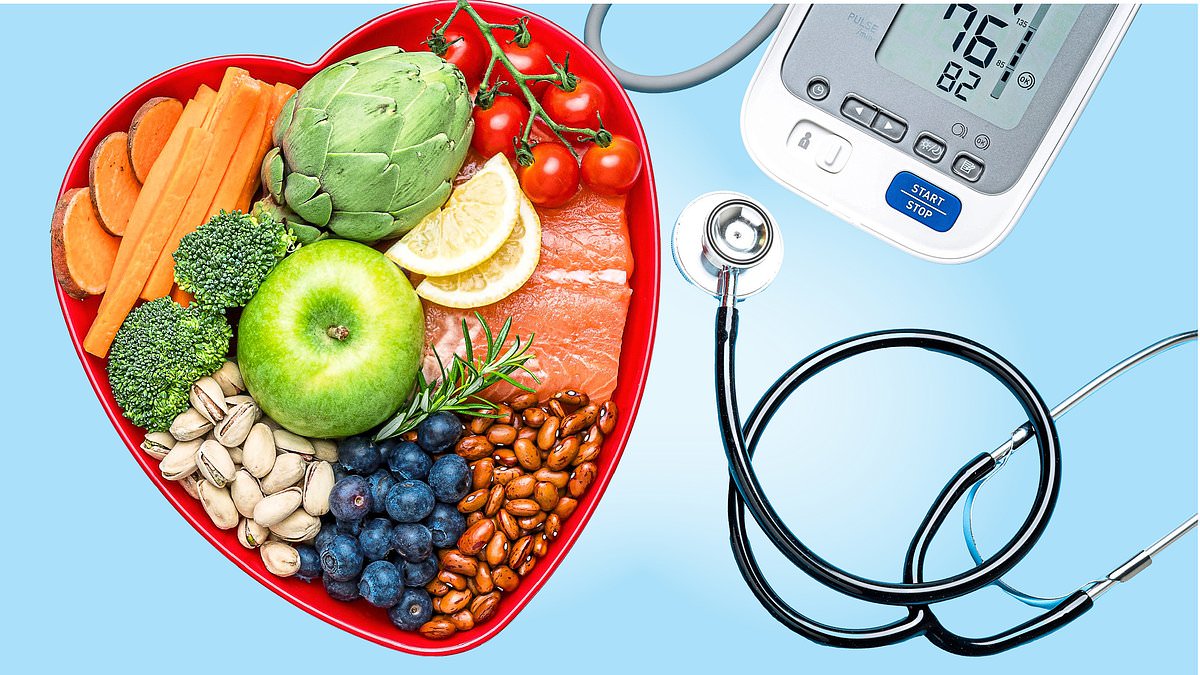
The DASH diet with fresh fruit and veg, grains, lean protein, low-fat dairy, legumes or nuts/seeds and limited fats and sweets. Pictured: File photo
Studies show a lack of exercise and excessive alcohol intake are two of the leading lifestyle factors linked to high blood pressure.
Around a tenth of Britons aged 16 to 44 have high blood pressure.
However, experts say poor diet is also one of the main causes of hypertension. In particular, excessive salt use.
Earlier this year, a British Heart Foundation study found UK adults were eating 40 per cent more than the recommended daily salt limit of 6g.
The charity said this meant most were consuming as much as is found in 22 bags of ready-salted crisps (which contain roughly a third of a gram each) – or about 155 packets a week.
The NHS uses a long list of prescription medicines to keep high blood pressure in check. These include ACE inhibitors such as ramipril and lisinopril, angiotensin receptor blockers (ARBs) such as losartan and candesartan, and calcium channel blockers including amlodipine and felodipine.
But experts say the first step in tackling hypertension should always be lifestyle changes.
This is what the DASH diet is designed to do. The meal plan was devised by researchers funded by the US government in response to rising hypertension rates.
Patients are advised to eat a specific number of servings each day from certain food groups.
This includes four to five servings of fresh fruit and vegetables. A serving is equivalent to a handful of cut-up raw or cooked vegetables or a medium piece of fruit. There should be six to eight servings of grains, with a serving being a slice of wholemeal bread or a handful of cooked wholegrain pasta or rice.
TheRE should also be six or fewer servings of lean protein – half a chicken breast or an egg would count as a single serving.
And two to three servings of low-fat dairy products are recommended. A glass of low-fat milk, a yogurt or a small portion of low-fat cheese counts as a serving.
Patients are also advised to eat four to five servings a week of legumes, nuts or seeds. A serving would be two tablespoons of seeds, a handful of nuts or a cup of cooked beans.
Crucially, the DASH diet involves limiting sugar and sweets to around five servings a week. One serving might be a tablespoon of sugar or jam.
Fats and oils should also be limited to two to three servings a day. A serving could be a teaspoon of vegetable oil or margarine, or a tablespoon of mayonnaise.
DASH diet followers are also told to keep alcohol consumption to fewer than 14 units a week – equivalent to about a large glass of wine or pint of beer a day.
Experts say DASH diet benefits are twofold. First, it limits consumption of ingredients that raise blood pressure, particularly salt.
‘Most don’t realise the damage salt intake is doing to their body,’ says dietitian Ms Wilkins. ‘You should be having less than a teaspoon of salt a day. Any more pushes up your blood pressure.
‘The problem is that most people do not realise how much salt, fat or sugar is in their food. This is because so often people consume ready meals, or other ultra- processed food like shop-bought sauces, cereal bars and crisps.’
The second benefit of the DASH diet is to boost consumption of healthy nutrients. Experts say the most important is potassium, found in fruit and vegetables such as bananas, tomatoes and spinach.
‘Potassium balances out sodium [salt] in the body and helps relax blood vessels,’ says Ms Wilkins.

Professor Tim Spector, founder of healthy eating app ZOE, lowered his blood pressure by increasing potassium intake
Professor Tim Spector, founder of healthy eating app ZOE, lowered his blood pressure by increasing potassium intake.
The DASH diet is rich in magnesium – another nutrient to relax blood vessels – which is found in leafy greens, nuts, seeds, beans, lentils and whole grains. It is also high in calcium, which helps the body remove sodium through urine. Milk, yogurt, cheese and leafy greens are all good sources.
And the DASH diet has good levels of fibre. Fewer than five per cent of people eat enough fibre, and experts say this could be contributing to dangerously high blood pressure. Research shows fibre can help control body weight – a major driver of hypertension.
It can also lower cholesterol levels – the fatty plaque that builds up in the arteries, raising the risk of heart attacks and strokes, and worsening high blood pressure.
Research suggests the benefits of the DASH diet are life-changing. One large study, published in 2019 in the medical journal Nutrients, analysed data from more than 45 DASH diet trials.
The results showed that following the diet could reduce the systolic blood pressure reading by 5.2 points and the diastolic reading by 2.6. Most of this reduction was in the first two to three weeks. The study concluded that following the DASH diet cut the risk of cardiovascular disease by a fifth.
‘It’s possible if a patient follows the DASH diet for long enough, they might be able to reduce the amount of pills they take,’ says Tracy Parker, senior dietitian at the British Heart Foundation.
‘This isn’t a health problem that happens overnight – your blood pressure rises gradually over the years. So it’s never too early to take steps. There’s even good evidence that DASH diet followers lose weight. So there are so many reasons to give it a go.’
Recipes to make lowering blood pressure a pleasure

Very berry breakfast smoothie by Mindful Chef
BREAKFAST: Berry, yogurt & oat smoothie
Ingredients
- 140g frozen mixed berries
- 100g Greek yogurt
- 250ml milk
- 30g whole rolled oats
- 1 tbsp chia seeds
- 1 tsp honey
Blend until smooth.

Speedy Mexican tofu rice bowl with avocado salad by Mindful Chef
LUNCH: Speedy Mexican tofu rice bowl with avo salad
Ingredients:
- 280g tofu (soya)
- 1 unwaxed lime
- 110g baby tomatoes
- 1 avocado
- 250g steamed brown basmati rice
- ½ tsp chilli flakes
- 1 tbsp Mexican spice mix
- 40g baby spinach
- 2 spring onions
- 1 handful of fresh coriander
- Drain the tofu, pat dry and cut into 2cm cubes. Place in a bowl and toss with the spice mix and a good pinch of sea salt.
- Heat a frying pan with ½ tsp oil on medium heat. Add the tofu and half the tomatoes and cook for 6-8 mins, until the tofu is golden and the tomatoes soften.
- Dice the avocado. Quarter the remaining tomatoes. Thinly slice the spring onions. Roughly chop the coriander. Place the avocado, tomatoes, half the spring onions and half the coriander in a bowl. Zest and quarter the lime. Add the zest, juice from 2 lime wedges, chilli flakes (to taste), 2 tsp olive oil, and black pepper and mix.
- Add the rice, spinach and remaining spring onions to the tofu pan. Add a splash of water and break it up with a wooden spoon. Cook for 2-3 mins, until piping hot.
- Serve the tofu and veggie rice in bowls and spoon the avocado and tomato over the top. Garnish with the remaining lime wedges.

Trout & butter bean cassoulet with roasted root veg and dill by Mindful Chef
DINNER: Trout & butter bean cassoulet with roasted root veg and dill
Ingredients
- 2 carrots
- 1 parsnip
- 1 tbsp cornflour
- 10g vegetable stock powder
- 1 onion
- 1 handful of fresh dill
- 2 garlic clove
- 460g butter beans
- 80g baby spinach
- 2 tbsp nutritional yeast
- 4 x trout fillets (skin on)
- 8 tsp garlic, rosemary and thyme paste
- 200ml cashew cream
- Cut carrots and parsnip into chunks.
- Place both on to one side of a lined baking tray and toss with 1 teaspoon of oil, salt and pepper. Roast for 5 mins.
- After 5 mins, season the trout with salt, then place, skin-side up, on to the other side of the baking tray. Drizzle with 1 teaspoon of oil and roast for 20 mins, until the fish is cooked through and the veg is softened.
- Dissolve the cornflour with 50ml water. Add the stock and top up with 200ml boiling water.
- Thinly slice the onion. Finely chop or crush the garlic. Finely chop the dill. Drain and rinse the beans. Rinse the spinach.
- Heat a frying pan on medium heat. Once hot, add the nutritional yeast and toast for 2-3 mins, tossing regularly, until golden brown. Remove from the pan and set aside.
- Reheat the frying pan with 1 teaspoon of oil on medium-high heat. Add onion and cook for 6-8 mins, until it is soft.
- Add the fresh garlic and garlic herb paste and cook for a further minute.
- Add the beans and stock mixture to the frying pan and simmer for 5 mins, until the liquid is reduced by half.
- Add the cashew cream, and continue to simmer for 2-3 mins, until thickened.
- In the final minute, add the roasted veg, spinach and half the dill to the stew, then stir to wilt. Season to taste.
- Check your fish is cooked through – it should be steaming hot, opaque and separate easily with a fork.
- Serve the butter bean cassoulet into bowls, sprinkled with the nutritional yeast. Top with the roast trout and scatter with the remaining dill to finish.
Recipes provided by meal plan firm Mindful Chef
Anyone with concerns about heart and circulatory conditions can call the British Heart Foundation’s Heart Helpline and speak with a cardiac nurse: bhf.org.uk/informationsupport/heart-helpline