
Share this @internewscast.com
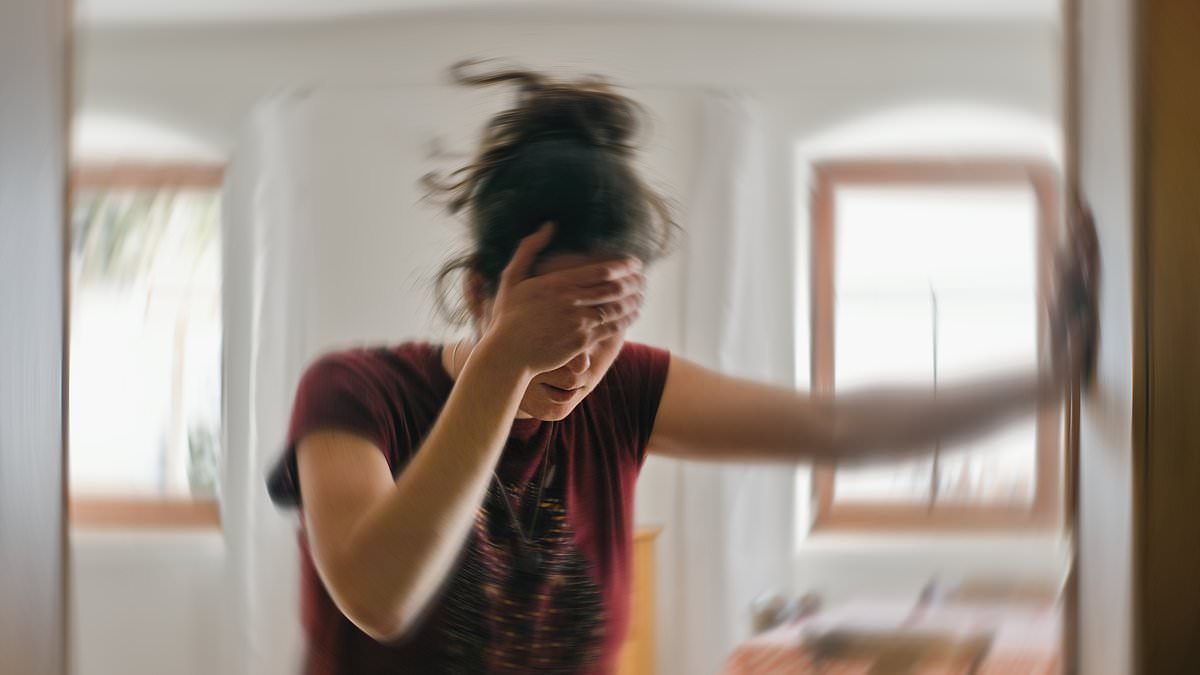
At 54, experiencing dizziness and heart palpitations upon standing is concerning. Despite being prescribed beta blockers, the issue persists. What might be the underlying cause?
These symptoms could be indicative of postural orthostatic tachycardia syndrome, commonly known as POTS.
POTS affects heart rate regulation when transitioning from sitting to standing.
Typically, standing causes a normal increase in heart rate as blood shifts to the abdomen and legs. However, in POTS sufferers, this reaction is often exaggerated, leading to dizziness, fainting, and headaches. Individuals with fair skin might notice their hands and feet appearing purplish.
A viral infection can trigger POTS, which has become more prevalent in the UK since the Covid pandemic. Nonetheless, some individuals may develop POTS without an apparent cause.
Symptoms tend to be more severe in the morning, and intriguingly, women are five times more likely to be affected than men, though the reasons remain unclear to medical professionals.
Beta blocker tablets are often prescribed to help with heart palpitations. However, these drugs are not always right for someone with POTS as they can actually trigger dizziness, further worsening the problem.
Instead, the NHS usually attempts to treat POTS without resorting to drugs.

Regular dizziness and heart palpitations are common symptoms of postural orthostatic tachycardia syndrome, or POTS
This includes boosting fluid and salt intake as well as a gradually increasing exercise programme, all of which can help to lower the heart rate.
However, POTS is not the only possible cause of these types of symptoms. Another trigger might be an overactive thyroid.
This is the butterfly-shaped gland in the neck that produces crucial hormones. An overactive thyroid can be diagnosed using a blood test carried out by a GP and is treated using a daily tablet called carbimazole.
In severe cases, the menopause may also be to blame for POTS-like symptoms, so a course of hormone replacement therapy (HRT) could help.
I’ve recently developed a burning sensation in my ankles that stops me from sleeping. There is no reddening or swelling. I’m 84. How can I make this stop?
Pain in the ankles that isn’t accompanied with swelling is likely due to a nerve problem.
Nerves are responsible for controlling all movements and sensations, including pain, temperature and touch. But if they become damaged or are under pressure, they don’t function properly.
This often leads to sensations such as burning, pins and needles or electric shocks.
Nerve pain that is felt on both ankles may be a sign of diabetes as, over time, the high blood sugar condition can damage the nerve endings.
This would be treated by getting blood sugar levels down, via diet or medicine. This may not end the nerve pain but it would likely stop it from getting any worse.
However, a deficiency in vitamin B12 – a nutrient found in animal products such as meat and dairy – can also cause nerve problems. This is diagnosed via a blood test and is treated simply with a daily supplement.
For anyone struggling with this symptom to the point that it disrupts sleep, there are a number of nerve-pain medicines that may help. These include amitriptyline, gabapentin and pregabalin. However, older patients need to be careful taking these drugs as they can raise the risk of dangerous falls.
I’ve just found out that I have macular degeneration – is there anything I can do to stop it?
There are some effective treatments but these work only for certain patients.
Macular degeneration is a common condition that affects the middle part of the vision. Also known as age-related macular degeneration, or AMD, it doesn’t cause total blindness, but it can make things such as reading and recognising faces difficult.
Symptoms typically begin when patients are in their 50s.
Its exact cause is unknown, but we do know that smoking, high blood pressure, obesity and a family history of the condition all raise the risk.
Crucially, there are two types of AMD. Dry AMD, the more common form, is caused by a build-up of a fatty substance called drusen at the back of the eyes. There is no treatment, however it typically develops very slowly.
Wet AMD is less common, and is caused by the growth of abnormal blood vessels at the back of the eye. There are drugs that can stop it from worsening. These are called anti-VEGF injections, which are jabbed directly into the eyes. Wet AMD tends to develop very quickly, often leading to a sudden loss of vision, so quick diagnosis and treatment is crucial.
The charity Macular Society offers advice and counselling for anyone with either form of the disease. It can be contacted via macularsociety.org.
Are you suffering from ‘phone dementia’?
I’m increasingly concerned about the effects mobile phones may be having on our brains.
Last week, two patients in row at my clinic asked for a memory test – a way doctors look for dementia. This is not an uncommon occurrence. However, what makes these cases exceptional is that both were women in their 30s and both had exactly the same story: they were regularly forgetting people’s names, as well as words, to a point where they were worried they might have dementia.

Dr Ellie’s theory is that younger people are losing the ability to retain crucial information due to the amount of time they spend glued to digital devices
The good news is that neither had the disease. However, my theory is that younger people are losing the ability to retain crucial information due to the amount of time they spend glued to digital devices. I’ve even coined a name for it: phone dementia. Do you think you might be experiencing this issue? Please write in and let me know.
Headaches that grind you down
There’s a hidden condition that triggers headaches which many sufferers do not realise they have – and a diagnosis can be life-changing.
Most of us will experience mild headaches at some time or another. Others may get severe headaches, called migraines, which can be treated with drugs. However, some people experience constant low-grade headaches for no clear reason.
And one thing that might cause it is teeth grinding.
This is where people clench their jaw during sleep and grind their teeth together. It often leads to jaw pain and headaches, but many sufferers don’t realise they do it.
It’s a problem I’ve suffered with off-and-on in the past. I was even once prescribed a mouth guard to protect my teeth while sleeping, but I didn’t like the sensation so
I stopped wearing it.
Have you found an answer to your teeth grinding? And how did you discover you did it?
Please get in touch.