
Share this @internewscast.com
When Dr. Philip Deibel faced a $2,400 increase in his family health insurance last month, it was the tipping point for him.
The self-employed obstetrician-gynecologist, who was already shelling out $21,000 a year to insure his healthy family of five with Blue Cross Blue Shield, reached his breaking point.
This substantial amount only provided ‘catastrophic’ coverage, with a $4,000 deductible per person and an $8,000 deductible for the family.
In practical terms, this meant Dr. Deibel, at 43, had to cover significant expenses out of his own pocket before the insurance would contribute.
Routine pediatric check-ups for his children, aged 12, 10, and 8, along with dental care and out-of-network wellness visits for him and his wife, pushed the annual healthcare costs to over $27,000, averaging more than $2,000 monthly.
“Last year was already challenging,” he shared with the Daily Mail. “I was on the most affordable plan available through the exchange.”
‘When I saw the cheapest option now was more than $23,400 for the year, that was the breaking point for me. I just couldn’t stomach it.’
Based in North Carolina and in the midst of setting up a new clinic, Deibel briefly considered going entirely uninsured, instead saving $1,000 to $2,000 a month in an account to cover emergencies.
He backed out of that, concerned over unexpected medical bills, but then came up with a controversial workaround.
The workaround, he said, covered his family’s healthcare for about $13,000 for the year – or roughly $16,000 less than the $29,000 he had expected to pay overall, a saving of about 55 percent.

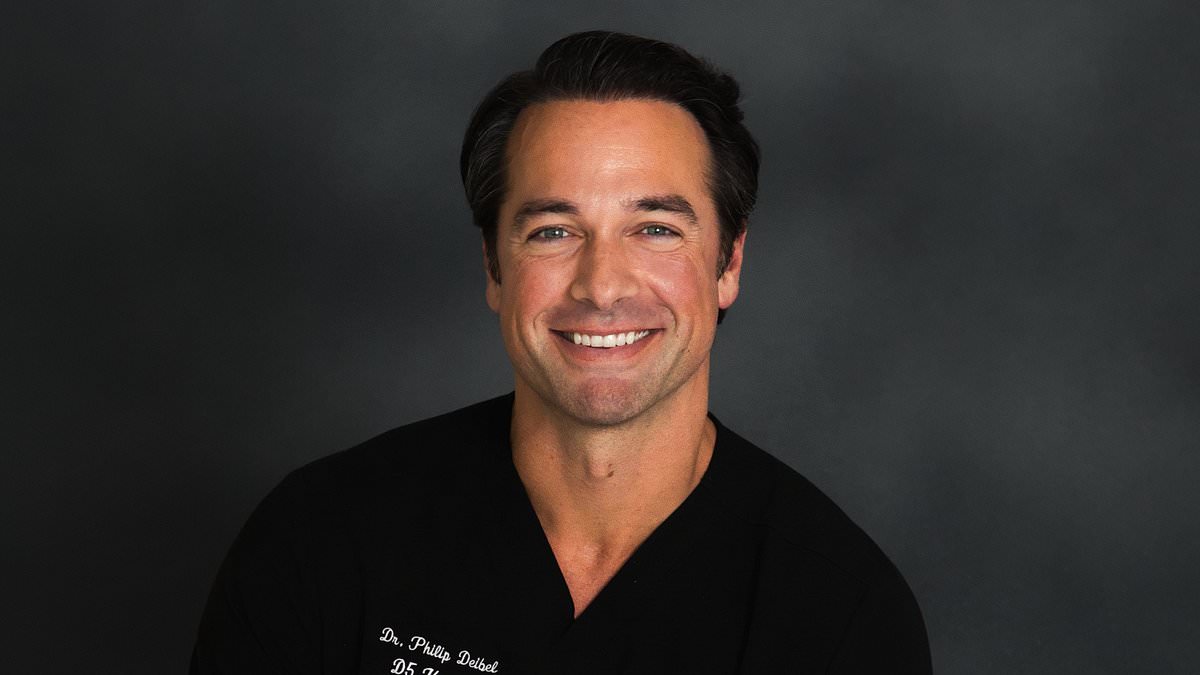
Dr Philip Deibel, pictured, says he has saved his family $13,000 a year by switching to a controversial health insurance workaround
His move comes as millions of Americans struggle to cope with soaring premiums, which jumped 20 percent this year on average – a surge insurance companies have blamed on expiring pandemic-era fee subsidies.
The US has no universal public healthcare system, meaning most people must secure insurance through an employer or buy it themselves, often at steeper prices.
From 1999 to 2024, worker contributions toward family premiums surged 308 percent, while the cost of total premiums spiraled 342 percent (roughly three times faster than wages) according to researchers at Rice University, Texas.
At the same time, independent analysis shows health insurance companies are now reporting record-breaking profits.
America’s seven biggest health insurers, including UnitedHealth and Centene, had profits of $71.3billion in 2024, the latest year available – it was the highest ever and half a billion dollars more than the year before, according to Wendell Potter, a former Cigna executive turned whistleblower.
Meanwhile, an estimated 26 million Americans (eight percent of the population) do not have health insurance.
To beat the system, Deibel split his family’s coverage across two plans.
For four months of the year, he enrolled them in a ‘three-plus-one’ short-term policy with UnitedHealthcare.
The plan covers catastrophic events only, such as unexpected hospitalizations, and carries a $5,000 deductible, meaning he must pay 100 percent of the costs up to that amount. He also has telemedicine coverage and can get an appointment online for a $20 co-pay. Overall, it costs him $500 a month, or about $2,000 for the total duration of the plan.
For the remaining eight months, he signed up for a cost-sharing program run by Sedera.

Deibel is pictured above with his wife Ashleigh, 42, and three children Keating, 12, Briggs, 10 and Kennedy, eight
Unlike traditional health insurance, cost-sharing plans pool monthly member payments and reimburse participants once they exceed a set ‘unshareable amount’ – which is basically a deductible.
Members are told to request the ‘cash price’ from hospitals – often cheaper than that charged to insurance because hospitals do not need to negotiate with an insurance provider – then submit the bills for reimbursement.
These arrangements, sometimes faith-based and often referred to as health care sharing ministries, have surged in popularity, with about 1.7 million Americans using them today, according to a report from the Colorado Division of Insurance.
But experts warn that they carry risks.
Dr Michael Botta, a Harvard-educated healthcare economist, warned that cost shares are not regulated like traditional health insurance and have no legal obligation to pay claims. He also said that they may run out of money, rendering them unable to pay members’ medical bills.
‘Saving $13,000 is great, but he’s saving money because he has stripped away the guarantees and consumer protections that are the reason healthcare plans are so expensive,’ Botta told the Daily Mail.
There may also be unforeseen catches in the plans. With childbirth, for example, Sedera does not cover the cost of a childbirth that takes place within the first year of membership. For health insurance, however, childbirth is legally required to be covered.
Deibel chose a Sedera plan with a $5,000 initial unshareable amount. That means for every medical expense Deibel must pay the first $5,000, after which the plan is expected to cover the remainder.
He pays $600 per month for Sedera ($4,800 total by the end of his commitment).
Altogether, he estimates he will spend $6,800 on coverage this year, plus another $6,000 on pediatric, dental and wellness visits for his family and himself – at which he said he would ask for the cash price.

Dr Deibel said he had decided to search for new options after seeing his family’s healthcare premiums surge once again
‘I am ok with paying a bit more per month to subsidize those who can’t pay a higher premium, but to pay that much and not get any value in the care was ridiculous,’ Deibel said, adding that he wasn’t getting a lot of benefits from the traditional plan he used to have.
Botta, himself a father-of-three who reviewed Deigel’s plan for the Daily Mail, agreed that patients should always ask for the cash price because it is often cheaper.
He said he preferred to consider health insurance as a financial backstop for worst-case scenarios – much like home or car insurance – to only be used in the cases of unexpected hospitalizations, accidents or critical diagnoses.
Botta said people should consider their individual circumstances when choosing their health insurance plan.
For his own family of five, Botta said he uses a high deductible healthcare plan with Aetna for medical emergencies. For pediatric visits and other care, he always seeks to pay the cash price rather than bill his insurance.
In most cases with high deductible plans, there is no copay, according to healthinsurance.org, an independent website that offers a guide to health insurance.
Deibel was initially on a high deductible healthcare plan. Botta did not reveal the deductible or price of his plan to the Daily Mail.
For his cash-pay care, Botta uses Sesame, a platform that gives patients direct access to clinicians at affordable, upfront prices. (Botta is the president and co-founder of Sesame.)
He warned people against repeatedly signing up for short-term policies, saying these often exclude pre-existing conditions when coverage begins.
For now, Deibel said his strategy is working, and the savings are going straight back to his new clinic, called D5 Health.
‘People seem very interested in my approach,’ he said.
‘No one has told me they made the switch, but a lot are asking me for information on what I did to see whether it could benefit them too.’