
Share this @internewscast.com
A TV doctor has revealed the foods he recommends to his patients who need to lose weight—as they have ‘natural Ozempic’ qualities.
Top of the list is eggs, which stimulate the same hunger-supressing hormone that the blockbuster weight loss jabs trigger, according to Dr Amir Khan, GP and resident doctor on ITV’s Good Morning Britain.
In an video posted to his Instagram page where he has nearly 650,000 followers, Dr Khan said nuts like almonds, pistachios and walnuts, olive oil, and high fibre foods like oats, barley and whole wheat have the same effect.
‘These are the kind of foods I recommend my patients living with type two diabetes increase their intake of,’ he wrote in the caption.
‘But we could all do with eating more of them.’
Explaining how the fullness hormone, called GLP-1, works, he said: ‘GLP-1 slows the rate at which the stomach empties, which keeps us fuller for longer and controls our appetite and food intake.
‘It stimulates our pancreas to make insulin which lowers our blood sugar.
‘It also stops the production of another hormone called glucagon that can raise our blood sugar.’
In particular, the protein-rich egg white and fibre in nuts and oats are known to stimulate the release of GLP-1 in the gut, he explained.
As for olive oil: ‘Studies show that monounsaturated fats like olive oil are better at stimulating GLP-1 release than saturated fats like those found in butter,’ he said.
He also recommended three vegetables to increase your intake of, due to their hunger-supressing effects.
This included brussels sprouts, broccoli, carrots which cause bacteria in our gut to ‘break fibre down into short chain fatty acids’.
‘These can signal special cells in our gut to release GLP-1 into the bloodstream.’
This isn’t the first time a staple food has been flagged as having ‘natural Ozempic’ effects.
Last spring, a series of viral videos emerged on social media featuring young women hailing a DIY oat-based drink for its surprising weight loss effects.
So-called ‘Oat-Zempic’ trend involved drinking a blend of oats, water, cinnamon and lime daily.

Experts have called for tighter rules on how Ozempic, Mounjaro and other weight-loss products are prescribed

Last year, TikTokers went wild for ‘oat-zempic’—a DIY drink made from oats, water and lime that social media users said had similar slimming benefits as Ozempic
TikTokers said they shed almost a stone in less than a month by drinking the shake daily.
Speaking of the trend, experts were sceptical, concluding that an oat drink is unlikely to have as significant impact as the weight loss jabs.
However, Dr Alok Patel, a pediatrician at Stanford, acknowledged that oats ‘contain soluble fibre that will keep you fuller for longer’.
‘A half a cup of oatmeal, that’s a lot of fibre and some water to help them feel full, which may lead to a caloric deficit which is why people are seeing weight loss,’ he said.
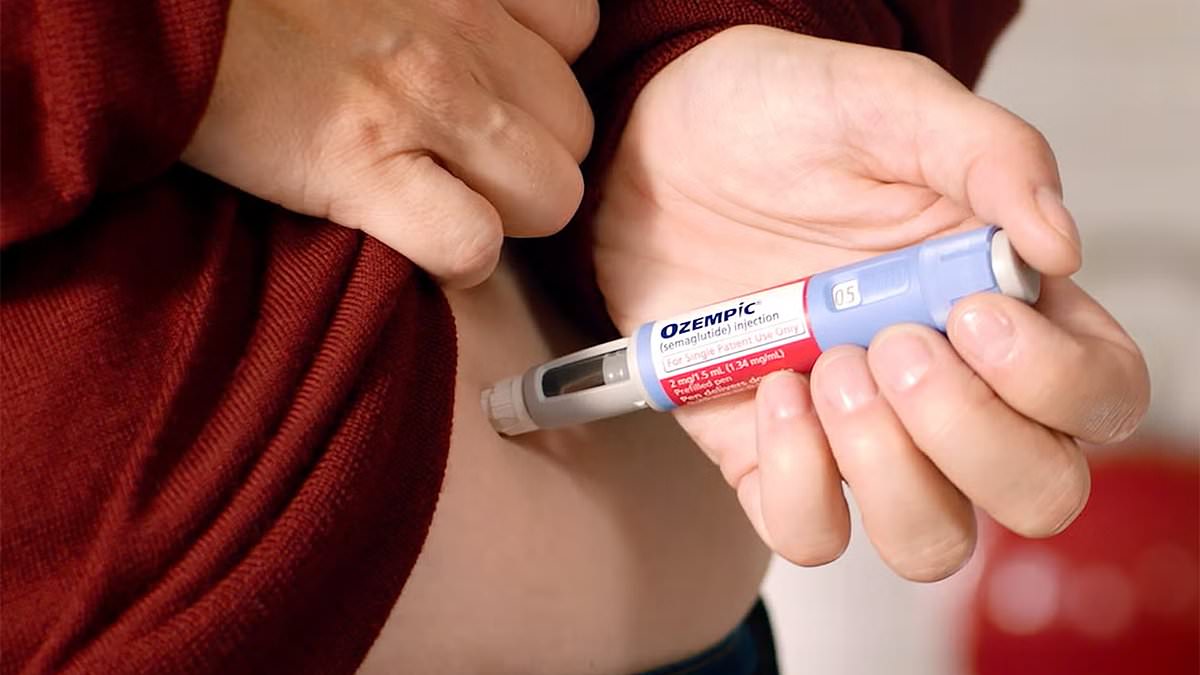
Ozempic and Wegovy, brand names for the medication semglutide, mimic glucagon-like peptide-1 (GLP-1).
Mounjaro, another weight loss jab making the headlines, works in a similar way to Ozempic and Wegovy, but is ‘super-charged’ by a compound that triggers another appetite-supressing hormone.
NHS data suggests that at least 1.45million semaglutide prescriptions were dolled out in 2023/24, and recent studies suggest more than one in 10 women are now taking slimming jabs.
Research suggests Ozempic results in an average weight loss of around a stone in roughly nine months—but it will be the same for everyone.
Nearly two-thirds of adults are overweight, with an extra 260,000 people entering the category last year, data shows.
Less than a third of over-18s eat the recommended five portions of fruit and vegetables a day, and a third fail to get any exercise.
Experts have called for the government to tackle the ‘our broken food system’ with bans on junk food advertising and promotions.