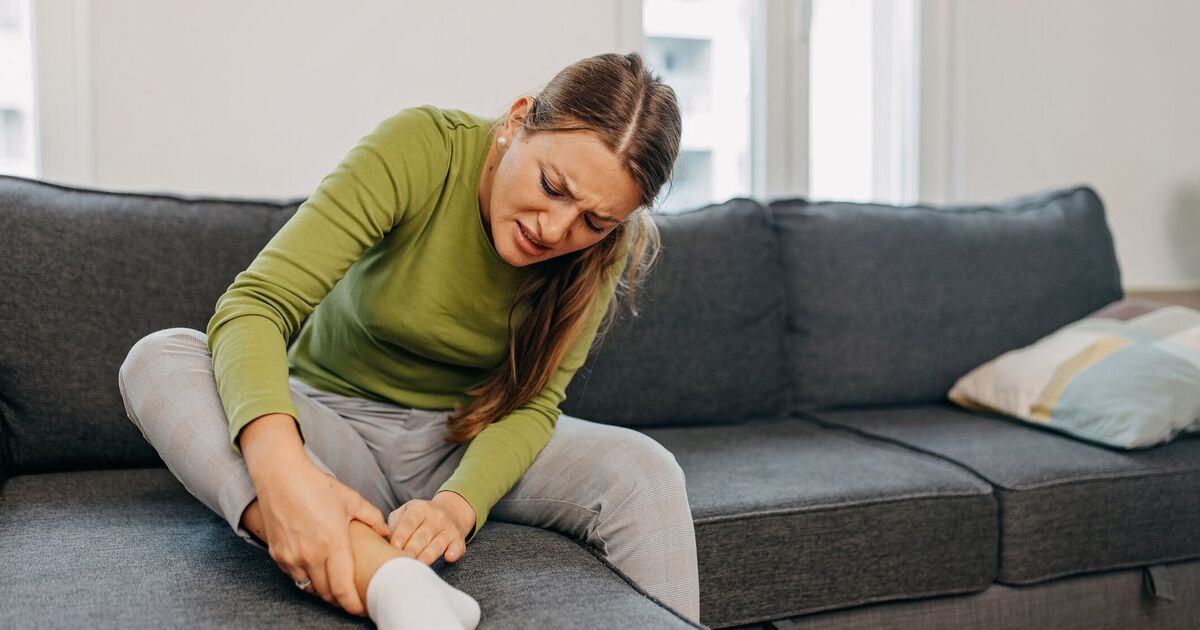

High cholesterol, medically termed hypercholesterolaemia, often has no symptoms but can lead to artery narrowing throughout the body. Depending on where this occurs, it can result in serious health issues such as heart attacks, strokes, and blood clots.
According to the British Heart Foundation, some people might be able to detect the condition before it escalates with three ‘visible’ signs, especially for those with familial hypercholesterolaemia. One such indicator is tendon xanthomata, which is essentially a swelling of the Achilles tendon at the back of the ankle due to an accumulation of cholesterol.
Yellowish lumps or nodules may form in or around the tendon, potentially visible from the outside. These lesions, known as xanthomatas, are cholesterol-rich, hence their yellow hue.
Tendon xanthomata can also appear on the knuckles of your hands and knees. While high cholesterol is the primary cause of these yellow lesions, they can also signal other conditions, such as Cerebrotendinous Xanthomatosis, a rare inherited disorder.
Tiny yellow spots resembling xanthomata may also emerge around the inner corner of your eye, known as xanthelasmas, which represents another rare visible indicator of elevated cholesterol levels.
Corneal Arcus can additionally impact your eye, creating a pale white ring that encircles your iris – the coloured section of your eye. While it occasionally develops as part of natural ageing, in younger individuals it typically signals high cholesterol.
If you believe you might have elevated cholesterol, it’s advisable to seek testing from your GP, as this remains the sole method to verify the condition exists before it triggers potentially fatal incidents.
People with familial hypercholesterolaemia may experience extremely elevated cholesterol levels despite lacking typical risk factors or warning signs due to defective genes that affect the body’s cholesterol processing.
Whilst there’s no single ‘remedy’ for high cholesterol, various treatment combinations are readily available to effectively control the condition, though BHF specialists cautioned that without treatment: “It can lead to heart attack and stroke.
“It’s often a hidden risk factor, which means it can happen without us knowing until it’s too late. That is why it’s so important to get your cholesterol level checked.”
Certain lifestyle modifications can be simple methods to reduce your cholesterol, such as increasing physical activity, reducing alcohol consumption, quitting smoking and maintaining a balanced diet. If these alterations aren’t sufficient to lower your levels, you may be prescribed medication like statins.


