
Share this @internewscast.com
A recent study has highlighted an unfair disparity in access to the latest weight-loss injections through the NHS, revealing a postcode lottery in care.
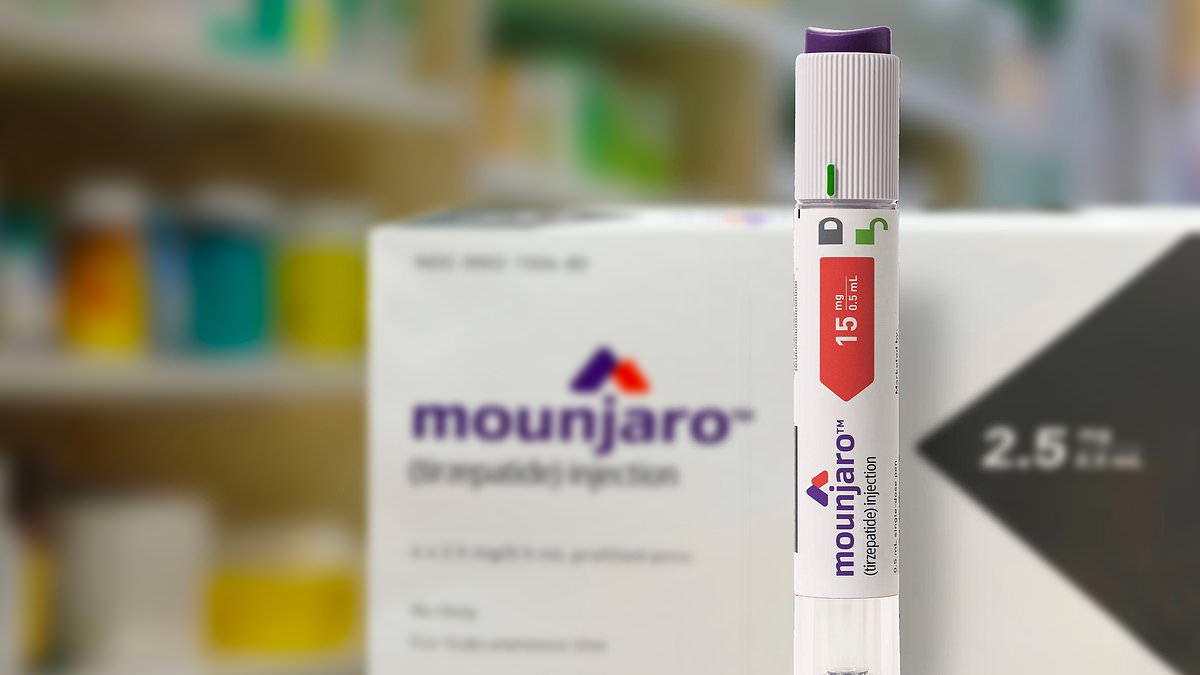
According to national guidelines, general practitioners are advised to prescribe the medication Mounjaro to individuals with a body mass index exceeding 40, paired with four or more related health conditions such as hypertension, heart disease, or type-2 diabetes.
However, certain integrated care boards, responsible for allocating health service funds locally, are enacting stricter eligibility requirements to manage expenses.
This situation results in patients being deprived of treatment they could otherwise receive with a standard NHS prescription, depending on their location in the UK.
Consequently, affected individuals must either forgo the medication or spend approximately £200 monthly to purchase it privately.
Research indicates that Mounjaro, often dubbed the “King Kong” of weight-loss drugs, can significantly enhance patients’ health, facilitating a reduction of up to 20% of their body weight within just over a year.
Data obtained by trade publication The Pharmacist under Freedom of Information laws found some ICBs exclude patients with unstable mental illness, others prioritise people from deprived areas, and one is set to require patients to undergo supported attempts to lose weight before being prescribed the drug.
Health secretary Wes Streeting described Mounjaro as a ‘game-changer’ when GPs were given permission to dole it out for obesity in June last year but many practices are yet to start doing so.

Health secretary Wes Streeting has previously vowed to make fat jabs more widely available on the NHS and said it is unfair that the wealthy can buy them privately while poorer people go without

An estimated 2.4 million people are taking weight-loss drugs in the UK but severe rationing by the NHS means the vast majority are forced to buy them privately
An estimated 2.4 million people are taking weight-loss drugs in the UK but severe rationing by the NHS means the vast majority are forced to buy them privately.
NHS England has implemented a phased 12-year rollout of the once-weekly injection, with only 220,000 patients prioritised in the first three years.
Later cohorts should be able to access the drug with a lower BMI and fewer weight-related conditions.
The primary care weight management service at Humber and North Yorkshire ICB has a list of exclusion criteria including patients with unstable mental illness, patients with a diagnosed eating disorder and those who have undergone bariatric surgery in the past 12 months.
In Lancashire and South Cumbria ICB, only patients who live in one of the most deprived areas are eligible for Mounjaro.
And NHS South Yorkshire ICB says it is following national guidelines for the first cohort of patients eligible for the jab but those who follow ‘will be required to have completed, in the last 24 months, a supported attempt to lose weight prior to consideration of weight loss drugs’.
Greater Manchester ICB has applied ‘local prioritisation’ within cohort one by dividing it into three sub-cohorts to prioritise patients with the highest clinical needs.
The Pharmacist analysis has also identified clear differences in NHS spending on Mounjaro across the country, with deprived areas spending the most.
North East and North Cumbria ICB spent £16.8million on the drug from April to November last year, which is more than any other ICB, while Dorset ICB spent just £1.1million.
Nationally, NHS spending on the drug has risen by up to 200 per cent since GPs were first able to prescribe it eight months ago.
But North East and North Cumbria ICB saw its spend almost triple from June to September 2025, and most ICBs – including the lowest spenders – saw an upward trend throughout the last 12 months.
Professor Azeem Majeed, head of the department of primary care and public health at Imperial College London, said the areas spending the most on Mounjaro ‘have some of the highest levels of obesity, type 2 diabetes and socioeconomic deprivation in England, meaning there is a larger pool of people who meet the eligibility criteria set by the National Institute for Health and Care Excellence’.
The new GP contract, which comes into effect from April, will pay family doctors bonuses worth up to £25million if they prescribe fat jabs to their most obese patients and refer others to weight management classes.
But Dr Katie Bramall, chair of the British Medical Association’s GP committee, said: ‘These proposals will do nothing over the next year to address the divide between those able to pay and those left waiting unable to afford private self-funded treatments.’