
Share this @internewscast.com
The release of additional files related to Jeffrey Epstein is likely to cause significant emotional distress and could potentially trigger suicidal thoughts among the women who allege he abused them, warn mental health professionals.
The U.S. Department of Justice has periodically made public several sets of documents detailing accusations of abuse and other alleged criminal activities linked to the notorious financier and convicted sex offender, Jeffrey Epstein.
On Friday, the department unveiled thousands more of these files.
This latest batch of unsettling photographs and documents depicts Epstein, who died by suicide in 2019 while in prison awaiting trial on federal sex trafficking charges, in the company of unidentified young women.
The Department of Justice estimates that Epstein’s victims number over 1,000 girls and women, though only a handful have been identified publicly.
The U.S. government voted overwhelmingly in favor of releasing these files to hold Epstein and his associates accountable and to seek justice for the victims. However, psychologists and trauma specialists express concern that the release could reignite trauma for those who claim to have suffered at the hands of Epstein, as reported by the Daily Mail.
They warned that the release of the Epstein files will ‘reignite’ trauma for the victims, which could lead to a surge in symptoms of post-traumatic stress disorder (PTSD), panic attacks and depression.
Experts also stressed that sexual assault victims are significantly more likely to attempt or die by suicide, so they encouraged victims to seek therapy immediately.

Jeffrey Epstein is pictured with Norwegian college student Celina Midelfart in 1997 at the Mar-a-Lago estate. Midelfart has been linked to Epstein but has not been identified as a victim

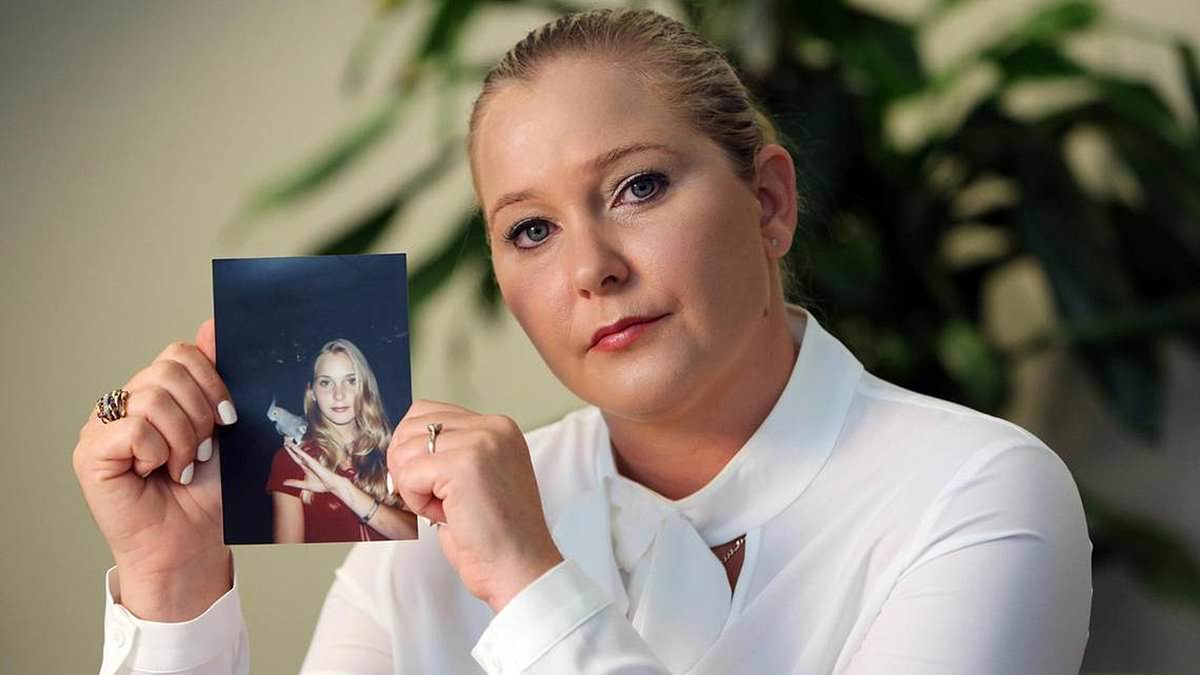
One victim Virginia Giuffre is pictured above holding a photo of herself as a teen. She said this was around the time she was abused
However, they also noted victims all respond differently, and a ‘sense of public justice can be healing’ for some and provide closure they may have spent decades seeking.
Stella Kimbrough, a psychotherapist and trauma specialist at Calm Pathway, told the Daily Mail: ‘It’s important to recognize that trauma affects everyone slightly differently, and while some survivors might feel re-traumatized by the release of the Epstein files, others might have different reactions.
‘It is very likely, however, that someone who has been victimized by Jeffrey Epstein might be navigating an increase in symptoms related to their trauma due to the release of the Epstein files.’
For victims diagnosed with post-traumatic stress disorder (PTSD), the release could cause those symptoms such as anxiety, avoidance, depression, exaggerated startle responses and even flashbacks to come flooding back.
Catherine Athans, a psychotherapist in California, told the Daily Mail: ‘Whenever you revisit a trauma, it reignites the trauma.
‘I pray that every victim of the Epstein crusade gets support, has support, and uses the support because it could be something that could stimulate a suicide.’
Survivors of sexual assault have long been shown to be more likely to die by suicide. The National Sexual violence Resource Center estimates survivors are 10 times more likely to attempt suicide than those who have not experienced sexual assault.
One in three rape survivors report contemplating suicide, while 13 percent have attempted. About five percent of the general US population has considered suicide, while 0.4 percent have attempted.
Dr Eleni Nicolaou, art therapist and clinical psychologist at Davincified, told the Daily Mail that releasing the files ‘can be a great cause of distress’ because ‘it forces survivors to relive memories of high arousal without consent.’

Epstein, pictured above, died by suicide in 2019 while awaiting trial for federal sex trafficking charges

Epstein is pictured with a group of unidentified young women. It is unclear if they were victims of abuse

Epstein is seen on a private jet with an unidentified young woman sitting next to him. It is unclear if she was abused
She explained that the ‘sudden influx of graphic and sensationalized images in the media’ causes the amygdala, the brain’s emotional processing hub, to send out a panic response, which includes a rush of adrenaline.
She said: ‘This happens because the hippocampus does not stamp these memories as past events, so the body responds as if the victim is currently in an immediate, dangerous situation.
‘When the victims see their private and personal pain exposed publicly, it usually results in secondary trauma, where the victim feels as though their agency has been taken away from them again.’
Carole Lieberman, clinical and forensic psychologist in Beverly Hills, also stressed the risk of victims being publicly identified.
‘Most media outlets try to block out their faces, but they could still be recognized by the rest of their appearance and by the background,’ she told the Daily Mail.
Laura Dunn, a sexual assault survivor who is now a victim and civil rights attorney in New York City, however, noted that victims should remain unidentifiable if authorities properly redact their personal information.
‘Information commonly redacted includes birthdays, physical descriptions, locations where connections were made with victims, mutual contacts, and similar information,’ she told the Daily Mail.
‘The risk in this situation is more of overly broad redactions to protect abusers, as many victims are calling for release of these files.’

A woman’s foot is seen with a quote from Vladimir Nabokov’s Lolita – with the novel pictured in the background

The above photo was made public on December 18 by Democrats on the House Oversight Committee
Experts stress that victims of sexual assault and other traumas also process major shifts like their abuser being put into the spotlight differently. While reintroducing trauma is a major concern therapists have, they noted it can also help validate survivors’ experiences and provide a sense of support.
Dr Nicolaou said: ‘Validation from an official source enables the brain to reorganize the trauma story from one of blame towards oneself to one of accountability from others.
‘This reorganization process then allows the prefrontal cortex to synthesize the experience, enabling the survivor to look at themselves through the lens of a strong and resilient person.
‘Plus, receiving validation from the public record decreases the survivor’s feelings of isolation.’
Dunn told the Daily Mail: ‘Survivors want justice, pure and simple, and when legal justice is not possible, a sense of public justice can be healing.
‘Justice is healing, silence is not. I know this as a survivor myself as well as a victim and civil rights attorney who fights for them every day. Vindication by acknowledging the harm done to them and consequences for the abusers is powerful medicine.’
For many victims, having their abuser’s wrongdoing revealed also helps them realize that people believe their suffering. According to The Rape, Abuse & Incest National Network (RAINN), nearly 98 percent of sexual abuse perpetrators walk free and do not serve time in prison.
This could help explain why only one in three victims report their abuse to law enforcement.
Dr Athans said: ‘I think a lot of people say, “Thank God the truth is coming out. I am believed. I am believable.” Because when women are abused, the number one thing is nobody believes it.’

Annie Farmer (left) and Courtney Wild, alleged victims of Epstein, look on as their lawyers speak to the press at federal court following a bail hearing for Epstein in 2019

Donald Trump appeared in a photo with unidentified young women in files released by House Democrats

Giuffre (middle) is pictured with Prince Andrew (left) and Ghislaine Maxwell in an undated photo released in 2021
She also encouraged victims to seek care from a trauma therapist and consider treatments such as Eye Movement Desensitization and Reprocessing (EMDR), which involves moving one’s eyes in specific ways to focus on moving traumatic memories to different parts of the brain and reprocessing them.
‘Have people around you that love you and support you for who you are. It’s vital to have people who also believe you when you say something and support that,’ she said.
Dr Lieberman also encouraged loved ones of victims to keep them away from media and ‘encourage victims to talk about their feelings in regard to anything they themselves have come across and should encourage them to return to therapy.’
Dunn urged partners and friends to simply be present around their loved ones.
‘There is power in someone merely physically being present in support, and words are not always necessary to offer comfort,’ she said.
‘Sometimes the wrong words are said, so empowering the survivor to ask for what they need and offering to be present is key.’