
Share this @internewscast.com
Between Thursday and Sunday, the UK is bracing for a series of yellow and amber weather warnings. Snow alerts have been issued for England, Wales, and Northern Ireland, while Scotland is advised to prepare for an impending cold spell.
The Met Office’s extended forecast predicts that snowfall is likely as rain systems from the Atlantic collide with the existing cold air over the UK, with central and eastern regions facing higher risks.
These weather conditions are expected to disrupt travel across the country. The Met Office has cautioned that delays in both air and rail services are probable.
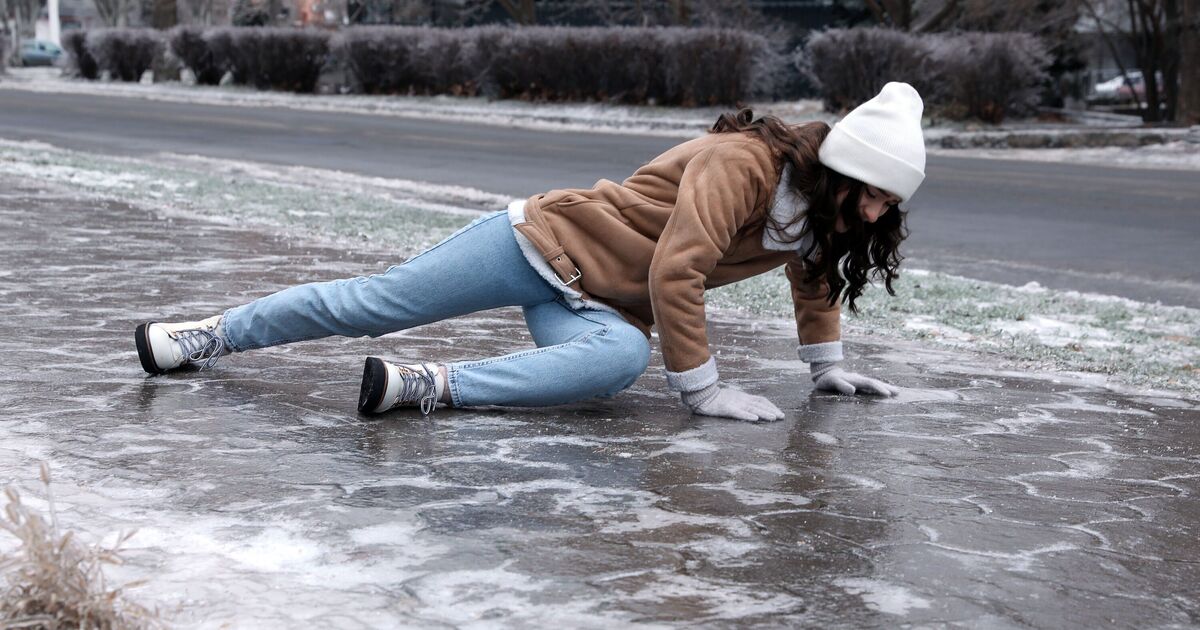
In some rural areas, snow and ice may cause communities to become isolated. As a precaution, it is advised that people remain indoors unless travel is absolutely necessary, given the increased risk of accidents like slipping on icy surfaces.
According to the NHS Information Centre, over 7,000 individuals in the UK are hospitalized each year due to falls on snow or ice. To address this, the NHS has provided guidelines on how to respond if you or someone else has a fall on ice.
On its official Instagram account, the NHS shared valuable advice on handling slips on ice this winter and offered guidance on when it is appropriate to call for medical assistance.
“If you or someone else has fallen, try to stay calm,” they wrote at the start of the post.
Instead of immedietly calling the emergency services for help, the first thing you should do is to assess and check for any pain or injuries. You must also see if the person who fell can get back up.
If you find that the person is injured or in pain, call 111 or get help from 111’s online service. They will be able to tell you the best course of action – and whether or not the person who fell need medical attention.
However, if the person who slipped injured their head, neck, back, or hip and cannot get up, you should immedietly call 999 to get an ambulance.
How to prevent slipping on ice
In 2024, the NHS went viral after telling people to ‘waddle like a penguin’ in order to prevent slipping and falling on ice.
While it may feel silly and unnatural, if it prevents you from serious injury in these icy conditions, then it’s got to be worth a try – right?
The advice includes bending your knees slightly to keep them loose, pointing your feet slightly outwards, extending your arms and then slowly waddling forwards with flat feet.
Laura Halcrow, Falls Prevention Lead at NHS Greater Glasgow and Clyde, said: “It might look funny, but waddling really works. A slip-on ice can cause painful injuries and even hospital stays, especially for older people.
“We’re asking everyone to share this advice with friends and family, particularly those who may be less steady on their feet. Take two minutes to find a waddle buddy, have a laugh, and stay safe together.”