Share this @internewscast.com
Last November, senior leaders from one of the globe’s most influential companies gathered at a snowy Swiss resort to strategize against an emerging challenge.
Contrary to what one might expect, the threat wasn’t from a competitor’s takeover attempt or a surge in the price of a crucial component—it was a novel pharmaceutical.
Reports suggested that Nestlé’s investors had been cautioning the food behemoth about consumers turning away from their sugar-rich, heavily processed snacks. This shift in preference became even more pronounced with the introduction of a groundbreaking weight-loss drug.
Aimee Donnellan, an author and columnist for Reuters, explores how the food industry is adapting to this new landscape in her book, “Off the Scales: The Inside Story of Ozempic and the Race to Cure Obesity.”
In a conversation with the Daily Mail, Donnellan shared, “An executive from one of the major food producers mentioned to me, ‘We can’t profit from selling you salmon or salads. That’s not what our business model supports.'”
According to Donnellan, these companies must innovate to make processed foods appealing to Ozempic users who are progressively steering clear of them.
For McDonald’s, the challenge comes at an inopportune time.

In a new book, Off the Scales: The Inside Story of Ozempic and the Race to Cure Obesity , author and Reuters columnist Aimee Donnellan describes how Big Food giants are now scrambling to adjust to the new reality

She told the Daily Mail: ‘Ozempic’s inventors, they think these drugs will eventually be like Viagra, something that people take everywhere for a very specific condition; in this case, obesity
The fast food giant, which has more than 13,000 stores across America, saw US sales slide 3.6 percent in the first three months of this year, a downturn from three years of more than ten percent sales growth from 2021 to 2023. In 2024, full year sales for McDonald’s were steady, growing 0.2 percent overall.
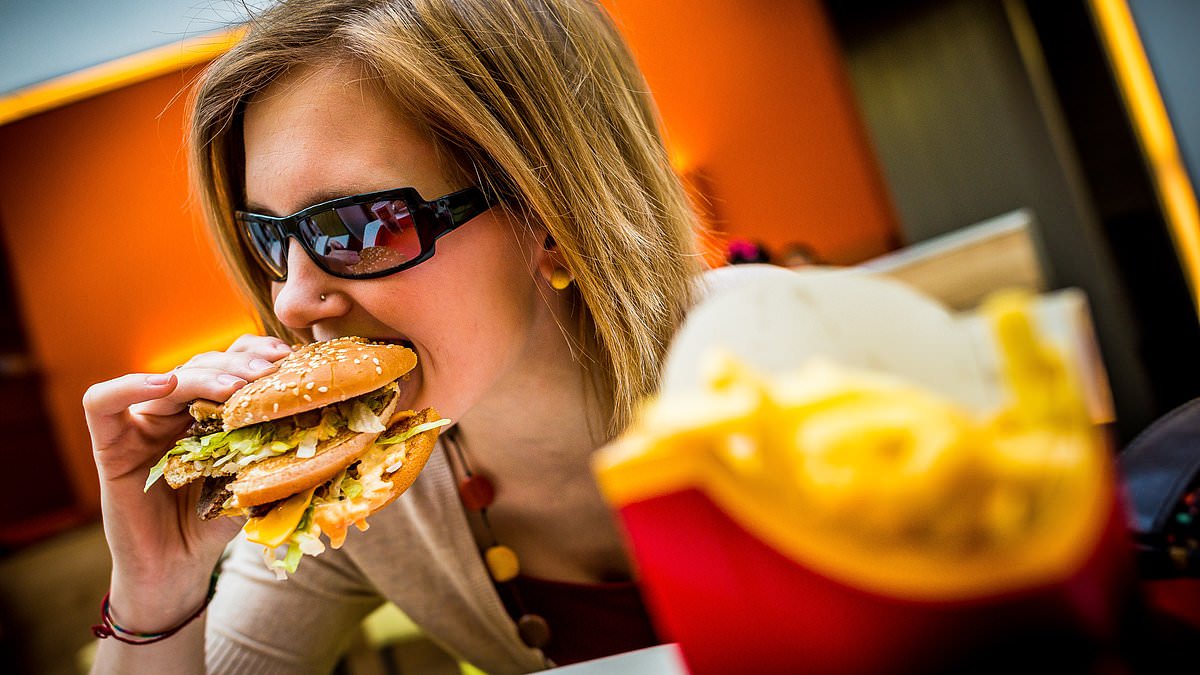
The relatively high cost of food has led people to eat out less, but fast food executives believe that Ozempic and similar weight loss drugs are also having an effect, Donnellan said. Their popularity has, consequently, caused some wealthier customers to turn away from the chain’s signature burgers and fries.
McDonald’s has already tried to sell salads to customers, but they were discontinued in 2020 due to lack of demand.
Now, Donnellan claimed, their strategy has seemingly become one of generating more sales from low-income people, who are less likely than more affluent people to have access to weight loss medications.
To some extent, the food industry as a whole, she claimed, ‘is doubling down on the people who won’t be able to afford these drugs.’
McDonald’s has extended its five-dollar meal promotion, which allows customers to get a McDouble or McChicken sandwich, small fries, four-piece chicken McNuggets and a small soft drink for $5. First launched in June 2024 for a temporary period that summer, McDonald’s executives extended it to the middle of 2025, more than a year longer than planned.
For Nestlé, executives at the company have seemingly turned to a different strategy, seeking to encourage Ozempic users to start buying their products again by creating foods tailored specifically for a new era of consumers.
With one in eight people in the US now having tried a GLP-1, and an estimated 1.5 million prescriptions for weight loss drugs written in the US every month, the market is now comparable to the size of that for vegans, about three million people, and vegetarians, about 13 million, according to Gallup.

The cost of living crisis has led people to eat out less, but fast food executives believe that Ozempic and similar weight loss drugs are also having an effect, Donnellan said

The popularity of GLP-1s has, consequently, caused some wealthier customers to turn away from the chain’s signature burgers and fries, she added
In September last year, the company launched its Vital Pursuit brand of ready meals, consisting of protein-enriched pizzas and pastas. The nutrient-enhanced food can help combat the muscle loss that comes from the low-calorie diets eaten by weight loss drug users.
In the marketing material, it said that the foods were ‘intended to be a companion for GLP-1 weight loss medication users and consumers focused on weight management.’
The brand also includes a line of fiber-rich foods, such as the Max Pro chicken and spinach bowl. GLP-1s can cause chronic constipation, which fiber-dense meals can relieve.
In December last year, Nestlé expanded this offering, releasing four-ounce shakes called Boost Pre-Meal Hunger Support, a line of protein-infused drinks designed to help maintain weight loss.
It has also entered the supplements space, writes Donnellan, launching GLP-1 Nutrition, which sells nutrients that weight loss drug users may be deficient in, such as $34 capsules to promote thicker hair and $50 peptides to help battle deficiencies in weight loss drug users. Some GLP-1 users have reported that the medications made their hair fall out.
According to Donnellan, Nestlé’s top executives showcased these products at the meeting in the Swiss Alps and gave investors a look at the now-launched shake line.
Donnellan claimed it was designed to convince investors that Nestle, considered the kingpin of food with $100 billion in sales every year, was on top of the trend. But she warned the ‘rapid scramble’ suggested there may be ‘an element of fear in the strategy.’
Amrita Bhasin, a food and beverage expert in California who runs food company Sotira, told the Daily Mail that weight loss drugs had prompted companies to pump more protein and fiber into their foods, potentially making them healthier.

The company launched its Vital Pursuit brand of ready meals, consisting of protein-enriched pizzas and pastas

Nestle’s Vital Pursuit pizza is adorned with a ‘GLP-1 friendly’ label
She said: ‘To sell their products now, companies are much more prominently featuring phrases such as ‘protein’ and ‘fiber’ on their packaging.
‘This is what pushed the industry into being healthier. And people are just buying less junk food, sugary drinks or cereals. Based on what I’m seeing in the figures right now, people are just buying less.’
She pointed to other brands that had tried to make new products targeted at health-conscious customers, including Starbucks, which launched a line of protein-infused coffees this year.
In other cases, she said cereal brands are now considering making their boxes smaller, which may appeal to people who want to buy the cereal but don’t want to waste a whole packet if most goes stale before they eat it.
But the Big Food industry is also working on developing a food that even Ozempic users, who are turning their noses up at traditional processed treats, will find irresistible.
Among those searching for this innovative ‘magic formula’ that could break through the Ozempic appetite defenses is Mattson, a food consultancy firm based in California.
Its recent ideas include a protein-infused NourishFit Brownie Bite, a protein-rich mozzarella stick and fried chicken that is wrapped in an edible leaf rather than the standard tortilla, reported the New York Times.
Its other ideas, still in development, include Bird-gers, a blend of frozen vegetables and seasoning that could be used to jazz up turkey meat, a two-ounce portion of yogurt in a pouch and satiety gums to help someone feel full.
Chris Bellamy, a food development expert at Yanaa, told the Daily Mail that some companies are also developing foods that have a different texture in the mouth, in the hope they may appeal to GLP-1 users.
He said: ‘What they’ve identified is that, while Ozempic reduced the desire for food and took the pleasure out of eating, there may be new ways to make people feel satisfied while eating food.
‘These include extra-crunchiness, and foods that are focused more on the mouth-feel experiences.’
Ozempic may have kickstared the war on Big Food, but they’re not going down without a fight.