
Share this @internewscast.com
The Centers for Disease Control and Prevention (CDC) has reported a notable surge in influenza cases across the United States during December, marking a significant escalation following the harshest flu season since 2018.
While it’s still uncertain whether the overall number of flu cases this season will rise or if the spike is simply due to many cases occurring in December, the CDC’s latest data reveals that over 3,100 individuals succumbed to the virus in the U.S. in the year ending August 2025.
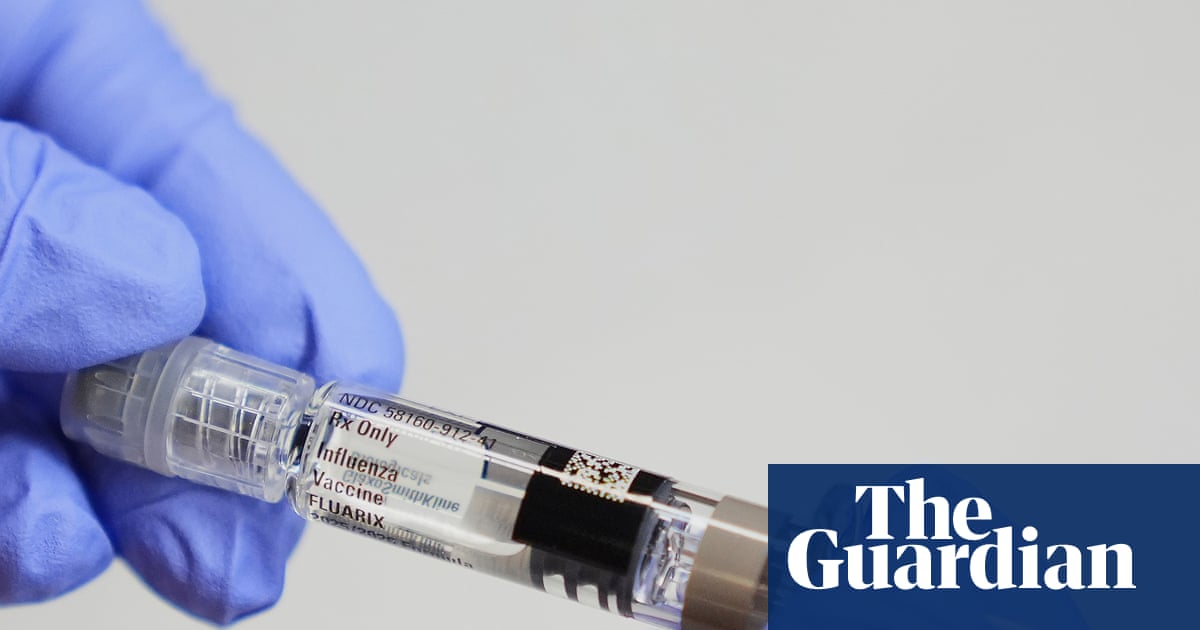
In light of these statistics, public health experts like Jennifer Nuzzo, an epidemiologist at Brown University, emphasize the importance of vaccination. “If you haven’t been vaccinated against the flu yet, it’s critical to do so, especially for young children and older adults,” Nuzzo advises.
This recent increase follows a 2024-2025 flu season that was the most severe since 2018, as noted by the CDC. Alarmingly, this period included 279 influenza-associated pediatric deaths, the highest number recorded by the agency during a seasonal influenza outbreak.
Adding to the complexity of the current situation, a new variant known as subclade K has appeared. The flu season also commenced earlier than typical in Europe, with December witnessing “high or very high influenza activity” across the region.
This year, a new variant, subclade K, has emerged and the flu season started earlier than usual in Europe, with “high or very high influenza activity”, in December in the region.
In the United States, there had been an estimated 7.5m influenza cases and 81,000 hospitalizations by 20 December. That marked a 25% increase in cases over the previous week, according to the CDC.
Thirty-two states have seen a “high or very high” number of flu illnesses.
“A lot of people are getting the flu at the same time, which is always tough. That is actually tougher than a situation in which people get it and it’s spread out over a longer period,” Nuzzo said. “It could be a worse season, in part because more people are going to need more care than hospitals can easily deliver.”
Epidemiologists are also concerned that fewer people could opt to get the flu vaccine because the CDC, led by the health secretary, Robert F Kennedy Jr, canceled its campaign encouraging people to get the shot. At the start of December, about 130m flu vaccines had been distributed in the US, 13m less than at the same point last year, according to the CDC.
“It’s completely incredulous to me that after experiencing the worst flu season for kids on record that we could head into this flu season – with signs that it could be bad, based on the viruses circulating out there – with anything but a robust plan to encourage people to get vaccinated,” Nuzzo said.
Some US residents could also be concerned about how much protection the new round of vaccine shots offer against the latest variant.
“We have some reason to think that the protection may be lower, but I want to be careful by saying” that, Nuzzo said. “It may protect you less, but it’s likely still going to give you some important protection.”
People also might not be aware that they can pick up an at-home test from a pharmacy, Nuzzo said.
“There are some people who might benefit from medication if they tested positive, but that medication needs to be given very soon after symptoms start,” Nuzzo said.