
Share this @internewscast.com
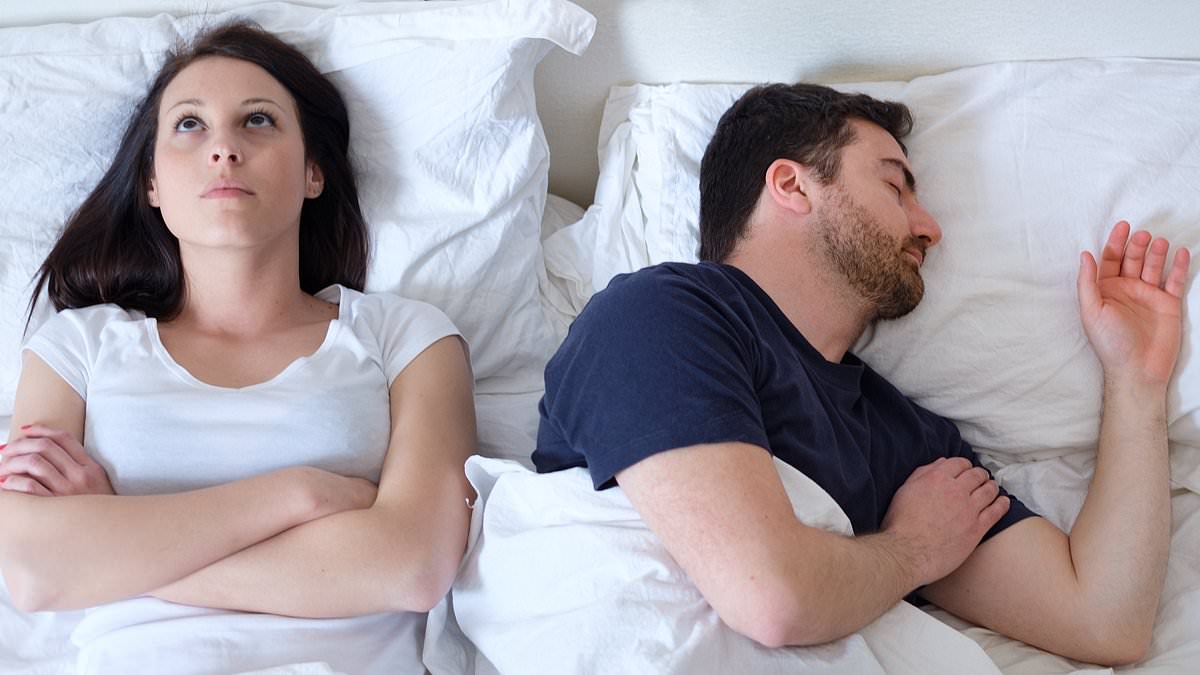
My wife tells me I thrash around and talk in my sleep, often sounding distressed. Is there a way to stop this?
Disrupted sleep patterns might stem from untreated anxiety, though in rare instances, they could indicate the onset of a degenerative brain disorder.
Known as parasomnias, behaviors such as sleep talking and excessive movement during sleep fall under this category. Parasomnias encompass unusual activities that occur while one is asleep, including sleepwalking, crying, and experiencing sleep paralysis—where individuals feel conscious but unable to move.
Parasomnias can signal underlying issues like obstructive sleep apnea, a condition where the throat closes during sleep, leading to oxygen deprivation. Anxiety is another potential cause. In certain cases, parasomnias may even be an early warning sign of Parkinson’s disease.

Disrupted sleep could be due to untreated anxiety but, in rare cases, it could also be the signs of a degenerative brain disease, writes Dr Ellie Cannon
Medications, including antidepressants and, paradoxically, sleeping pills, might also trigger these conditions. However, there often isn’t a definitive cause.
To alleviate symptoms, consider cutting down on alcohol and caffeine and maintaining a consistent bedtime. Sleeping in a dark, cool, and quiet room can be beneficial. It’s also advisable to avoid screens and meals immediately before going to bed.
There is anecdotal evidence that magnesium supplements, available at most pharmacies and largely risk free, help some patients with a parasomnia.
I have one testicle much larger than the other but it isn’t painful. What could be causing this?
A swollen testicle could be the sign of a tumour.
Testicular cancer typically causes a swelling or a lump in the organ. It can look as if one testicle is getting bigger, while the scrotum might feel heavy or firmer than normal.
The condition is more common in men under 50.
Caught early, it is treatable, so it is crucial that anyone who develops this symptom sees a GP as soon as possible, to have a scan taken and find out what is behind the swelling.
There are other, much less severe, causes. The most common is a hydrocele – where a fluid-filled sac next to the testicles swells up.
This usually occurs on one side of the scrotum, giving the impression one testicle is larger than the other. It occurs when the lubrication fluid around the testicle does not drain properly.
It can be due to an injury to the scrotum or an infection, such as a sexually transmitted disease. The swelling often resolves itself. If it persists, the NHS may offer surgery to drain the fluid.
In some cases, a swollen testicle may be due to an inguinal hernia. This is where a bulge forms through a weak spot in the abdominal muscles. A GP should be able to spot an inguinal hernia, either through a physical examination or an ultrasound scan.
This is almost always treated with surgery.
Easy ways to beef up your bones
Bone-thinning disease is something that worries many of my patients – but a large number are not aware of how you can boost bone strength.
Osteoporosis is linked to the deaths of thousands every year – predominantly women – due to serious bone-breaks. Many do not know they have the condition until a breaks occurs.
The Mail on Sunday is campaigning for the NHS to ensure all hospitals have osteoporosis screening clinics, called fracture liaison services. But patients, particularly women over 50, should know how to improve their bone health before osteoporosis occurs. Steps to take include regular weight-training, brisk walking, getting enough calcium and vitamin D, quitting smoking and reducing alcohol.
Have you found a way to improve your bone strength? Write and let me know.