
Share this @internewscast.com
My struggle with hair loss dates back 15 years to when I was just 38 years old.
In December 2011, I was at a hair salon in Reading when a young stylist pulled back my hair and gasped in shock. “Did you know you have a bald spot?” he exclaimed.
Indeed, there was a 5cm circular patch of bare pink skin just underneath my crown. It was hidden by the surrounding hair and positioned far enough back that I hadn’t noticed it myself.
This was my first encounter with alopecia areata, a condition I’ve experienced intermittently since then. The severity has varied, and in 2023, a bout of chemotherapy for breast cancer caused all my hair to fall out. I can confidently say that losing your hair is incredibly distressing.
Reflecting on it, my relationship with my hair has been akin to dealing with an unreliable partner. I care for it, yet it disappears and returns unpredictably.
Whenever I hear about others facing hair loss, like broadcaster Melanie Sykes, a wave of empathy washes over me. It’s an ordeal that transcends mere appearance, profoundly affecting one’s identity and self-perception.
Alopecia areata is said to affect around one in 500 people. ‘It’s an autoimmune condition where your immune system attacks hair follicles, causing areas of baldness,’ says Anabel Kingsley, consultant trichologist at the Philip Kingsley clinic in London.
‘It can be incredibly distressing. Hair is closely linked to our sense of self, so the psychological impact can be immense.’
So true. Unhelpfully and incorrectly, back in 2011, the stylist suggested my bald patch might be cancer, so I sat paralysed with horror for the next three hours until I could leave, with fabulous highlights, a heavy heart and an emergency GP appointment.


Alice’s devastating bald spot in 2011, compared with how her hair looks now
My GP in Marlow (where we lived at the time) was mighty unsympathetic (in my opinion). No, it wasn’t cancer. Yes, I might lose more, I might lose it all, and it might grow back. Or not.
This lack of clarity was extraordinarily upsetting and I left in tears. Back home, my husband, Justin, gaped with sympathetic horror when he saw my hair, which didn’t help, and my three children, then aged just three, five and six, gasped dramatically and delightedly along with him.
‘Causes aren’t entirely understood,’ says Kingsley. ‘For many it is triggered by a stressful event, like bereavement, divorce or job loss.’
This made sense; three months previously I’d had a skin cancer scare. And there may be a history of autoimmune conditions. Again, I ticked the box.
‘While the initial trigger can be “obvious”, subsequent episodes crop up more easily,’ says Kingsley. In fact, my subsequent attacks appeared entirely random. And every time it happened, I felt guilty at how much it affected me and struggled to put it in perspective.
Alopecia areata is generally painless and, of course, you don’t die from it, so why did it bother me so much?
Within weeks, that first bald patch almost doubled in size despite steroids from the GP and very expensive acupuncture that I’d read might help.
I lived in wide headbands, avoiding windy days like a vampire avoids sunlight. I was self-conscious, obsessed, and grieving, feeling like a version of myself I no longer recognised.
Join the debate
How do you think society should better support women struggling with hair loss and its emotional toll?

Alice having her hair done at Edward James salon, in Putney, London, in December 2025

Should my hair fall out again, I know there are solutions, says Alice
One of the problems with alopecia areata is that there’s no cure. ‘It often resolves on its own,’ says Kingsley. She adds that certain treatments may help speed up regrowth, such as minoxidil, steroid injections, topical vitamin D analogues and what are known as JAK inhibitors (oral medications for autoimmune conditions) for more severe cases.
Just after Christmas 2012, in despair, I went to see a dermatologist on Harley Street. Blood tests revealed I had very low ferritin, which is linked to hair loss and he put me on a cocktail of drugs; topical minoxidil, topical steroids and a course of oral steroids.
This last caused me to put on 5lb in a week and gave me what felt like permanent PMT for over a month. I swore that I’d rather go completely bald than take those again.
I had a bad six months. Dr Marianne LaFrance at Yale University worked with Pantene for two decades and a 2017 global study she conducted concluded a great hair day makes women feel strong, and was also associated with feeling ‘more productive, less stressed, more socially powerful, resilient, physically stronger, and more in control’. So there’s a lot of pressure on our follicles.
Three months after Christmas, to my absolute joy, I started to see regrowth. My hair grew back quickly, darker than my natural blonde, and curly.
When my husband died suddenly eight years later, in 2019, I assumed that I would once again develop alopecia. To my astonishment, my hair remained firmly in place. It was three years later, in the autumn of 2022, that I discovered another round patch.
I felt a familiar rush of panic, and reverted to my previous form; obsessively checking the size of the patch, trying to take pictures of my head from above and Googling the condition.
This time I did have the reassurance that the previous time it had resolved, so I was marginally less stressed. But I had no intention of leaving it to its own devices, so I made an appointment at the Philip Kingsley clinic, where I spent a morning having targeted treatments.

Alice’s hair in 2024, the year after she had to undergo chemotherapy for breast cancer
The patch didn’t grow any larger and a couple of months later, I could see regrowth. In the autumn of 2023, the big hair loss came, when I had chemotherapy for breast cancer. My first question on being told the treatment was: ‘What? So I’ll lose all my hair?’
Here, there are no absolutes, but I was unfortunate, and in spite of a number of life-threatening complications, hair loss was one of the worst parts of the whole experience.
It started to fall out after my second round of chemo, as I was in hospital having cardiac tests. Almost more distressing than the suggestion I’d had a heart attack were the handfuls of hair shedding around my hospital bed. A few weeks later I was left with a few tufts and a combover.
During cancer treatment, the one thing you want is to look and feel normal. Again, it goes way beyond vanity. I couldn’t bear to look at my unrecognisable reflection, with the weight gain, moon face (from steroids that you have to take during treatment – the irony) and red skin.
I ended up paying thousands for an expensive weave that was stitched painstakingly on to the remains of my own hair. It was ridiculously over-priced, but did mean I felt a semblance of normality at a truly horrible time.
Although the cold cap, which you can wear during chemotherapy to try to preserve hair, didn’t save my locks, it did contribute to the speed at which it grew back.
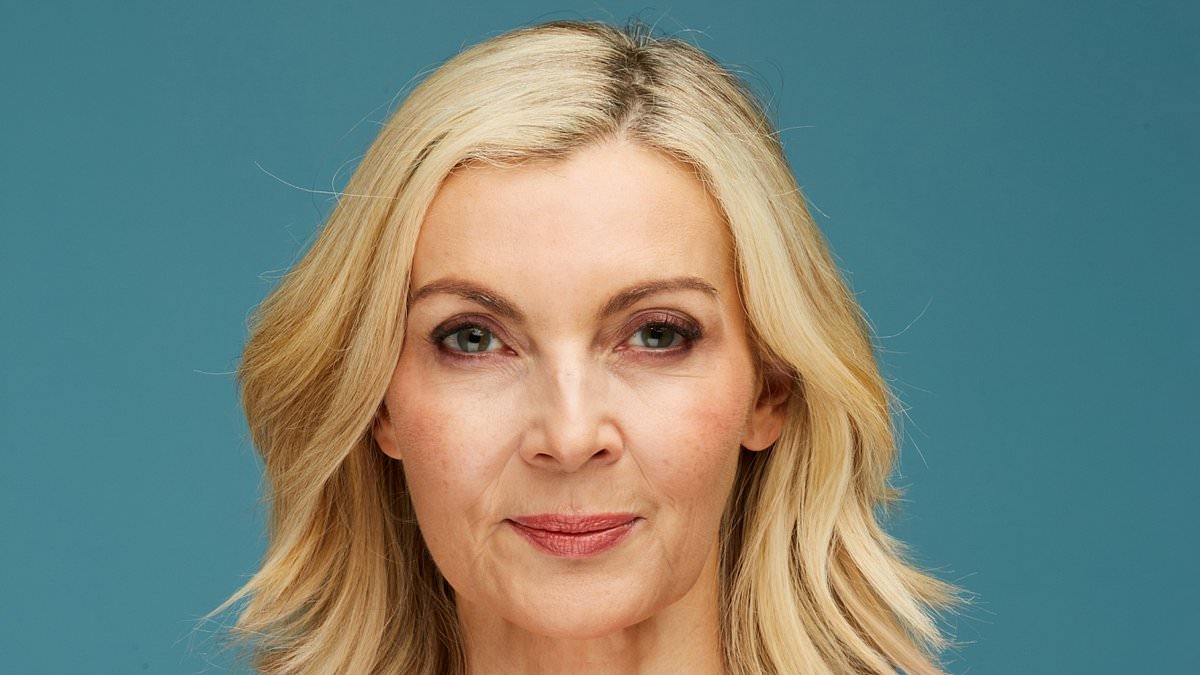
Less than a year later, my hair was almost bob length, and, now, just under two years after completing treatment, it’s longer and thicker than ever before.
To my dismay, early last year (2025), my dear stylist, Edward James, who has shepherded my hair from loathed post-chemo fluff to healthy and flowing, (with the help of a few Beauty Works tape extensions), noticed another patch – around 3cm in diameter, and this time at the back of my head.
I simply sighed with irritation and assumed it would be OK this time.
It’s interesting that at this stage of life, in my early 50s, I am just relieved that I have some hair! That patch grew back again, and I’ve not had any hair loss since.
Should it fall out again, I know there are solutions. And if nothing else works and I lose it all, I’ll get a good wig and wear it with pride.