
Share this @internewscast.com
At just 26, Rachel Freedman had the stamina of someone in their 50s.
The graduate student from New York City would have to catch her breath after walking up the subway stairs, going on a grocery run and even taking a shower. On hikes with friends, she felt ‘like a gorilla’ was sitting on her chest as she struggled to keep up.
Freedman assumed she just needed to lose weight and started exercising more to get her energy back.
But after being rushed to the hospital in May 2019 for an undisclosed issue, an electrocardiogram (EKG) showed an abnormal heart rhythm.
Though doctors insisted ‘it was probably not a big deal,’ Freedman’s mother urged her to get further testing.
Cardiologists at NYU Langone Health performed an echocardiogram, an ultrasound of the heart, and found obstructive hypertrophic cardiomyopathy (HCM), which causes the walls of the heart to slowly thicken and block blood flow.
The one-in-500 genetic condition often causes no symptoms, leaving thousands of patients unaware they have it until they suffer heart failure or cardiac arrest.
It’s also the leading cause of sudden cardiac deaths in young people, which have surged in the US.

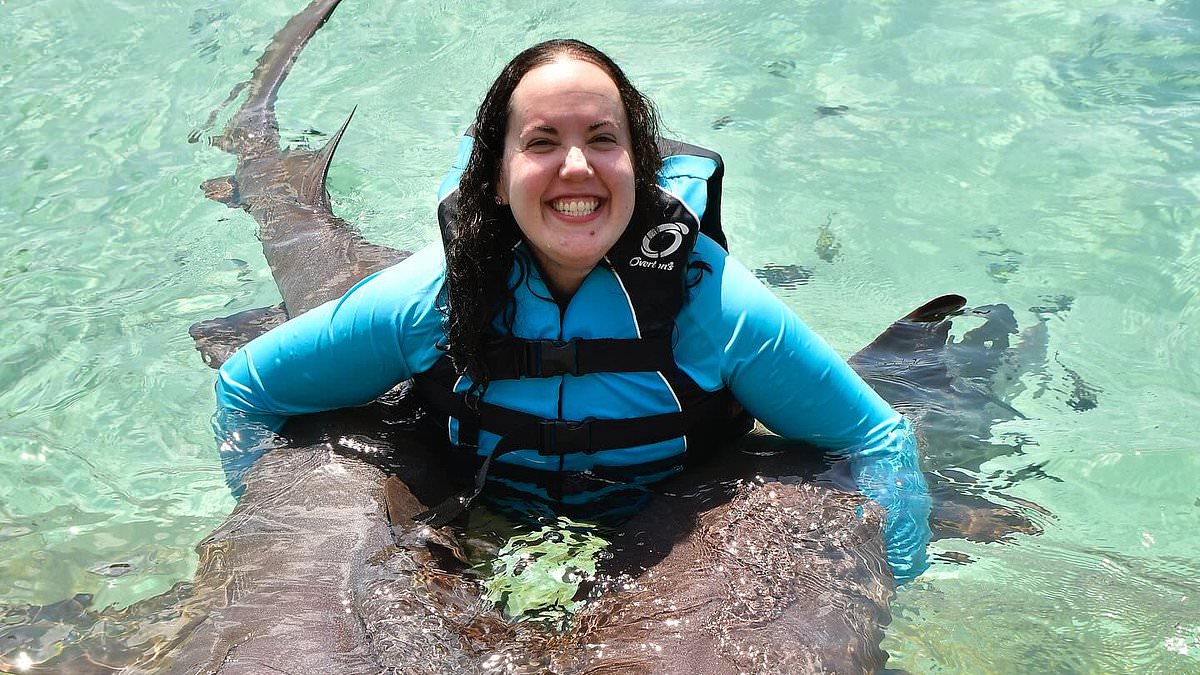
Rachel Freedman, pictured here, was just 26 when she was diagnosed with hypertrophic cardiomyopathy (HCM), which causes the walls of the heart to slowly thicken and block blood flow

Data shows that heart attacks and sudden cardiac deaths are on the rise in young Americans. Hypertrophic cardiomyopathy is the leading cause of sudden cardiac death in this age group
Freedman, now 32, said: ‘I had no idea what it was. How could I have this and not know?’
Heart attack deaths have spiked in the US, with recent Harvard research suggesting a 17 percent increase in the years following the Covid pandemic.
Those researchers found many of these attacks occurred at home, suggesting symptoms or precursors had been ‘missed’ until it was too late.
Doctors told Freedman her heart muscle was more than 30 millimeters thick, three times more than an average healthy person’s, suggesting her condition was advanced despite her being only 26.
This usually happens in the septum, the wall dividing the heart’s two bottom chambers.
This crowds the heart’s main pumping chamber, making it work harder to deliver blood throughout the body and triggering erratic heartbeats that can cause cardiac arrest.
Freedman soon began taking medications to decrease her heart rate, lower cholesterol and relax the heart, including beta blockers, blood thinners and statins.
Doctors also implanted a defibrillator into her chest three months later, which jolts the heart from an irregular rhythm back into a normal one.
Despite losing 60 pounds in a year to put less stress on her heart, her symptoms did not improve and she ‘was really limited.’
Dr Daniele Massera, Freedman’s cardiologist, said: ‘She could only walk six minutes on the treadmill. At 26, you’d expect much more. She was having fainting spells despite medical therapy.
‘Rachel wanted to avoid surgery at all costs, but if you faint and have a diagnosis of HCM, that’s a very high-risk situation.’

Freedman, pictured here, said she would have to catch her breath after walking up the subway stairs, going on a grocery run and even taking a shower because her heart muscle was three times thicker than normal

Freedman underwent a septal myectomy, a type of open-heart surgery meant to remove a portion of thickened heart tissue. She is now recently married and is pursuing a master’s degree. Freedman is pictured here with her husband
In August 2020, 15 months after her diagnosis, Freedman underwent a septal myectomy, a type of open-heart surgery meant to remove a portion of thickened heart tissue. It generally takes three to four hours.
After surgery, Freedman completed four months of cardiac rehabilitation, which typically involves light cardio and strength workouts and education on heart-healthy interventions like diet and quitting smoking.
Nearly five years later, Freedman can keep up with her friends on hikes and walk up the stairs without having to stop and catch her breath. Her chest pain is gone, and she can now walk the Brooklyn Bridge to get home instead of taking the subway.
She also got married in 2022 and is pursuing a master’s degree to become a high school guidance counselor.
Freedman said: ‘To my doctors, I’d say, “Not only did you save my life, you changed my life.”‘