
Share this @internewscast.com
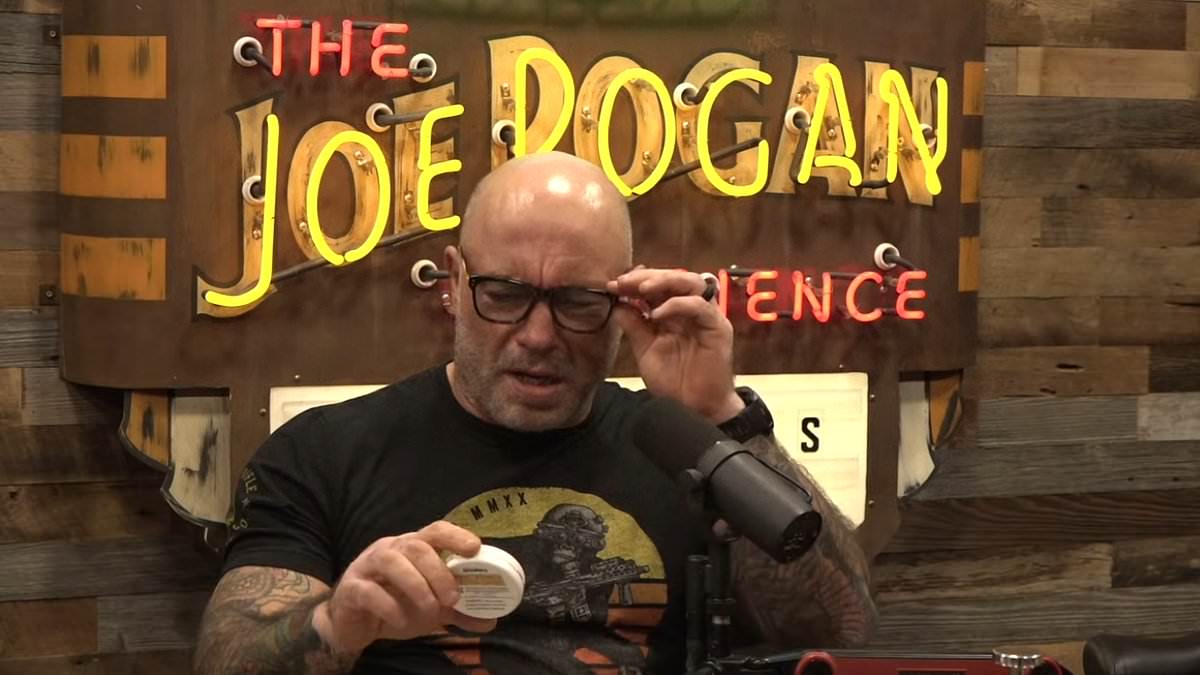
Joe Rogan has recently shared that he no longer needs glasses, crediting this improvement to red light therapy and vitamin supplements.
During an episode of The Joe Rogan Experience, he discussed with fellow podcaster Theo Von that while his vision isn’t as sharp as it was in his youth, it’s doing “okay.”
The 58-year-old mentioned that his eyesight is significantly better than it used to be, attributing this improvement to his recent use of red light therapy. This therapy involves using low-level LED red light wavelengths through devices like masks, lamps, beds, or saunas.
Typically, red light therapy is employed to address skin issues such as wrinkles, stretch marks, psoriasis, or inflammation. However, emerging studies suggest it may also alleviate pain, promote hair growth, and potentially destroy cancer cells.
Increasing evidence indicates that regular exposure to red light might enhance vision by aiding eye cells in generating the energy required to transform light into signals the brain perceives as sight.
There is also some evidence that red light therapy could improve color differentiation, though the research in this area is still limited.
Rogan said: ‘I started using red light, a red light bed. It makes a giant difference. Huge difference.
‘I don’t need reading glasses anymore. I needed reading glasses for a while, like looking at my phone. I don’t need [them] anymore.’

In the latest episode of his podcast, Joe Rogan claimed his vision has improved with red light therapy and lutein supplements
Rogan also said he started taking supplements containing lutein, an antioxidant found in dark, leafy green vegetables, eggs and yellow and orange produce like carrots.
Lutein is crucial for vision as it helps filter out harmful blue light from digital screens and neutralizes molecules called free radicals that damage cells and induce inflammation.
However, the human body can’t produce lutein on its own, and nearly eight in 10 Americans don’t get enough of it from diet, a recent survey found. The pills can be pricy, however, ranging from $6 to $50 per bottle depending on the brand and size.
Rogan claimed he takes Macular Support supplements from Pure Encapsulations, which cost $58 for 60 capsules and $103 for 120.
‘Those two things for sure have had a big impact,’ he said.
According to a survey by The Vision Council, three in four Americans need some form of vision correction such as glasses, contacts or Lasik surgery.
And about 34million, or 13 percent of the population, wear over-the-counter reading glasses to read up close.
It’s unclear if Rogan has a diagnosed vision condition like hyperopia, or farsightedness, where close objects and words appear blurry.
A recent study from University College London in the UK examined the effect of red light on the retina, the light-sensitive layer of tissue in the back of eye that detects light and converts it into electrical signals. Those signals travel to the brain via the optic nerve, translating into vision.
After age 40, the mitochondria in retina cells begins producing less adenosine triphosphate (ATP), which provides energy needed to convert light into electrical signals.

Red light therapy is still relatively new, but recent research suggests it may slow vision decline (stock image)

Lutein is found in red and orange produce, as well as dark leafy greens and nuts. However, many Americans don’t get enough (stock image)
The UCL researchers, however, found just three minutes of red light exposure each day helped increase ATP production, improving vision for up to one week. Participants also had 17 percent improved color contrast vision, or the ability to distinguish between similar colors.
While red light therapy is generally low-risk, it may increase the risk of eye damage if protective eyewear is not worn, as well as skin irritation. The technology is still too new to show clear, long-term risks.
Red light therapy sessions can also be expensive, ranging from $25 to $200. Devices used at home like masks can also cost up to $500.
Lutein, meanwhile, is well established as a vision-boosting supplement. Lutein is part of the carotenoid family of antioxidants, which are found in leafy greens like kale, spinach and basil, as well as eggs, red and yellow bell peppers and carrots.
The nutrient increases pigment density in the macula, the small, yellow spot in the center of the retina that makes objects sharper and more detailed. It also has been shown to reduce inflammation and protect eye tissue from sun damage.
It’s estimated that the average American consumes one to two milligrams of lutein each day, but the recent Age-Related Eye Disease Study 2 found that 10 milligrams was enough to reduce the progression of age-related macular degeneration.