
Share this @internewscast.com
The longevity sector in the United States has seen remarkable growth, reaching an impressive $600 billion this year.
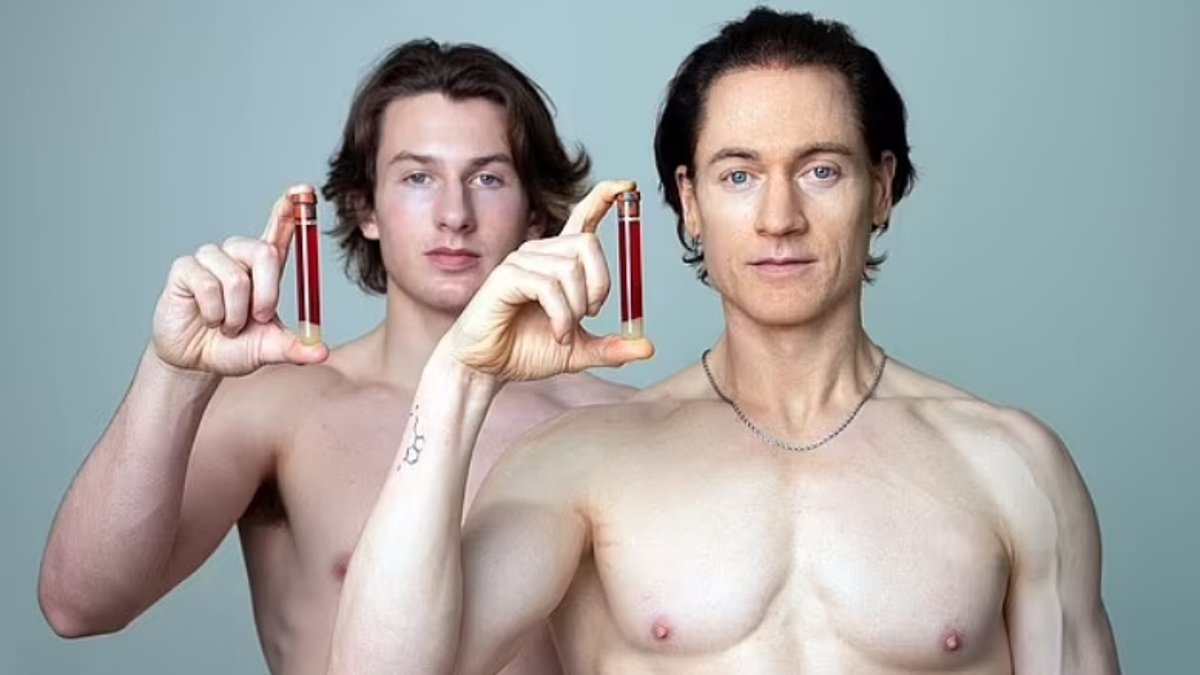
On average, Americans are now spending about $175 each year on supplements. High-profile figures, such as billionaire tech executive and Project Blueprint founder Bryan Johnson, have invested millions in costly programs they claim can effectively lower biological age.
In early December, Johnson made a bold claim, stating that he expects to “achieve immortality” within the next 15 years. At 48, Johnson asserts that biologically, he is more than a decade younger. He shared on social media platform X that with each passing year, his biological age remains unchanged.
However, a physician trained at Stanford University has issued a cautionary note, suggesting that many individuals who adopt extreme regimens, like those promoted by Johnson, may not be getting their money’s worth.
Dr. Shad Marvasti, an internal medicine physician based in Arizona, expressed to the Daily Mail that while supplements and advanced gadgets might provide minor health benefits, the most significant improvements come from simple, cost-free lifestyle changes.
“I believe that easily 80 to 90 percent of longevity is determined by lifestyle choices,” he explained. “No supplement can surpass the benefits of a good diet and adequate sleep. Technology is impressive but often distracts from what truly matters. Genuine longevity isn’t found in a bottle.”
Now, Marvasti has exclusively shared his top six hacks for a longer life, culled from a list of 72 tips, he says everyone should follow if they want to add years to their life – and each is free of charge.
Some biohackers urge people to prioritize eight hours of sleep and intense exercise, but Marvasti said that, while these are important, it is better to give patients smaller, achievable tips to help them work toward these goals.
Instead, he encourages people to focus on what he has dubbed the DRESS code to boost their longevity: diet, relationships, exercise, stress and sleep.

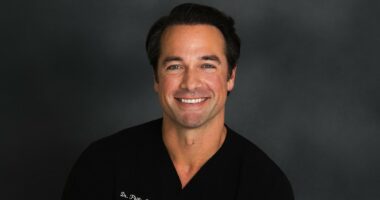
Dr Shad Marvasti (pictured), an internal medicine doctor in Arizona, has revealed his six top tips for living a longer life

Pictured: Marvasti on an exercise machine having his vitals tested
He urged people to spend more time with friends and family, saying this can help to reduce age-inducing inflammation and warning that this component can often get lost in the mission to beat last week’s sleep score.
His tips are based on decades of clinical experience and his work with more than 1,000 patients. He tries to stick to the points himself and even keeps a diary to track his own efforts.
The tips are revealed in his new book, Longevity Made Simple: Live Healthier for Longer with the DRESS Code, set to be released on January 20, 2026.
Marvasti’s six most important aspects for living a longer and healthier life, detailed by the doctor for the Daily Mail:
Spend less time with your fitness tracker and more time with your friends
The race to get your best-ever sleep score or beat your last exercise time, Marvasti warns, can often come at the cost of social time.
With the time needed to work, cook and do chores, there are often only a few precious hours left to meet up with friends.
According to Marvasti, socializing should be a top priority – it can help to give purpose in life and is shown to boost longevity and reduce inflammation.
Former US Surgeon General Dr Vivek Murphy warned in 2023 that being lonely was as bad for someone’s health as smoking 15 cigarettes a day.
To help curb that risk, Marvasti suggests actively making the effort to relate to others.
‘For the relationships, build your longevity circle,’ he told the Daily Mail. ‘Find your two to three people to connect with weekly that you have a meaningful, authentic relationship with.
‘This would be a close friendship and they would be someone with whom you can be vulnerable, with whom you have a sense of trust and connection.’

The above graph shows how the number of people living alone in the US has gradually shifted upward since the 1960s. Experts have called it the ‘biggest demographic change in a century’
Studies have shown that being lonely or feeling socially disconnected can raise the risk of depression, stroke, heart attack and high blood pressure.
Doctors say this is in part because loneliness triggers higher levels of stress in the body, which raises inflammation levels and can increase the risk of other conditions.
Loneliness is a growing issue in the US. An estimated 40 percent of adults now say they are lonely, or feel lonely or isolated, according to a poll released this month. That’s compared to 35 percent in 2018. The survey suggests that middle-aged and older adults, and men in particular, are at the highest risk.
Switch up your routine
Humans are creatures of habit and, over time, it is easy to become stuck in a specific routine.
But Marvasti warns against what seems like the inevitable, telling the Daily Mail that prolonged repetition deprives the brain of the novelty and problem-solving needed to trigger the growth of new brain cells.
‘There is also this cognitive challenge part to longevity that makes it important to try new activities,’ he told the Daily Mail.
‘Taking the same route to school, work or wherever it is – if you go a different route, or even do a new activity, that can require the brain to work and activate new areas of it. Novel experiences stimulate neuroplasticity.’
Psychologists say that regularly getting new experiences leads the brain to form more memories.
Previous research has also shown rigorous mental exercises that challenge the brain can help to reverse key markers of aging. The brain can also be challenged by attempts to navigate new areas.

Marvasti recommended taking a different route to stimulate brain activity and boost longevity (stock image)
Walk for 20 minutes a day
Marvasti encourages his patients to walk every day to boost their longevity.
‘Even just a 20-minute walk can lower the risk of all causes of death by 20 percent and add three years to your life,’ he said.
‘And if you do that 20 minutes in the morning, as an example, you have the added benefit of resetting your circadian rhythm in a way that sets you up for a good night of sleep through morning exposure to sunlight.’
Importantly, Marvasti recommends walking for 20 minutes in one go, which is equivalent to about 2,400 steps – not a total of 20 minutes throughout the day.
He said someone could also walk with their pet or a friend, which would allow them to socialize while they exercise.
A study published this year by researchers at Vanderbilt University found that walking briskly for just 15 minutes per day reduced the risk of death from all causes by 20 percent.

Marvasti said that walking for 20 minutes a day could boost longevity (stock image)
Go to bed and wake up at the same time every day
Experts and the CDC urge Americans to get seven to nine hours of sleep every night.
To help someone meet this threshold, and ‘get more sleep than they otherwise would,’ Marvasti recommends setting a consistent bed and wake time for all seven days in the week.
He said this would set the body’s circadian rhythm, or internal clock, to a particular pattern, helping someone to fall asleep quickly and make the most of their rest.
He also said it could boost the time someone spends in deep or rapid-eye movement (REM) sleep, which studies have associated with a lower risk of cognitive decline and dementia.
‘The most important thing with sleep is consistency,’ he told the Daily Mail.
Fill half your plate with vegetables
Taking stock of what you eat can have a big impact on your longevity.
Estimates suggest that ultra-processed foods now make up about 55 percent of the American diet. These foods are often packed with salt and sugar, making them ultra-palatable, but also potentially destructive for someone’s health.
To avoid feeding your body harmful ingredients, Marvasti recommends a more visual aid.
‘Filling half your plate with vegetables is almost like filling half your plate with health,’ Marvasti said, adding that these foods provide ‘nutrients that can lower inflammation, reduce the dementia risk and support brain health.’
Other experts agree.
While Marvasti said you can utilize any kind of vegetables, others have recommended a variety of colors to ensure you’re getting a range of nutrients.

Marvasti also recommended breathing exercises to boost longevity (stock image)
Scientists have often linked the positive health effects (lower inflammation, reduces risk of dementia and general brain health) to the antioxidants in fruits and vegetables, which can help to boost cells in the brain and repair damage.
Practice one-minute breathing exercises
About one in four US adults experiences high levels of stress. The stress can cause higher levels of inflammation in the body that can lead to a shorter life.
To combat this, Marvasti recommends breathing exercises.
‘For one minute, I breathe in slowly for four counts and then breathe out slowly for three counts,’ he told the Daily Mail. ‘I do it about three times a day.’