
Share this @internewscast.com
Sometimes life’s unexpected twists bring crucial revelations. For Christine McNeill, a chance discovery of a serious bone condition stemmed from an unforeseen incident involving her sister.
In 2021, Christine’s sister, Rosie, faced an alarming situation when she fractured her wrist during a tennis match. The injury, which seemed disproportionately severe, prompted her to undergo a DEXA scan at a private hospital. This particular scan assesses bone density and strength, providing critical insights into bone health.
The results were startling—Rosie was diagnosed with osteoporosis, a condition that primarily affects women post-menopause by significantly weakening bones and increasing the likelihood of potentially severe fractures. Her doctor informed her that this condition often has a genetic component.
With this new information, Christine, who was 50 at the time, pursued a proactive approach. She visited her GP in North London and requested the same diagnostic scan to assess her own bone health.
Reflecting on the decision, Christine is convinced it was one of the wisest moves she could have made. Detecting the condition early has allowed her to take preventative steps that might have otherwise been overlooked.
Today she believes that decision was one of the best she has ever made.
The results revealed that Christine, who works in tech, had osteopenia – the early stage of bone thinning that can precede osteoporosis. Her GP informed her, with the right care, the condition could be kept at bay but said it could not be reversed.
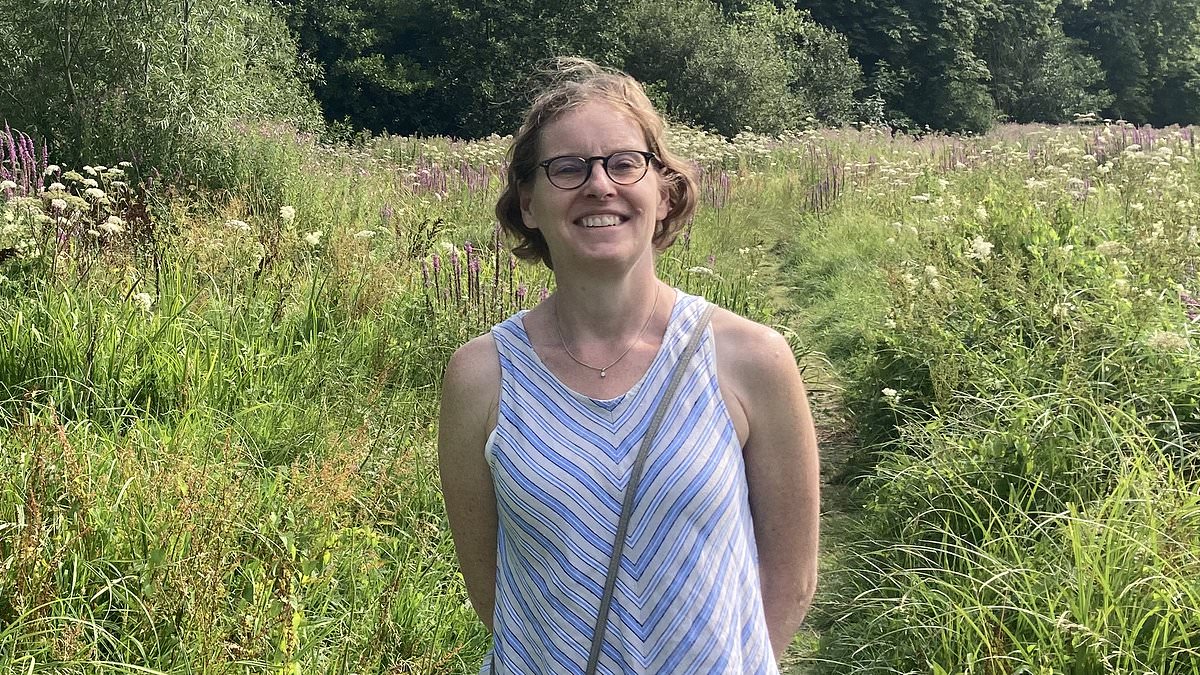
However, Christine, now 55, has indeed managed to reverse her osteopenia through a series of lifestyle changes, including a specific exercise routine and a cheap vitamin supplement.

Christine McNeill reversed her osteopenia through a series of lifestyle changes, including a specific exercise routine and a cheap vitamin supplement
Experts are now calling on the NHS to ensure that postmenopausal women are taught about the steps they can take to prevent osteoporosis.
So what are the lifestyle changes that can help reverse osteopenia? And how can you find out if you are at risk?
More than three million Britons have osteoporosis, where the bones become dangerously fragile. The condition affects around half of all postmenopausal women as decreasing levels of the hormone oestrogen reduce bone density. Around one in five men also develop it.
Research shows that heavy drinking and smoking increase the risk of osteoporosis.
Since 2024, The Mail on Sunday has campaigned for the NHS to ensure that all hospitals have osteoporosis screening clinics, called fracture liaison services (FLS). Once diagnosed, patients can take drugs that will stop the bones from degrading further and prevent serious breaks, such as hip fractures.
Last week, nearly 140 medics, in collaboration with the Royal Osteoporosis Society, wrote to Health Secretary Wes Streeting urging him to fund FLSs.
But other experts say these screening clinics, while vital, catch patients when irreversible bone damage has already occurred. ‘Once you’re turning up in a fracture liaison service with a fracture, it’s often too late,’ says Prof Karen Barker, a physiotherapy expert at the University of Oxford.
Yet, crucially, specialists say that patients who are diagnosed with osteopenia can reverse the bone damage. Around 40 per cent of over-50s are affected by it, although most are unaware they have the condition.
Research shows that vitamin D tablets, costing as little as 2p a day, can help strengthen the bones and prevent osteoporosis. This is because the nutrient, mainly gained from direct sunlight, is crucial for bone health.
But medics say that the most important step to reversing osteopenia is regular exercise. In particular, they say patients should focus on strength training, which typically involves lifting weights or using resistance bands.
Professor Barker says: ‘Aerobic exercise, like brisk walking, and balance training, such as standing on one foot, are important for reversing osteopenia, but strength training really is crucial. It puts extra stress on the bones, and, in response, the body produces more bone cells.’
Christine began doing an online-led programme, called Stronger You For Life, as well as taking a daily vitamin D supplement and hormone replacement therapy (HRT).
The exercise course is designed for people who have little previous experience of strength training.

Christine began taking three 30-minute to one hour online classes a week, with a personal trainer
She began taking three 30-minute to one hour online classes a week, with a personal trainer, explaining: ‘I did them in my living room.
‘We’d do exercises like deadlifts and chest presses, which are designed to build muscle and strengthen bones.’
And the workouts had the desired effect. In 2024, another DEXA scan showed that Christine’s bone density had increased.
She says: ‘My doctor was really surprised. When I was diagnosed, he said exercise might help halt the decline but he hadn’t expected it to improve my bones.’
Clare Kennedy, co-founder of Stronger You For Life, says: ‘A lot of women who come to us after an osteopenia diagnosis have no clue that strength training can reverse the problem. It’s more effective than any drug, so it’s frustrating that many doctors aren’t telling patients about the benefits of exercise.’
Another problem is that the majority of osteopenia patients are unaware they have the condition. They do not know they need to make lifestyle changes until it is too late.
Prof Barker says: ‘This is why everyone should be taking daily vitamin D. And it’s why, from 50 onwards, patients need to be doing strength training. You don’t have to go to a gym to do this. Just taking the stairs instead of the lift can help strengthen your bones. Osteoporosis isn’t inevitable. You can improve your bone health.’