
Share this @internewscast.com
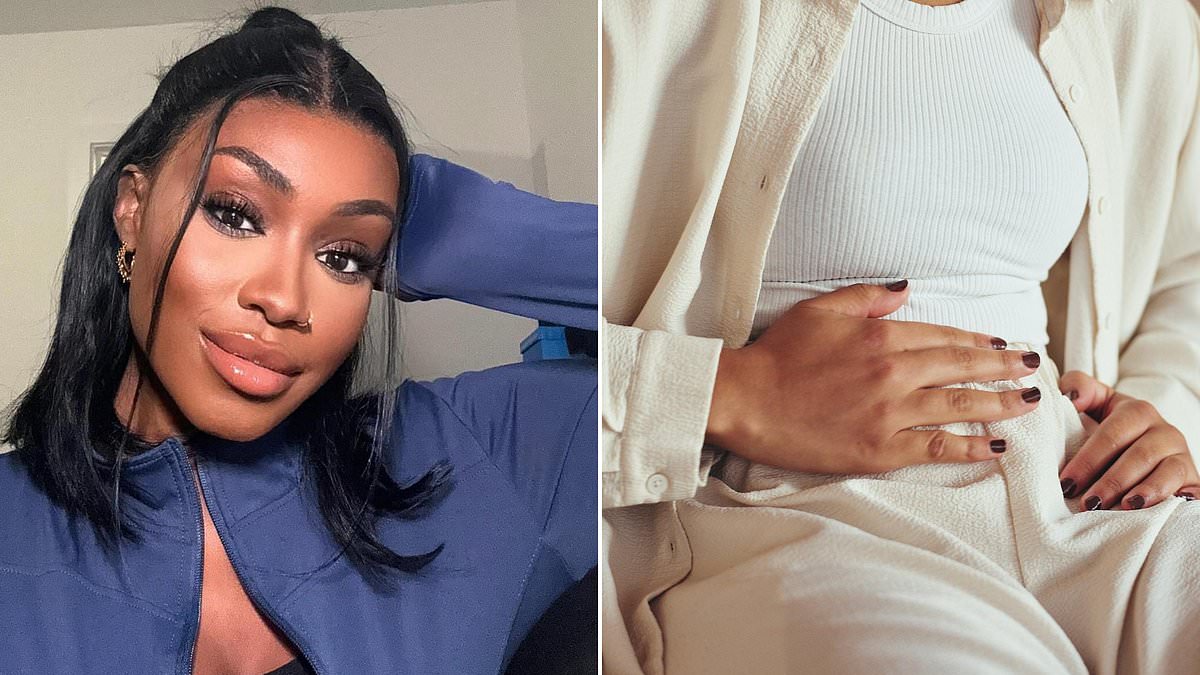
In her 20s, Sapphia Cousins envisioned a life filled with lively work gatherings, brunches with friends, and exciting weekend plans. However, reality painted a starkly different picture for the recruitment consultant.
By the age of 29, Sapphia found herself confined to her home, battling severe anxiety, depression, and relentless pain. Her days were far from the vibrant lifestyle she had imagined.
For over ten years, she suffered from intense stomach pain and bowel issues. These symptoms frequently drove her to seek emergency medical attention, often more than once every two weeks.
Describing her ordeal, Sapphia, now 32, shared, “The pain would hit me so suddenly and fiercely, like waves of contractions. It was a shooting, unbearable pain in my side that would lead me to vomit and sometimes even lose consciousness.”
Despite being rushed to the hospital, often unable to stand without fainting, Sapphia was repeatedly dismissed without receiving the help she desperately needed.
“Most times, I couldn’t get beyond the initial triage,” she recounted. “They would give me painkillers and send me home, leaving me without answers or relief.”
As her condition worsened, she also began to lose control of her bowels.
‘The bowel issues began when I was 26 and progressively got worse,’ she said. ‘At first, I would have an accident maybe once a month. But by 30, it was weekly.

Sapphia Cousins says she was repeatedly turned away from hospital despite the severity of her symptoms

Endometriosis affects one in ten women of reproductive age, with numbers rising
‘I was terrified to leave the house – when I did, I had to map out toilets.’
Despite these symptoms, Sapphia says she was continually dismissed by GPs and A&E doctors.
‘For years I was told it was anything from a stomach bug to irritable bowel syndrome,’ she said. ‘No one ever investigated. Meanwhile, my life was falling apart.’
Today, however, she says she feels like a different person. Two years ago, she was finally diagnosed with a debilitating gynaecological condition affecting around 1.5 million women in the UK – and received proper treatment.
‘Life is totally different now. I leave the house whenever I want – the pain is gone, I’m no longer rushing to the loo,’ she said. ‘I’m so thankful that someone finally listened.’ Sapphia has endometriosis – a disease in which tissue similar to the lining of the womb grows elsewhere in the body, causing chronic pain, heavy bleeding and, in many cases, infertility.
It affects one in ten women of reproductive age, with numbers rising. Symptoms vary but include pelvic pain, heavy periods, pain during sex and painful bowel movements. Yet the average time to diagnosis in Britain is a record nine years and four months – up from eight years in 2020.
Experts say one reason is the difficulty of diagnosis. Confirmation usually requires a laparoscopy – keyhole surgery in which a camera is inserted into the abdomen.
Waiting lists can stretch for years. And even then, the condition can be missed, particularly if lesions are small or hard to detect.
Campaigners also say women’s symptoms are too often dismissed – with painful periods and heavy bleeding still seen as ‘normal’.
A survey by Endometriosis UK found 39 per cent of patients had to see their GP ten times or more before the condition was even suspected. More than half – 55 per cent – had attended A&E, while 46 per cent were sent home without treatment. ‘For a long time, menstrual pain has been culturally normalised,’ says GP Dr Nikki Ramskill, who specialises in women’s health. ‘There’s been an unspoken narrative that it’s simply part of being a woman.’
Charities also warn endometriosis is not always covered in depth during medical training. To boost awareness, the Endometriosis Foundation has partnered with Holland & Barrett to expand access to its free Menstrual Health Helpline, doubling appointments and introducing in-person consultations with a specialist nurse. For Sapphia, the diagnosis came as a shock – she had never even heard of the condition.

‘For years I was told it was anything from a stomach bug to irritable bowel syndrome,’ Sapphia says. ‘No one ever investigated. Meanwhile, my life was falling apart’
Although she had suffered severe period pain since her early teens, she assumed it was normal.
When she raised concerns with her GP at 18, she says she was asked whether she had considered having a baby – which can ease symptoms.
‘I was always just told to take paracetamol and grin and bear it,’ she said. ‘Eventually, I thought it was all in my head.’
It wasn’t until she began trying to get pregnant more than a decade later that doctors finally investigated further. After months without success, she was referred to a fertility clinic, which quickly sent her to a gynaecologist.
It was this specialist who first suggested endometriosis – and arranged an NHS laparoscopy in December 2024. ‘When they finally operated, it was much worse than they had thought,’ she said. ‘The tissue was all over my bowel and bladder, fusing the organs.’
This explained years of bowel accidents and severe pain.
But the disease was so advanced she needed complex surgery – with an NHS wait of more than a year. ‘I had had enough,’ she said.
‘I saw a private doctor who was horrified by my notes. She booked me in for surgery immediately – and I’m so thankful, because I was days away from my bowel rupturing from the pressure. I could have died.’ The damage was so severe Sapphia required a temporary stoma bag to allow her colon to heal. It has since been reversed.
Today, she takes a daily tablet to suppress her periods and slow the return of the disease. ‘I’ve had a few flare-ups, but nothing like before,’ she said. ‘Life is different.’
She hopes other women will not have to endure the same ordeal. ‘I’ve been told that if it had been treated earlier, I wouldn’t be facing fertility issues now,’ she said. ‘The damage wouldn’t have been so bad. I don’t want other young people to go through what I did.’