
Nando’s is facing criticism for implementing a cap on Coca-Cola Classic servings, limiting customers to just one glass. This comes in response to new government regulations aimed at reducing sugar intake.
The Peri-Peri chicken chain, known for its ‘bottomless’ drink option, previously allowed diners to refill soft drinks freely during their meal.
But while zero-sugar options such as Sprite Zero and Fanta Zero remain unlimited, Coca-Cola Classic is now capped at one serving.
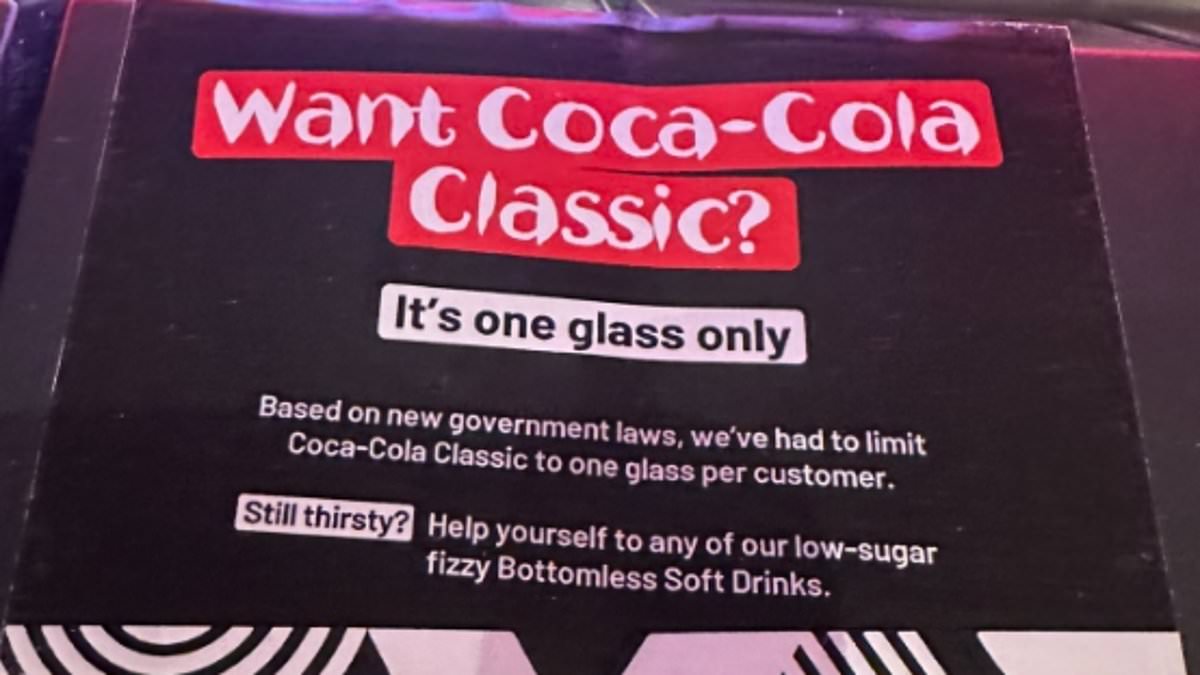
An updated sticker on Nando’s drinks machines now reads: ‘Want Coca-Cola Classic? It’s one glass only.
According to the rules, “Due to recent government policies, we’ve had to restrict Coca-Cola Classic to a single glass per patron. Still have a thirst? Opt for our low-sugar fizzy bottomless options instead.”
The move immediately triggered complaints on social media. One X user wrote: ‘Welcome to the nanny state.’ Another said: ‘This must be a joke.’
Other restaurants suspected of following suit include Five Guys, Toby Carvery, Harvester, Pizza Hut, and Burger King, all of which may be enforcing similar refill policies.
These adjustments are part of a broader anti-obesity strategy rolled out since 2021, initiated under the guidance of then-Health Secretary Matt Hancock.

The Peri-Peri chicken chain, known for its ‘bottomless’ drink option, previously allowed diners to refill soft drinks freely during their meal

But while zero-sugar options such as Sprite Zero and Fanta Zero remain unlimited, Coca-Cola Classic is now capped at one serving
Recently, new rules were implemented prohibiting ‘buy one, get one free’ deals on items with high fat, sugar, or salt content. Additionally, free refills of sugary beverages in dining venues are now restricted.
Officials state these initiatives are designed to combat the rising obesity rates in the UK. Statistics show that over 25% of adults and 20% of Year Six children in England are considered obese.
A Department of Health and Social Care spokesman said: ‘Obesity robs children of the best possible start in life, sets them up for a lifetime of health problems and costs the NHS billions.’
Some public health leaders have called the measures ‘long overdue’, arguing that supermarket and restaurant promotions normalise over-consumption.
Researchers say the approach can work.
A University of Leeds study found that when supermarkets were banned from placing unhealthy items at checkouts and aisle ends in 2022, sales of those products fell by around two million items a day.
The next phase of the crackdown will introduce a watershed on junk-food adverts before 9pm and a ban on online promotions of unhealthy food and drink early next year.
The Daily Mail has contacted Nando’s, Harvester, Toby Carvery, Five Guys, Pizza Hut and Burger King for comment.


People took to X over the weekend to share their thoughts on the change – and views on the matter were divided

This map, from the Government’s Office for Health Improvement and Disparities, published earlier this year highlights the areas most blighted by obesity
Obesity rates have soared in recent decades, with more than a quarter of adults and a fifth of Year six pupils now classed as obese, NHS figures show.
Weight-related illness also costs the economy £74billion a year, with people who are overweight at increased risk of heart disease, cancer and type 2 diabetes.
Similar rules are due in Wales next year, with Scotland expected to follow.
These latest restrictions build on earlier efforts to curb the nation’s sugar intake.
In 2018, the Soft Drinks Industry Levy—often referred to as the ‘sugar tax’—came into force, charging manufacturers for beverages containing more than 5g of sugar per 100ml.
The move prompted many brands, including Fanta and Lucozade, to reformulate their drinks with less sugar, while others, such as Coca-Cola, chose to absorb the levy rather than alter recipes.
Since then, ministers have focused on reducing the visibility and promotion of foods high in fat, salt and sugar.
They are now moving towards direct limits on portion size—starting with the new ban on free refills of sugary soft drinks in restaurants and cafés.
Supermarkets have previously been barred from placing confectionery at checkouts and aisle ends.
Hospitals have also taken steps to curb over-consumption, with NHS England introducing limits on supersized snacks and sugary drinks sold in hospital shops and vending machines as part of its healthy eating framework for staff and visitors.
The UK’s approach contrasts with that of the United States, where New York City once attempted to ban ‘supersized’ sodas under Mayor Michael Bloomberg.
The proposal—which would have capped sugary drinks sold in restaurants and cinemas at 16 ounces—was struck down by the courts in 2014 before it could take effect.
Public health campaigners say Britain’s gradual tightening of rules—combining taxes, placement restrictions, advertising curbs and now portion limits—is starting to show results, but warn that obesity levels remain among the highest in Europe.
Obesity itself increases the chances of person suffering serious health conditions that can damage the heart, such as high blood pressure.
Last year, a sobering report also suggested Britain’s spiralling obesity levels have fuelled a staggering 39 per cent rise in type 2 diabetes among people under 40, with 168,000 Brits now living with the illness.
Piling on the pounds has also been linked to at least 13 types of cancer and is the second biggest cause of the disease in the UK, according to Cancer Research UK.