
Share this @internewscast.com
Groundbreaking research suggests that a simple eye examination could detect Alzheimer’s disease long before any symptoms emerge.
Researchers at City St George’s, University of London, are developing an AI tool that might soon be utilized in optician and ophthalmologist clinics. This tool aims to identify early cognitive decline by examining alterations in the blood vessels at the back of the eye.
Currently undergoing trials with the health data from over half a million British individuals, this technology could enable early identification and treatment of dementia patients, potentially mitigating significant brain damage.
Meanwhile, innovative studies from China indicate that the retina’s thickness—this is the light-sensitive layer at the back of the eye—might also serve as an early indicator of the disease.
In the UK, nearly a million people struggle with dementia, a number expected to exceed 1.4 million by the year 2040. Dementia remains the leading cause of death in the country, resulting in 76,000 fatalities annually. In response, The Mail on Sunday and Daily Mail have partnered with Alzheimer’s Society for the Defeating Dementia campaign, aiming to enhance awareness, improve early diagnosis, and bolster research and care efforts.
The disease, which stems from either protein accumulation or reduced cerebral blood flow, remains without a cure.
In 2024, the first medicines capable of slowing Alzheimer’s, lecanemab and donanemab, were approved for use in the UK.
However, NHS chiefs refused to fund these costly infusion drugs because they appeared to only slow the disease’s progression for less than a year. But experts say these medicines – and others like them – could be even more effective if given to patients as soon as they develop dementia – before too much damage is done.

Dementia is the UK’s biggest killer, claiming 76,000 lives each year (Stock image)
For many Britons, however, the condition is not picked up for years after symptoms begin – with a recent study from University College London finding that it takes patients roughly 3.5 years to be diagnosed.
But now, researchers at City St George’s have found a new approach – looking for signs of cognitive decline during routine eye exams.
Every year, thousands of older adults have photos taken of the back of their eyes to check for changes to the retinal blood vessels – which research has shown are closely linked to ones in the brain and can show signs of neurodegeneration.
Experts believe the retina may predict Alzheimer’s risk because it is part of the central nervous system and connected directly to the brain via the optic nerve.

Everyone experiences dementia differently. Use this checklist to help you make a note of your symptoms before you talk to your GP.
This makes the eye vulnerable to degeneration in the brain caused by Alzheimer’s disease, including nerve cell loss, inflammation and vascular damage.
Retinal thinning can also be a sign of brain changes such as reduced brain volume and atrophy – a gradual wasting away.
A study published earlier this year by scientists at the Jackson Laboratory in the US found those who had suffered changes to these tiny blood vessels were more likely to have a common genetic mutation known to raise the risk of Alzheimer’s.
They also discovered blood vessels that are more twisted and looped than normal may limit how nutrients and oxygen is transported.

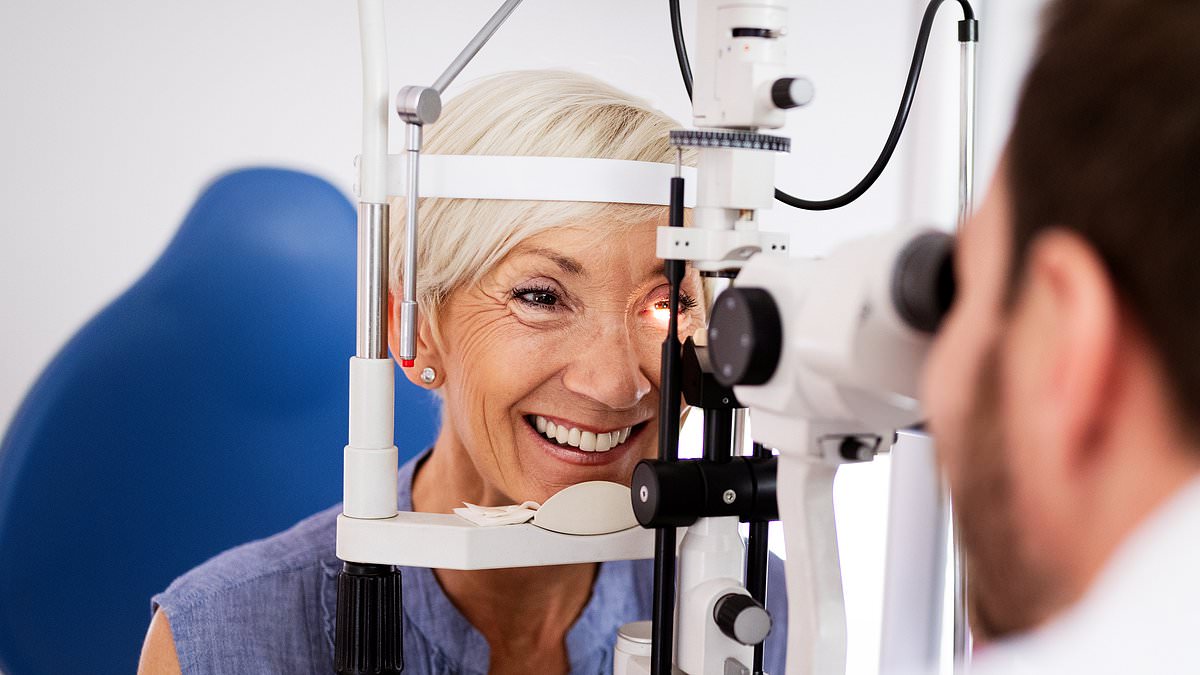
New research suggests that eye tests could spot signs of Alzheimer’s disease years before symptoms first appear (Stock image)

To analyse thousands of images, the City St George’s research team, funded by Alzheimer’s Society, used an AI tool that can measure the exact width and area of the vessels, and found that changes to retinal vessels are strongly linked with lower cognitive test scores.
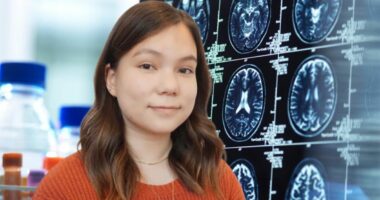
Misha Ramesh, lead researcher at City St George’s, said: ‘This should help to predict neurodegenerative disease before symptoms begin.’
Last year this newspaper reported that researchers were developing a nose swab test that could spot dementia decades before symptoms begin to show.
The University of Southampton scientists say that if successful, their swab test could provide results ‘in minutes’.