
Share this @internewscast.com

In a troubling revelation, the latest data has identified England’s most lethal hospitals, spotlighting the alarming number of patients who die after admission.
According to figures published by NHS England yesterday, several hospital trusts reported patient death rates exceeding expectations by over 30% between December 2024 and November of the previous year.
This annual report assesses each trust by comparing the anticipated number of patient deaths with the actual figures recorded during the specified period.
Notably, the data encompasses patients who passed away within the hospital as well as those who died within 30 days post-discharge.
While the NHS emphasizes that these statistics do not directly reflect the quality of care, it regards them as a “smoke alarm” warranting further scrutiny.
It’s worth noting that four of these trusts had previously been highlighted for higher-than-expected mortality rates in earlier reports.
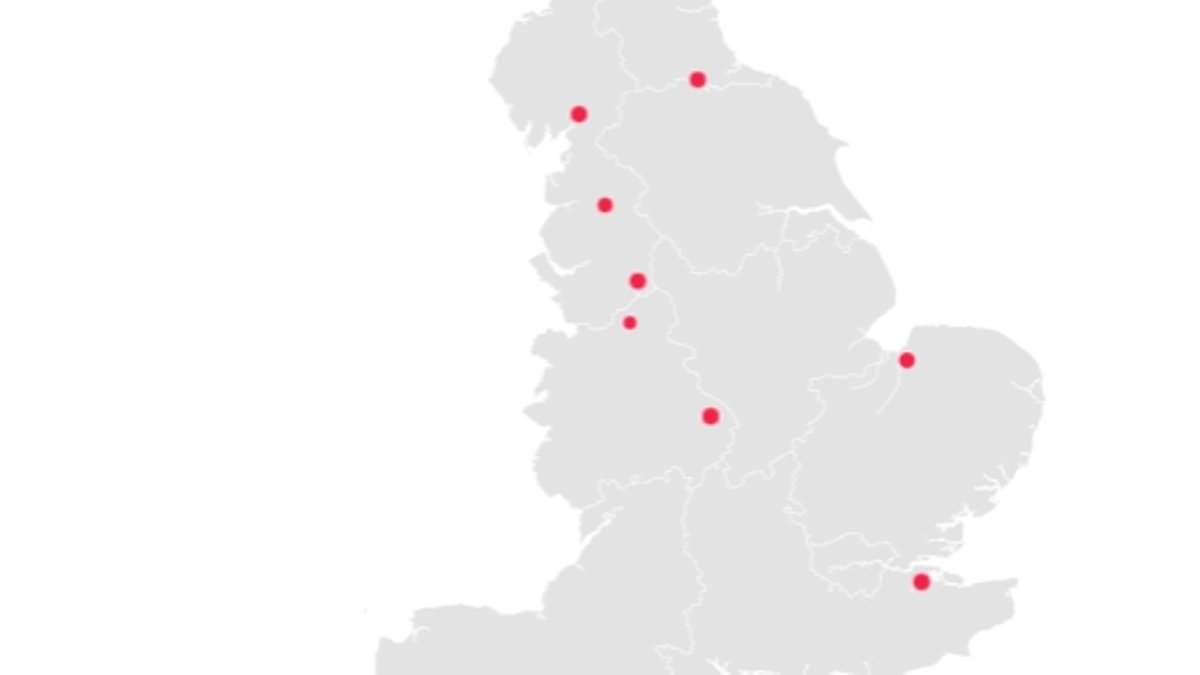
Blackpool Teaching Hospitals NHS Foundation Trust – which is comprised of Blackpool Victoria Hospital and Clifton Hospital – had recorded deaths 31.9 per cent above expected levels.
A total of 2,355 patients died either while in the trust’s care or within 30 days of discharge, compared with an expected figure of around 1,785.
The second highest death rate (30 per cent above expected levels) was recorded at Medway NHS Foundation Trust, where there were 1,820 deaths against a projected 1,400. All but five of these deaths occurred at Medway Maritime Hospital.
This was followed by University Hospitals of Morecambe Bay NHS Foundation Trust, where deaths were 28.8 per cent above expected levels, with 1,900 deaths compared with 1,475 expected.
In total, 118 trusts were analysed in the latest figures, with around 7.6 per cent overall classified as having higher–than–expected death rates.
Worryingly, four of the trusts flagged as ‘smoke alarms’ in the previous data – between December 2023 and November 2024 – also appear again in the latest figures.
They are County Durham and Darlington NHS Foundation Trust, East Cheshire NHS Trust, East Lancashire Hospitals NHS Trust, and Medway NHS Foundation Trust.
Death rate percentages increased from the last figures for all of these trusts except East Lancashire Hospitals NHS Trust, which saw a slight decrease.
Overall, of the 118 trusts included in the data there were 286,000 recorded deaths, a slight drop from the total of 288,000 recorded in the previous figures.
Damningly, the trusts with higher–than–expected deaths also rank among some of the worst performers in the NHS league table, which assesses 134 trusts against key performance targets.
As well as recording the highest percentage of deaths above expected levels, Blackpool Teaching Hospitals NHS Foundation Trust – ranked 106th in the table – has been engulfed in controversy in recent times.
It was revealed last year that six of its medical staff at Blackpool Victoria Hospital were sent to prison for serious criminal offences in the space of just two years. That tally did not include a consultant at the hospital who was found by a tribunal to have raped a woman at his home.
Elsewhere, at Medway NHS Foundation Trust – which sits 116th in the league table – a report last year revealed that frail A&E patients were ‘told to soil themselves’ because there was no–one to take them to the toilet at Medway Maritime Hospital.
Healthcare inspectors visiting the hospital found bed–bound patients faced waits of more than 50 hours with no access to wash facilities, leaving some ‘sitting in their own faeces’.
Meanwhile, University Hospitals of Morecambe Bay NHS Foundation Trust – 95th in the rankings – were criticised by a coroner last year for having a ‘culture of defensiveness’ after a baby died due to ‘gross failures’ in ‘basic medical care’.
James Adeley criticised the Trust after an inquest into Ida Lock, a baby who died a week after birth as a result of a serious brain injury caused by poor care at the hands of midwives.
Mr Adeley pointed out ‘multiple missed opportunities’ for ‘enhanced care’ during the baby’s birth including a ‘wholly ineffectual’ and ‘incompetent’ resuscitation.
The senior coroner for Lancashire and Blackburn with Darwen noted similarities with criticism pointed at the trust a decade ago after hearing evidence of a ‘deep seated and endemic culture of defensiveness in respect of maternity incidents’.
The Queen Elizabeth Hospital, King’s Lynn, NHS Foundation Trust is the lowest–ranked trust on the NHS league table among those with higher–than–expected death figures.
The trust is currently ranked 133rd, having moved up one place from the bottom of the table, where it sat last year.
Patients at its main hospital have previously complained about conditions, describing how ‘everything cracks’ and claiming the A&E department ‘stinks’, while others said lying beneath the ceilings felt like being under a ‘death trap’.
| Trust name | % of patient deaths higher than expected | Deaths | Expected deaths |
|---|---|---|---|
| Blackpool Teaching Hospitals NHS FT | 31.9% | 2,355 | 1,785 |
| Medway NHS FT | 30% | 1,820 | 1,400 |
| University Hospitals of Morecambe Bay NHS FT | 28.8% | 1,900 | 1,475 |
| East Cheshire NHS Trust | 28.6% | 900 | 700 |
| County Durham and Darlington NHS FT | 28% | 3,320 | 2,595 |
| The Queen Elizabeth Hospital, King’s Lynn, NHS FT | 27.5% | 1,600 | 1,255 |
| East Lancashire Hospitals NHS Trust | 24.1% | 2,550 | 2,055 |
| University Hospitals Coventry and Warwickshire NHS Trust | 21.1% | 2,900 | 2,395 |
| University Hospitals of North Midlands NHS Trust | 18.7% | 4,350 | 3,665 |
The NHS said in their release of the latest report: ‘[The figures are] not a measure of quality of care. A higher than expected number of deaths should not immediately be interpreted as indicating poor performance and instead should be viewed as a ‘smoke alarm’ which requires further investigation.’
‘Similarly, an “as expected” or ‘lower than expected’ SHMI should not immediately be interpreted as indicating satisfactory or good performance.’
They also stated that the figures for the trusts should be ‘interpreted with caution’ as there was a ‘high percentage of invalid diagnosis codes’.
While the majority of trusts recorded deaths in line with expectations, eight reported fewer patient deaths than expected by the NHS.
These were Chelsea and Westminster Hospital NHS Foundation Trust, Homerton Healthcare NHS Foundation Trust, Imperial College Healthcare NHS Trust, Kingston and Richmond NHS Foundation Trust, London North West University Healthcare NHS Trust, Royal Surrey NHS Foundation Trust, University College London Hospitals NHS Foundation Trust, and University Hospital Southampton NHS Foundation Trust.
Imperial College Healthcare NHS Trust recorded the largest reduction, with 2,155 deaths compared with 2,995 expected – a decrease of around 28.1 per cent.
This was followed by Kingston and Richmond NHS Foundation Trust, which recorded 1,155 deaths against an expected 1,565, representing a 26.2 per cent decrease.
In third place was Chelsea and Westminster Hospital NHS Foundation Trust, where deaths were 24.8 per cent below expected levels, with 1,695 deaths compared with 2,255 expected.
Approached for comment on the latest figures, a spokesperson for University Hospitals Coventry and Warwickshire NHS Trust said: ‘This relates to a data validation issue that we have been working to resolve and is not connected to any clinical concerns.
‘Our SHMI figure has been decreasing since its peak in May 2025 and we are now in an improved position.’
Rebecca Martin, Medical Director at The Queen Elizabeth Hospital in King’s Lynn, said: ‘A key factor affecting our SHMI results is the clinical coding backlog we were experiencing at the time.
‘This means the coding of many patient’s episodes of care were not fully included in the results. This has underestimated patient complexity and their diagnosis, which means this data cannot be confirmed as accurate. We have been using other data sets to monitor quality of care and levels of mortality during this period.
‘We acknowledge that this backlog should not have been allowed to grow. We have now rectified our backlog and have sufficient capacity in place to keep pace with our coding work. This will allow all episodes of care to be fully coded and included in SHMI going forward. As this data is retrospective it will take some time for all care to be reflected in our data.’
A spokesperson for East Lancashire Hospitals NHS Trust said: ‘Mortality indicators do not measure avoidable deaths or quality of care, we consider them alongside a wide range of other quality and safety information to identify where improvements may be needed.
‘The way we record deaths, whilst aligned with national guidance, makes our mortality appear higher than expected which currently mean the figures do not provide an accurate picture. We are currently working with NHS England to correct that.’
Dr Alison Davis, chief medical officer at Medway NHS Foundation Trust, said: ‘We are committed to understanding and addressing the underlying factors that contribute to a higher-than-expected mortality rate.
‘We are taking action by strengthening care for frail patients in and out of hospital, preventing patients deteriorating while in hospital, improving pneumonia and sepsis care, and acting on learning from deaths.’
Many of the trusts are believed to have reported coding concerns to NHS England.
All of the NHS trusts with higher–than–expected death rates have been approached for comment.
It comes just days after it was revealed that strikes by junior doctors have cost hospitals £3billion – as they walked out again this week for the 15th time since 2023.
Health chiefs burn through £50million a day when medics walk out, as they are forced to cancel procedures and pay consultants up to £313 an hour to cover for their junior colleagues, now known as resident doctors.
The £3billion total could pay for 1.5million operations, 15million outpatient appointments or 75,000 nurses for a year – or be used to build three new hospitals.
Tuesday’s walkout started at 7am and is due to last six days. The doctors are striking in pursuit of a 26 per cent pay rise – on top of the 28.9 per cent they have received over the past three years.
Health Secretary Wes Streeting on Monday accused the British Medical Association of ‘sapping the health service of vital funds’, urging the union to call off the strike and ‘put the needs of patients and the country first’.
He said the walkout had been timed to cause ‘maximum disruption, at a cost now running into the billions’.
His comments echo a warning by NHS England, which said strike action immediately after the Easter bank holiday weekend will put a ‘significant strain’ on services.