
Share this @internewscast.com
A new study has revealed a simple 14p algae supplement can treat people’s high blood pressure, lowering their risk of a stroke or heart attack.
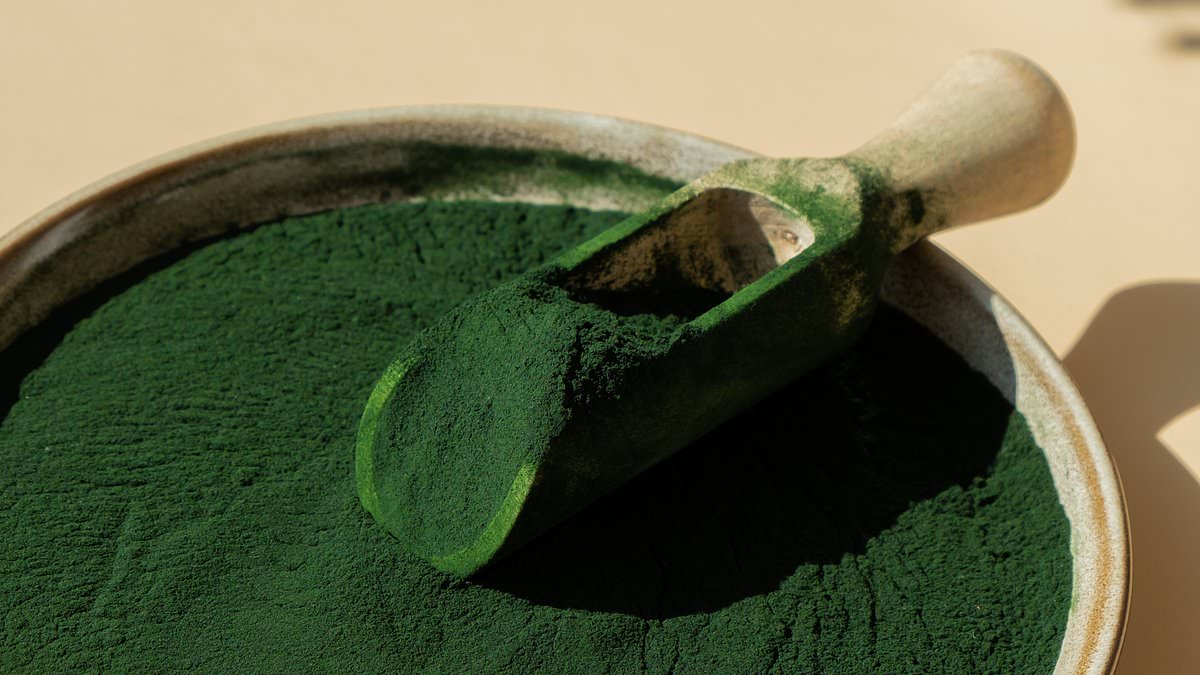
The researchers found edible algae like spirulina—which is available at Boots and Holland and Barrett in supplement and powder forms—lower blood pressure.
The dietary supplement spirulina is a blue-green algae known for its nutritional value—as it is high in protein, iron, B vitamins and antioxidants like phycocyanin.
This blue pigment comes from the presence of phycocyanin, a natural protein which supports immune, cardiovascular, liver, and brain health.
Meanwhile, the green comes from chlorophyll, which also has antioxidant, detoxifying, anti‑inflammatory, and gut‑supporting effects.
The findings of the study, which reviewed 29 trials with 1538 participants, were recently published in the Journal of Human Nutrition and Dietetics.
The majority of trials tended focused on edible algae as supplements, but others also looked at tablets, pills, drinks and powder.
Their analysis found consuming 3 grams a day of whole edible algae, especially Spirulina, for at least 12 weeks lowers blood pressure.

The simple edible algae, which is available as supplements, was found to lower blood pressure
‘This suggests that edible microalgae may serve as a natural approach to managing hypertension, complementing pharmacological treatments,’ said the authors.
The silent killer, high blood pressure, also called hypertension, can lead to life threatening complications like strokes or heart attacks.
This is because it damages blood vessels, narrowing and stiffening them—which can result in ruptures and blockages, triggering the life-threatening events.
Symptoms of high blood pressure include headaches, blurred vision, nose bleeds and chest pain.
However, the British Heart Foundation has warned that most people don’t realise they have high blood pressure, because the symptoms aren’t obvious.
So, that’s why they urge people to regularly get their blood pressure checked—which is offered for free at GPs, some workplaces and many pharmacies.
Classic ways to lower blood pressure include having a healthy according to the National Health Service (NHS) are, a healthy, balanced diet and regular exercise.
But others include reducing salt, quitting smoking, reducing alcohol intake, and drinking less coffee.

The Pret A Manger drink vibrant blue spirulina-laced iced latte recently released this summer
It comes as Pret A Manger recently released their vibrant blue spirulina-laced iced latte this summer.
However, the coffee shop chain hasn’t publicly disclosed how many grams of spirulina are in the drink.
The latest study also looked at other microalgae, but spirulina was the most effective, reducing SBP by 5.28mmHg and DBP by 3.56mmHG.
And you buy Cytoplan Organic Spirulina that offers 120 capsules for £16.80—it costs 14p per capsule.
Systolic blood pressure (SBP) is the pressure in arteries when the heart contracts and diastolic blood pressure (DPB) is the pressure when it rests between beats.
The researchers also compared microalgae like Spirulina with macroalgae like seaweeds like kelp.
They found microalgae drove the most benefits with macroalgae having now significant effect.
The scientists also found whole algae—the actual algae dried and eaten like spirulina powder—is more effective in lowering blood pressure.
This was compared to extracts or bioactive compounds pulled out of the algae such as phycocyanin, the blue pigment.
Their findings could suggest that your trendy Pret A Manger drink isn’t as effective at lowering blood pressure as the spirulina whole algae supplements.
While a 2022 study suggested a safe dose for adults is between three and 10 grams daily, people should not exceed the dose on the product label.
Spirulina shouldn’t be taken by those on blood thinners or have an autoimmune condition, bleeding disorder, allergies, or phenylketonuria (PKU)—a rare genetic disorder.
Meanwhile, there is limited data on spirulina and pregnancy, so it is difficult to say whether it is safe or unsafe while someone is expecting a baby.