Share this @internewscast.com
Professor Sir Chris Whitty has expressed concern that the BBC is inadvertently promoting disinformation and conspiracy theories by featuring questionable academics on its programs. The chief medical officer for England highlighted this issue during a recent gathering of health leaders.
At the Nuffield Trust Summit near Windsor, Sir Chris specifically called out the Radio 4 Today programme for providing a platform to experts with fringe views. He warned that such exposure can lend unwarranted credibility to these opinions, potentially undermining critical public health efforts, including vaccination campaigns.
Sir Chris emphasized the challenges of countering misinformation once it takes hold, noting that even highly intelligent individuals may struggle to change their beliefs after being exposed to misleading but persuasive arguments.
He pointed out that some misinformation is deliberately spread by state actors aiming to create chaos and destabilize government and institutional trust. Additionally, certain individuals and groups with commercial interests may also propagate false narratives.
However, Sir Chris added that some academics promote these ideas seemingly out of personal vanity, rather than any substantive rationale.
But he added: ‘Some of our colleagues push some of these ideas for reasons, as far as I can see, almost exclusively of vanity.
‘Previously, they are a liberal ranking, perfectly decent clinician or academic.
‘Once they start pushing these they’re invited onto the Today programme. They have a huge following on Twitter. Every time they tweet something out, they get 100,000 likes.

The chief medical officer for England told a gathering of health leaders that the BBC Radio 4 Today programme helps to legitimise ‘vain’ experts with fringe views
‘It’s very, very addictive. And I’m afraid some of the people you hear are simply vain. And again, I think we should be honest enough to call that out.’
Sir Chris said social media ‘amplifies’ disinformation, with chatbots making minority views looks like they have more widespread support.
He urged respected health experts to direct the public to trusted sources of information but added: ‘Now a word of warning – this is a health warning to my science colleagues.
‘What do you do when you see conspiracy theories running riot on the radio, in the social media, in the press?
‘And the warning is that the aim of some of the things that are said on social media by professional disinformation experts is to get you so angry that you respond.
‘They want you to respond, and they want you to respond for at least three reasons.
‘The first reason they want you to respond is you will then repeat their lies to a public who otherwise would not hear them.
‘So you’ll say, “It’s outrageous that someone is saying that vaccines turn your teeth green. There is no evidence that the vaccines turn your teeth green.”

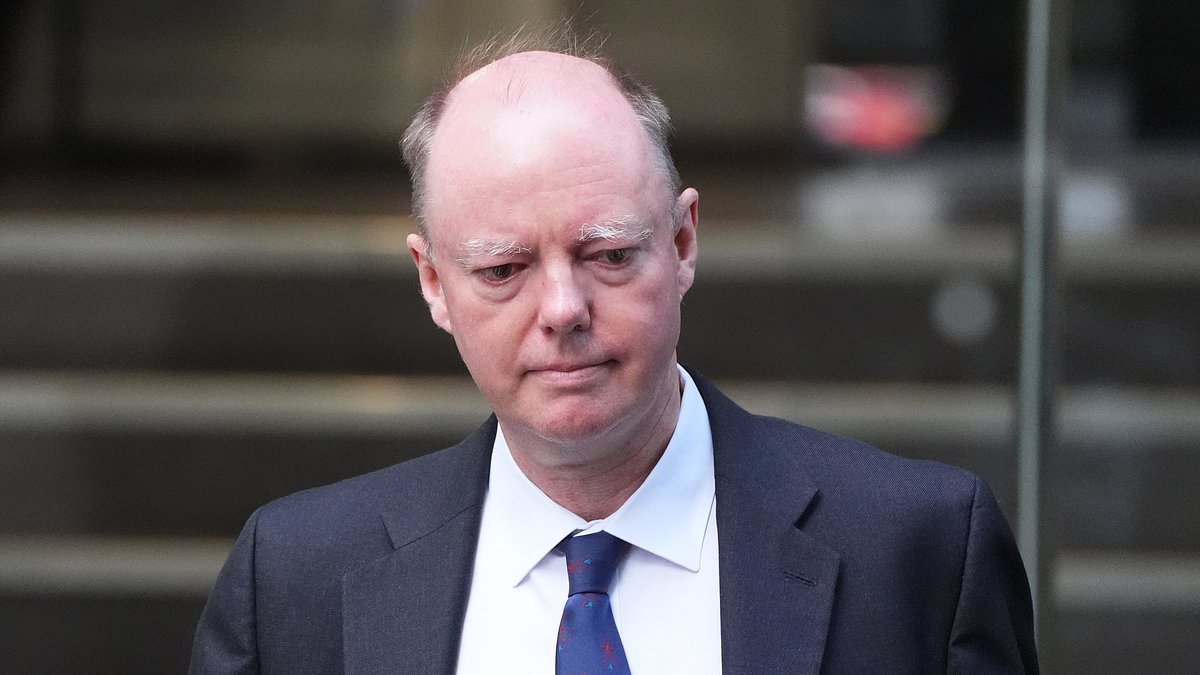
Professor Sir Chris Whitty, chief medical officer for England, warned of the dangers of disinformation on public health
‘You’ve immediately told a whole bunch of people who have never heard that big lie but that’s something they should worry about.
‘So the repetition is the first thing they want you to do.
‘The second thing is they want – remembering that the general public trust the medical profession – is they want a given parity of esteem.
‘So you being on one side of the argument and them being on the other basically raises their professional status relative to where they were previously.
‘So they want you to debate with them.
‘They also know that they have a huge advantage over you, which is, if you’re tethered to being honest evidence based, not exaggerating, it’s much harder to be interesting than if you basically can lie, lie and lie again – making stuff up, being completely inconsistent – you can basically tell a fantastic story.
‘So they will almost always be quite entertaining on the TV, radio or anything else.
‘And what they want you to do is kind of match them. You tend to exaggerate your own case and then they’ve got you because then they say you claimed X, and they knock you down.
‘And lots of scientists start off being very reasonable and get more and more irate as the interview goes by, and end up saying something which, in the light of hindsight, actually is not very evidence based, because they are so angry about it.
‘We need to be very careful of that.’