
Share this @internewscast.com
As snow and ice are set to blanket the UK, officials are advising the public to adopt a ‘face mask rule’ to safeguard against the biting cold. This guidance emerges amidst a slew of severe weather alerts, as Arctic air swoops over the nation, bringing with it a chill to last throughout the week.
The Met Office has forecasted a spell of snow, ice, and freezing temperatures extending into the weekend. From Thursday night, winds reaching speeds of 60mph and heavy rain are also expected to lash various parts of the country. These weather warnings align with the amber cold weather health alerts issued by the UK Health Security Agency (UKHSA) for all regions of England, effective until Friday.
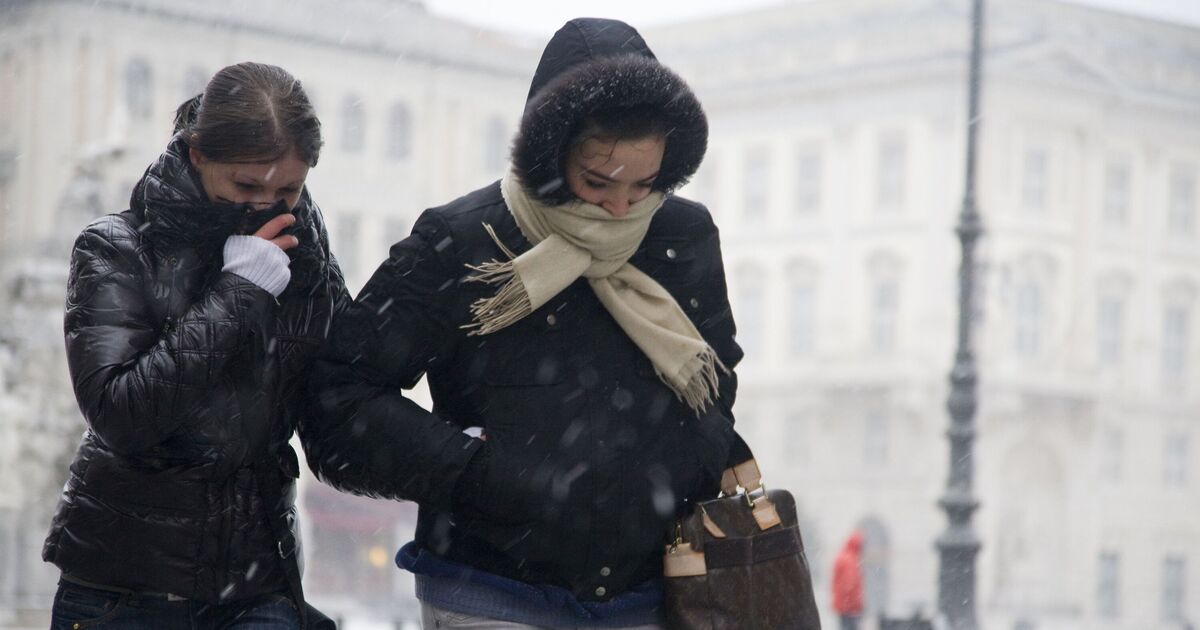
In preparation for the impending wintry conditions, households are encouraged to stock up on essentials like torches, batteries, and blankets, particularly in case of power outages. For those venturing outdoors, additional precautions are advised, including adhering to the ‘face mask rule’.
The NHS highlights that cold weather can exacerbate respiratory issues, suggesting the use of a scarf as a makeshift face mask to shield against the frigid air. This technique allows the air to warm slightly before inhalation, thereby minimizing the chances of asthma flare-ups. The healthcare service further advises inhaling through the nose rather than the mouth to increase the warmth of the air intake.
A representative from the NHS notes, “Cold weather is a common trigger for asthma symptoms. There are steps you can take to manage your symptoms in the cold. Always carry your reliever inhaler and continue using your preventer inhaler as prescribed. Should you find yourself needing your inhaler more frequently, it is crucial to consult your doctor to reassess your treatment plan.”
The NHS says: “Cold weather is a common trigger for asthma symptoms. There are things you can do to help control your symptoms in the cold. Carry your reliever inhaler with you at all times and keep taking your regular preventer inhaler as prescribed. If you need to use your inhaler more than usual, speak to your doctor about reviewing your treatment.
“Keep warm and dry – wear gloves, a scarf and a hat, and carry an umbrella. Wrap a scarf loosely over your nose and mouth – this will help warm up the air before you breathe it.
“Try breathing in through your nose instead of your mouth – your nose warms the air as you breathe.”
Met Office advice also recommends that people plan to leave their house at least five minutes earlier than normal to reduce the risk of accidents, slips and falls, in the icy weather, and if travelling on foot, stick to pavements along main roads as these are likely to be less slippery. If cycling, it is best to stick to main roads which are more likely to have been treated.
Experts also recommend staying active and moving around at least once every hour in cold weather as this will help to keep your body warm, and stave off winter illnesses like colds, flu and more serious health problems, to eat at least one hot meal per day, alongside regular hot drinks, and to wear multiple layers of thin clothing as this helps to insulate your body by trapping heat.
Weather conditions are expected to be changeable throughout the week, which means the potential for more weather warnings to be issued, so people are urged to check the forecast to keep up to date.
Met Office Deputy Chief Forecaster Chris Bulmer said: “A deepening area of low pressure – named Storm Goretti by Meteo France – will move across the south of the UK during Thursday and into Friday. It will clash with the very cold air here, meaning Thursday night could be what we call a ‘multi-hazard’ event, with snow on the northern flank of the low, wind and rain on the southern flank.
“We have therefore issued a yellow warning for snow for parts of England and Wales, where heavy snow could lead to disruption and difficult travelling conditions. Strong winds associated with Storm Goretti may also lead to some disruption, and so in addition a yellow wind warning has been issued for southwest England.
“The exact track of the low is still uncertain, and these warnings are likely to be amended – and potentially escalated – over the coming days. It is therefore vital people keep up-to-date with the latest forecasts.”