
Share this @internewscast.com
Two drugs already approved by the FDA for cancer treatment may hold the key to reversing Alzheimer’s disease in patients, experts say.
Researchers from the University of California, San Francisco (UCSF) believe that letrozole, a hormone-based breast cancer drug, and irinotecan, a lung and colon cancer chemotherapy medication, can help reverse brain damage caused by the incurable neurodegenerative disease.
In an animal study, the UCSF experts found that both cancer drugs were seen to reduce brain degeneration in mice and even improve their memory and learning capacity.
Alzheimer’s disease is one of the most common forms of dementia and mostly affects adults over the age of 65. About 7million Americans live with the condition and over 100,00 die from it annually.
The disease is believed to be caused by the development of toxic amyloid proteins and/or tau proteins in the brain, which can accumulate and damage cells responsible for memory and learning.
Amyloid protein molecules stick together in brain cells, forming clumps called plaques. While tau proteins twist together in fiber-like strands called tangles.
As of now, there is no cure for AD and only two FDA-approved therapies, Lecanemab (Leqembi) and Donanemab (Kisunla), are available for early-stage Alzheimer’s treatment.
However, because letrozole and irinotecan are already approved for other treatments, this could fast-track clinical trials and the potential approval for use in Alzheimer’s patients.

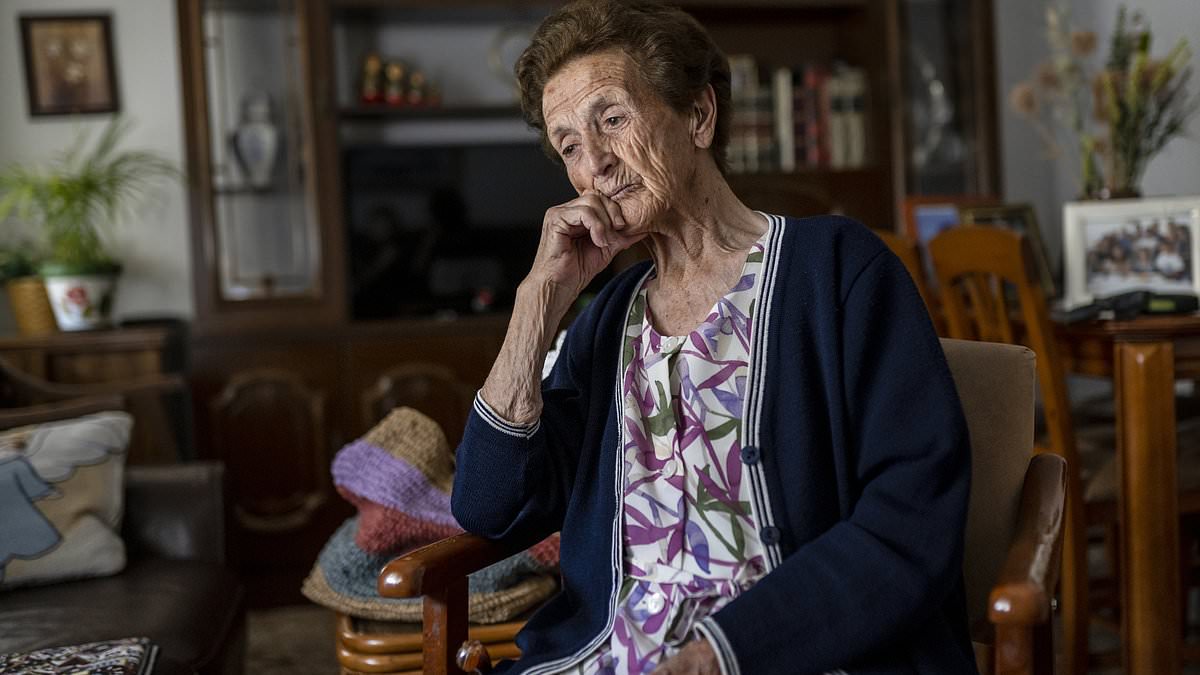
Researchers from the University of California, San Francisco (UCSF) believe that letrozole and irinotecan can help reverse AD-caused brain damage (stock image)
Co-senior author Dr Marina Sirota, a professor at UCSF, said: ‘Alzheimer’s disease comes with complex changes to the brain, which has made it tough to study and treat, but our computational tools opened up the possibility of tackling the complexity directly.
‘We’re excited that our computational approach led us to a potential combination therapy for Alzheimer’s based on existing FDA-approved medications.’
In Alzheimer’s patients, the plaques and tangles block the ability of the brain’s neurons to send electrical and chemical signals back and forth.
Over time, this disruption causes permanent damage in the brain that leads to Alzheimer’s and dementia, causing patients to lose their ability to speak, care for themselves and interact with the world around them.
While the exact mechanisms of how the Alzheimer’s-related brain damage begins are still under investigation, age and genetics are known risk factors.
Experts also believe that lifestyle factors such as physical inactivity and high blood pressure can also contribute to the development of Alzheimer’s.
Despite rigorous preclinical and clinical research efforts, drug development for dementia faces significant challenges, with a 98 percent failure rate in recent decades.
Neuroscientist Dr Yadong Huang, co-author of the study and professor of neurology at UCSF, explained: ‘Alzheimer’s is likely the result of numerous alterations in many genes and proteins that, together, disrupt brain health.
‘This makes it very challenging for drug development – which traditionally produces one drug for a single gene or protein that drives disease.’
However, researchers at USCF believe their discovery can help reduce or reverse the cognitive decline caused by the disease.

Doctors usually prescribe letrozole, also known by the brand name Femar, to treat some types of breast cancer

Irinotecan, which is sold under the brand name Camptosar and Onivyde, is prescribed by doctors to treat colorectal, pancreatic, ovarian and lung cancers
First, the team looked at how dementia changes gene expression in the brain.
Then, they scoured a database of over 1,300 drugs, including antipsychotics, antibiotics, antifungals and chemotherapy drugs, to determine which, if any, reversed any of these gene expressions.
If any existing drugs were found to be effective, they could be repurposed to treat the condition in a reduced the time in which the drugs could be made available to patients.
During their search, the team specifically looked for drugs that would target the harmful Alzheimer’s-related changes in neurons and in brain cells called glia that are responsible for supporting the nervous system.
Then, the researchers analyzed millions of digital medical records to find patients who took some of these drugs as part of cancer treatments and their likelihood of developing Alzheimer’s.
Ultimately, they identified letrozole and irinotecan as the best candidates to lower Alzheimer’s risk in patients.
By combining the two drugs together, the researchers were able to target different types of brain cells affected by the disease.
They noted that letorozole could counter the effect of Alzheimer’s on neurons and irinotecan helped reverse damage on the glia cells.
When the combination was tested on mice, the scientists saw that the harmful clumps of tau protein were reduced significantly and the mice showed improvements in learning and memory tasks.
The study authors noted that it remains unclear how the cancer drugs are able to reverse the damage.

Despite rigorous preclinical and clinical research efforts, drug development for dementia faces significant challenges, with a 98 percent failure rate in recent decades (stock image)
However, they theorized that it was possible that letrozole blocks the production of estrogen, a hormone that controls the working of a large number of genes, which therefore reduces the genetic risk factor of developing Alzheimer’s.
Additionally, they believe that irinotecan may also block inflammation in the brain by preventing the rapid reproduction and DNA damage of glial cells.
As this was an animal study, the researchers hope to test the drugs in a clinical trial with human Alzheimer’s patients.
Dr Huang said of the results: ‘Developing a new drug can take hundreds of millions, or even billions, of dollars, on average take more than 10 years. For this repurposed drug, usually it just takes two or three years, and then you can go to the clinical trial and the cost is much, much lower.
‘We still haven’t generated or produced any very effective drugs that can really slow dramatically the cognitive decline.’
However, despite their groundbreaking discovery, risks continue as letrozole is known to cause hot flashes in patients while irinotecan can cause severe diarrhea. Both drugs can also lead to nausea and vomiting.
Dr Sirota said: ‘These drugs have huge side effects, so you need to always balance and figure out whether those types of side effects would be amenable to somebody with Alzheimer’s. It’s not that it’s a slam dunk.’
The research was published in the journal Cell.