
Share this @internewscast.com
In a recent discussion, health expert Sunna van Kampen shared insights from his latest book, which outlines simple dietary changes that significantly improved his family’s well-being. Today, he shifts his focus to everyday bathroom products like toothpaste, shampoo, and deodorant, suggesting that they might actually be causing more harm than we realize.
While standing at the kitchen sink, I made an observation that stopped me in my tracks. The back of a dishwashing liquid bottle bore the warning: ‘harmful to aquatic life’. This prompted me to reflect deeply on what I was using around the house.
For several years, I had been diligently monitoring what I consumed—making healthier swaps, scrutinizing ingredient labels, and reducing my intake of highly processed foods. These efforts helped me conquer the frequent colds I once suffered from every few months.
However, despite revamping my dietary habits, I had never really considered the impact of the products I applied to my body.
Like millions of others, my daily routine included brushing my teeth, showering with soap, applying deodorant, and sometimes moisturizing with body lotion. We often assume personal hygiene routines are solely about cleanliness and skin protection.
Yet, the cautionary note on the dishwashing liquid made me question the long-term effects of my daily personal care regimen on my health. If such products pose a threat to marine life, what consequences might they have for my own body?
So I did what I always do when something doesn’t quite sit right: I went digging.
At first, it was just turning bottles around in the bathroom and actually reading ingredient lists properly for the first time. Then it turned into weeks of research – reading the science, speaking to experts, and working out which ingredients genuinely matter… and which ones we’ve all simply accepted without thinking.

While Sunna van Kampen had overhauled what he was putting in his body, he’d never really questioned what he was putting on it
That rabbit hole became part of my new book, The Good, The Bad And The Healthy – the shortcuts and swaps I wish I’d known years ago, and the same ones I used to overhaul my family’s bathroom cabinet.
Here’s the key thing I learned: this isn’t about one ‘bad’ product. It’s about how many you use, and how often. Layered on, day after day, for decades.
There’s plenty of science looking at individual chemicals in isolation. But personal care is different – it’s about the chemical load created by products we use daily, over large areas of skin, often without a second thought.
Today, I’m going to do what I did with food: strip it back and show you where to start – the swaps that remove the biggest question marks first, without turning your routine upside down. And with a new year ahead, it’s the perfect moment to reset.
THE TOOTHPASTE MOMENT
Toothpaste was one of the first things that surprised me.
Not because it was ‘toxic’, but because of how many unnecessary extras had crept in simply to improve taste, texture and foam.
Why does this matter? Because the mouth is highly absorbent. Brushing your teeth for two minutes gives whatever’s in that tube a direct route into the body.
Take PEG-6 (polyethylene glycol), a petroleum-derived compound. Or Red 30 (CI 73360), a synthetic dye made from petroleum or coal tar. Then there’s titanium dioxide – banned in the EU as a food additive in 2022 due to toxicity concerns yet still permitted in toothpaste.
Add artificial sweeteners, and you might start to see why I switched to a simpler, naturally derived toothpaste.
Of course, we can’t talk about toothpaste without mentioning fluoride. Fluoride is a naturally occurring mineral that strengthens enamel and reduces tooth decay. Dentists recommend fluoride toothpaste, and at the levels found in toothpaste and tap water it’s deemed safe.
But the science continues to evolve. Studies looking at areas with high fluoride exposure have raised concerns about potential effects on IQ in children. A 2012 meta-analysis of 27 studies found an average difference of nearly seven IQ points between children in high- and low-fluoride areas, and the US National Toxicology Program has concluded there is an association at elevated exposure levels.
That doesn’t mean brushing your teeth is dangerous. Fluoride toothpaste has helped cut rates of childhood tooth decay significantly.
But if you’re uneasy – particularly with children or grandchildren who swallow toothpaste – there is a well-studied alternative: toothpastes containing hydroxyapatite, the same mineral found in tooth enamel itself, which research suggests can help remineralise enamel without adding fluoride.
THE LATHER TRAP
Shampoo and body wash were the next penny-drop moments.
Most shampoos rely on surfactants such as sodium lauryl sulphate, or its milder cousin sodium laureth sulphate, to create that satisfying lather.
We’ve been trained to think more foam means cleaner. But that squeaky feeling isn’t a sign of health – it’s a sign that the skin and scalp’s natural oils have been aggressively removed.

University of Birmingham scientists say ‘leave-on’ products such as lipsticks, moisturiser and even hand-sanitisers have been far less studied than rinse-off ones like soap and toothpaste
For some people that’s not an issue. But for many, it creates a cycle they don’t realise they’re stuck in. Strip the scalp too hard, it dries out or becomes irritated, and the body responds by producing more oil to compensate – which makes you feel like you need to wash again.
That’s when people start talking about oily scalps, dry skin, constant itchiness or persistent dandruff, without ever questioning the products they’re using every day.
What surprised me most is how common this is. Many popular shampoos and body washes are designed to cut through grease extremely efficiently – often using the same degreasing ingredients as washing-up liquid.
That’s great for a frying pan. Less great for your skin twice a day. Over time, repeated over-cleansing can weaken the skin’s natural barrier, making low-level irritation feel ‘normal’.
Switching to gentler washes means less foam and less instant gratification – but for many people it’s one of the quickest ways to let skin and scalp settle.
But it’s not just about lather. Some hair products have also been found to contain PFAS – often called ‘forever chemicals’ – added to improve spread, slip or smoothness.
Scientists are still working out what long-term exposure means, but research shows some PFAS can pass through human skin and, once in the body, don’t break down easily. They’re related to a number of health conditions from obesity to cancer.
Another ingredient worth flagging here is phthalates. These are often used in fragranced products to make scents last longer or help ingredients blend evenly.
You won’t usually see ‘phthalate’ on the label – they’re often hidden under ‘fragrance’ or ‘parfum’. They’ve been flagged in studies as potential endocrine disruptors, meaning they may interfere with hormones.
Evidence of harm at cosmetic exposure levels is inconclusive. But if a product is used daily, over large areas of skin, it’s reasonable to question whether those extras are really necessary.
DEODORANT: THE ALUMINIUM ISSUE
Next up was deodorant – something I’d applied every morning for years without a second thought. Antiperspirants don’t just mask smell. They work by using aluminium salts, such as aluminium chlorohydrate, to form temporary plugs in sweat ducts, which is what keeps you dry.
There’s no proven link between aluminium deodorants and diseases like breast cancer, and regulators consider them safe at the levels used.
But we do know excessive aluminium exposure isn’t ideal. Your kidneys usually clear it effectively – yet if you’re applying aluminium under your arms every day for decades, it’s fair to ask whether that’s exposure you actually need.
For me, it came down to a simple point: if an aluminium-free deodorant works well enough, why keep the question mark?
You may need to reapply more often on hot days – but that feels like a small trade-off.
THE ‘STACK’ MATTERS
Most of us assume these products just sit harmlessly on the surface of the skin. But the skin isn’t a sealed wall – it’s a living organ. Otherwise nicotine patches, hormone creams and medicated gels wouldn’t work.
Some substances pass through the skin. Others are inhaled as sprays. Some end up in the mouth. And because we use multiple products every single day, exposure builds quietly.
Regulators assess ingredients individually and deem them safe at the levels used. What they can’t fully assess is cumulative exposure as they stack up – what happens when small amounts are layered, day after day, across a lifetime. That’s the grey area where science is still catching up.
Body care doesn’t give instant feedback, which is why it’s easy to ignore. But what I felt after overhauling my and my family’s body care routine was reassurance – that I was reducing unnecessary exposure to toxins, rather than piling it on without thinking.
One product won’t change your health. It’s the chemical load over decades that concerns scientists.
And when the swaps are simple, affordable and already sitting on the supermarket shelves, being more selective just makes sense.
FOREVER CHEMICALS
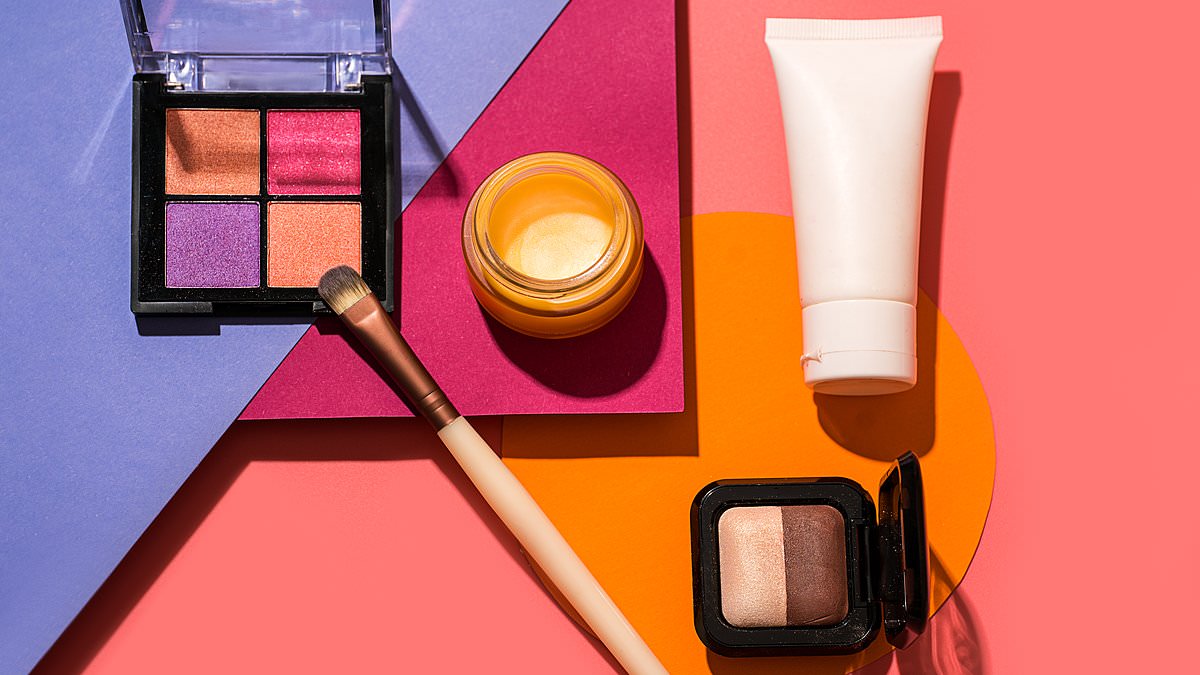
More than 50 per cent of make-up tested in a major study showed signs of PFAS – ‘forever chemicals’ that don’t break down easily, can build up over time and which have been linked to health conditions from obesity to cancer. The kicker? Most didn’t list PFAS on the ingredients label at all – so shoppers would never know they were there.

More than 50 per cent of make-up tested in a major study showed signs of PFAS – ‘forever chemicals’ that don’t break down easily
THE INGREDIENT PILE-UP
Women now use around 12 personal-care products a day on average, while men use around 11 – up from just six in the early 2000s. That daily routine can expose the average adult to more than 100 different chemical ingredients every single day, simply through normal grooming.
LIPSTICK SOS
That slick of lippy could be doing more than plumping your pout. University of Birmingham scientists say ‘leave-on’ products such as lipsticks, moisturiser and even hand-sanitisers have been far less studied than rinse-off ones like soap and toothpaste.
5 INGREDIENTS I ALWAYS CHECK FOR – AND WHY
When I started looking at body care the same way I look at food, the same ingredients cropped up again and again – across toothpaste, shampoo, body wash, deodorant and moisturiser whether it was in the ones used by me, my wife – or even my kids.
Here are the ones I avoid.
1. SLS / SLES (FOAMING AGENTS)
Sodium lauryl sulphate (SLS) and its milder cousin sodium laureth sulphate (SLES) are added to shampoos, shower gels and some toothpastes to create that rich lather we associate with ‘clean’. They’re strong detergents – which is why many people prefer gentler cleansers that don’t rely on heavy foaming day after day.
2. PARABENS (PRESERVATIVES)
Parabens stop products growing mould or bacteria. They’ve been used for decades and are still permitted within strict limits. Some parabens have been linked in studies to hormone disruption, mimicking oestrogen in the body, so people who want to be cautious often choose to limit how many paraben-containing products they use overall – especially when ‘paraben-free’ alternatives are easy to find.
3. ‘FRAGRANCE’ or ‘PARFUM’
This is the catch-all. When a label says ‘fragrance’ or ‘parfum’, it can represent dozens of different compounds used to create a scent and help it last – without those individual chemicals being listed. If you want one simple rule, go fragrance-free for products you use daily or leave on for hours.
4. ALUMINIUM SALTS (IN ANTIPERSPIRANTS)
If a deodorant is also an antiperspirant, it usually works by using aluminium salts to form temporary plugs in sweat ducts to keep you dry. Regulators deem them safe within limits, but if you don’t need an antiperspirant every day, switching to an aluminium-free deodorant is an easy way to remove that ingredient from a product you apply for hours, year after year.
5. TOOTHPASTE ‘EXTRAS’ (COLOURANTS and PETROLEUM-DERIVED ADDITIVES)
Toothpaste goes straight into a highly absorbent part of the body – our mouth – twice a day. That’s why I check for non-essentials like whitening colourants (including titanium dioxide) and petroleum-derived additives such as PEGs – and why I prefer a simpler formula where I can.
THE BOTTOM LINE
None of these ingredients guarantees harm. One product won’t change your health.
But when the same additives appear across lots of products you use every day, choosing simpler options where you can just makes sense.
START NOW: THE BODYCARE SWAPS THAT CAN TRANSFORM YOUR HEALTH THIS WEEK
TOOTHPASTE


Switch Oral-B 3D White/Aquafresh Complete/Colgate Total for Sensodyne Pronamel/Kingfisher Natural/Biomed
You use it twice a day – so it’s the easiest place to ditch pointless add-ons (whitening agents and flavour boosters) that don’t make teeth any cleaner.
SHAMPOO


Switch from Head & Shoulders/Pantene/Herbal Essence to Faith in Nature/Green People
Many mainstream formulas rely on harsh detergents for that big lather – the same strip-it-fast logic as washing-up liquid.
SHOWER GEL


Switch Lynx/Dove Men+Care/Original Source for Childs Farm/Neal’s Yard Remedies
You coat your whole body in it daily – so swapping here cuts out a big hit of ‘parfum’ and other unnecessary ingredients in one move.
DEODORANT


Ditch Sure/Dove/Nivea antiperspirants and use Wild Refillable/Salt of the Earth/Fussy instead
Antiperspirants work by using aluminium salts to block sweat ducts – a daily, decades-long exposure you can avoid without changing your routine.
FACIAL MOISTURISER


Replace Nivea Body Lotion/Simple/Aveeno with Weleda Skin Food/Neal’s Yard Remedies
It stays on your skin for hours – so if you’re leaving one product on all day, make it the simplest one you can.
SUNSCREEN


Stop buying Piz Buin/Garnier Ambre Solaire/Nivea Sun and give Green People/Thinksport/Badger a go
Many chemical suncreams use reactive UV filters that have come under scrutiny – mineral zinc works by sitting on the skin and blocking rays.
Adapted from The Good, the Bad and the Healthy by Sunna van Kampen (New River Books, £10.99). © Sunna van Kampen 2026. Order a copy of the book for only £5.49 (RRP £10.99) using code HEALTHY-JAN26 at tgjonesonline.co.uk. Offer valid for UK orders only online until January 8, 2026.