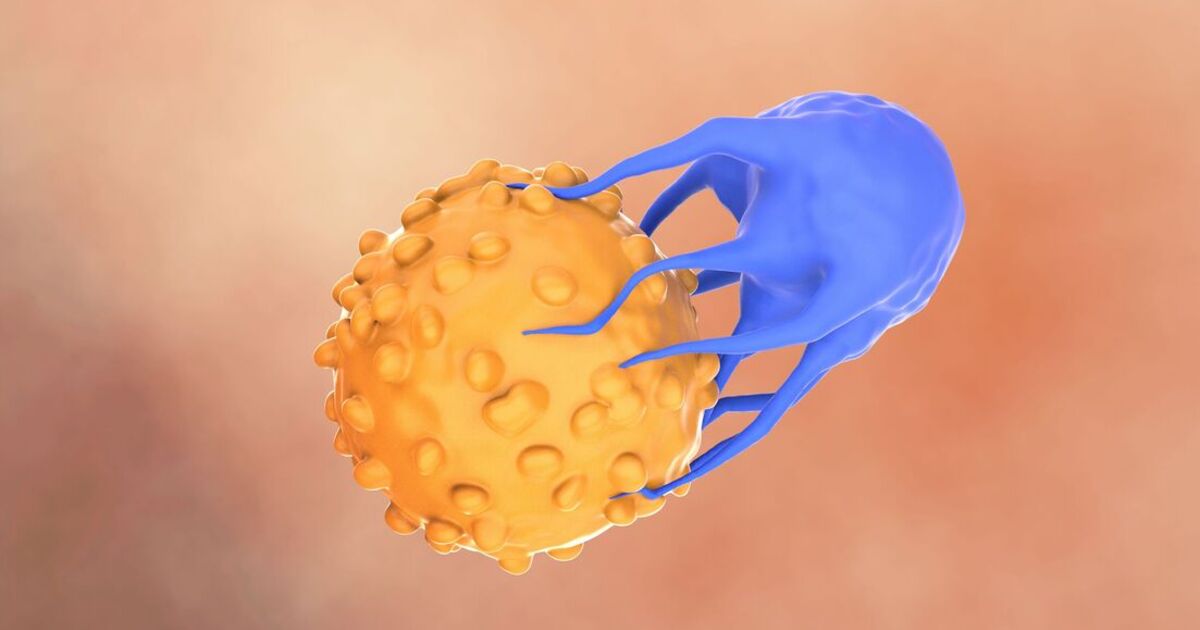

A cutting-edge therapy that genetically modifies a patient’s own cells to seek and destroy cancer cells could deliver a “paradigm shift” in treatment, experts have said. CAR-T cell therapy involves reprogramming immune cells in a lab to better target cancer, before returning them to the patient’s bloodstream. It is already transforming the treatment landscape for blood cancers.
Now, a landmark study unveiled at the world’s largest cancer conference has shown that it could also combat solid tumour forms of the disease, which represent around 90% of all adult human cancers. The research, involving more than 100 patients with advanced gastric or gastro-oesophageal junction (GEJ) cancer, found those treated with CAR-T therapy lived on average 40% longer than patients who received standard care.
Patients who received CAR-T cell therapy survived for an average of 7.9 months, compared to 5.5 months with standard care. They also experienced 3.3 months without their cancer progressing, versus 1.8 months.
Researchers from Peking University Cancer Hospital & Institute in China, who published their results in The Lancet medical journal, said the method “could represent a paradigm shift” in care.
The findings were presented at the American Society for Clinical Oncology’s (ASCO) annual conference in Chicago.
The study is the first ever randomised controlled trial — considered the gold standard for proving whether a treatment is effective — to look at the therapy for solid tumours.
Dr Carl June, a leading expert on CAR-T cell therapy at the University of Pennsylvania, said: “This represents a groundbreaking milestone for the field of CAR-T therapies against solid tumours.”
Dr Jason Luke, an ASCO expert and associate professor of medicine at the University of Pittsburgh and UPMC Hillman Cancer Centre, said the results were “exciting”.
He added: “This is a very important ‘plant the flag’ publication that should rally the cancer research community to push forward toward improving the lives of patients [with] solid tumours.”
Dr Catherine Elliott, director of research and partnerships at Cancer Research UK, said it was “encouraging” to see early signs that Car-T cell therapy could help patients with solid tumours.
She noted that the therapy would need to be trialled in larger numbers of patients before being rolled out but “could mark an important step forward for patients with limited treatment options”.
However, Dr Jennifer Eads, physician lead for gastrointestinal clinical research at Penn Medicine, highlighted that the drug only extended survival by around two months.
She added: “Ways to significantly lower the cost of CAR-T therapy will need to be found in order to make this treatment widely available.
“It is encouraging to see that there is another potential treatment option for gastric cancer patients.
“Their prognosis in general is so poor, it would be wonderful to see something come along that might be able to provide meaningful longevity.”