
A freezer stocked with blue-capped tubes of cow’s blood stands ready to nourish a colony of mosquitoes at Eswatini’s national insectary. “You could also use your arm,” suggests Nombuso Princess Bhembe, who oversees the mosquito care in this modest facility located in Siphofaneni. It’s all part of the southern African nation’s determined efforts to eradicate malaria.
Eswatini, a landlocked country with a population of 1.2 million, formerly known as Swaziland, faces multiple challenges in its malaria elimination campaign. The climate crisis, reductions in aid, resistance to insecticides, and economic migration from countries with higher malaria rates all pose significant obstacles.
In 2024, Eswatini reported 362 confirmed malaria cases. In contrast, its neighbor Mozambique recorded a staggering 11.6 million cases, ranking among the highest globally, while South Africa reported 4,639 cases.
The malaria parasite easily crosses porous borders, traveling in the blood of individuals who utilize informal crossings.
Climate change is exacerbating the problem by enhancing mosquito breeding conditions and extending the malaria season to coincide with the sugarcane harvest, a time when many people are working in the fields.
At the insectary, Bhembe and her team diligently set traps for mosquitoes at various “sentinel sites” each day. These are brought back for analysis under microscopes, where species are identified by color and wing patterns. Some mosquitoes are subjected to tests to evaluate the effectiveness of the insecticides currently in use.
“With time, we have seen change,” she says. Species that can transmit malaria are being found in new areas, potentially linked to changing temperatures.
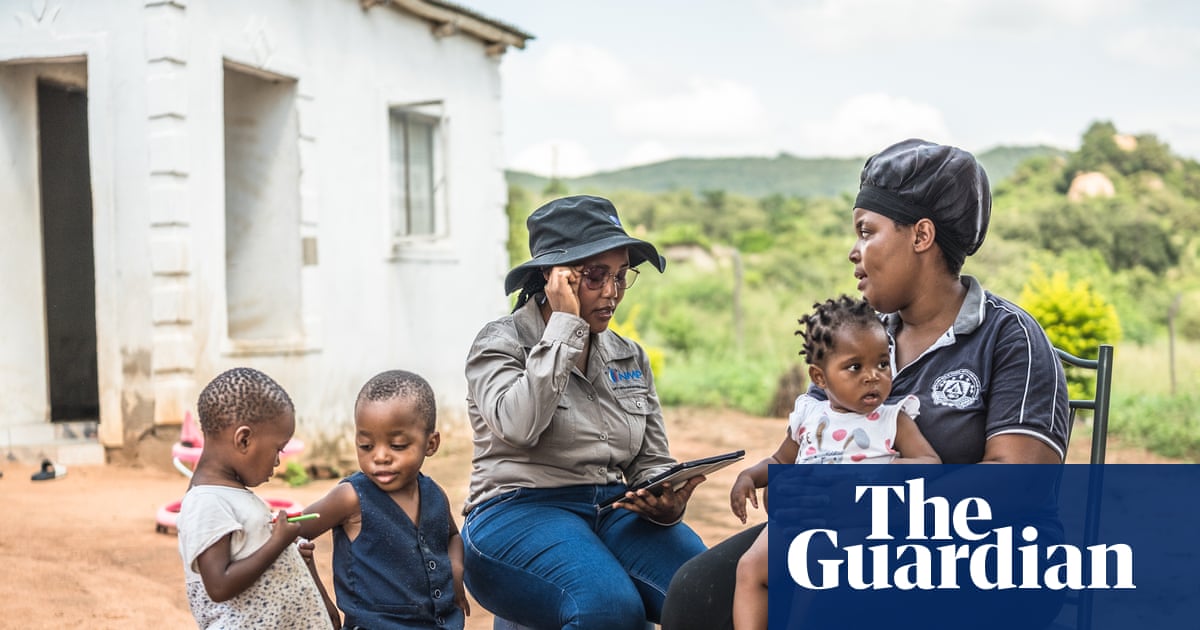
A team from Eswatini’s malaria programme has come to the northern Hhohho region to see a patient who started to feel unwell last week. The woman was weak and shivery. Paracetamol helped the headaches for a day or so, but soon she felt worse. At her local health centre, she tested positive for malaria.
That test result triggered an immediate phone alert to the national malaria prevention team. Today, workers armed with leaflets, malaria tests and insecticide sprays are going house to house in the hamlet where the now-recovering woman lives.
It is better to take rapid action now, says Nomcebo Dlamini, chief malaria surveillance officer, than come back in a few weeks when there might be more cases.
“As you think you’re getting closer and closer [to elimination], something happens – like extreme weather patterns, which then affect the rate at which mosquitoes are breeding [or] the closeness of breeding sites,” she says.
A flood, for example, “means every other place is a pond all of a sudden, which is collecting stagnant water; now you have breeding sites coming closer to people”.
It is difficult, she says, “but we are working with what we have and are up for the challenge”.
There had not been any cases in the area for about four years. “I think the closest is probably two, three kilometres away,” says Dlamini. “So it would qualify as a new focus for investigation – to try to establish what has suddenly brought transmission here, out of the blue.”
Malaria is seasonal – the team sees about 50 cases in the worst months, but as few as three in the dry months of August and September. But the season is getting longer, according to Dlamini. She says it used to peak in March but high case numbers now persist into the May harvest.
There are also farms in the region illegally growing cannabis – known locally as dagga – employing workers from Mozambique, who accept lower wages.
If workers carrying malaria parasites are bitten, that mosquito can transfer the parasites to others “and you find that you now have a clustering of cases”.
Farmers and workers can be wary of engaging with the authorities, including health clinics. They often sleep outside to guard their fields, without bed nets, historically a key part of malaria prevention.
“Every time it becomes something new that you need to deal with, and develop strategies to curb or work around,” says Dlamini.
The surveillance team visits homes to offer advice and tests, pointing out potential mosquito breeding sites such as wheelbarrows, which hold water if not stored upside down.
Homes here were sprayed before the malaria season began, but the chemicals are only effective for three months, and now that there has been a case residents must move their belongings away from the walls so that insecticide can be applied from top to bottom.
Mosquitoes from the insectary are placed in a cone on walls, to check that spraying has been done effectively.
Mark Edington, head of grant management at the Global Fund to Fight Aids, Tuberculosis and Malaria, which partly – funds Eswatini’s malaria programme, says elimination is proving harder than hoped. Cases have risen globally for six consecutive years.
Aid cuts are taking a toll. The Global Fund had to make $1.4bn of cuts to existing grants last year, after donors failed to fulfil pledges of contributions.
“If you look at the combination of decreased malaria funding, from us and probably from the US; you look at increased resistance towards both drugs and insecticide; you look at population growth; you look at extreme weather events, which are increasing; and you put that all in a mixing bowl, the result is not good,” Edington says. “It is worrying.”
In Eswatini, aid cuts have had a small effect on malaria services, officials say, mostly in reduced training for workers.
Eswatini’s health minister, Mduduzi Matsebula, hopes that integrated border controls with neighbouring countries will simplify health surveillance. The government is looking at making travel documents and passports easier to access, so that people do not use informal border crossings, which make the spread of disease harder to track, he says.
The country has its sights set on elimination “and we will pull all strings to achieve that”, he says. “We are ambitious about it and we believe it’s doable.”