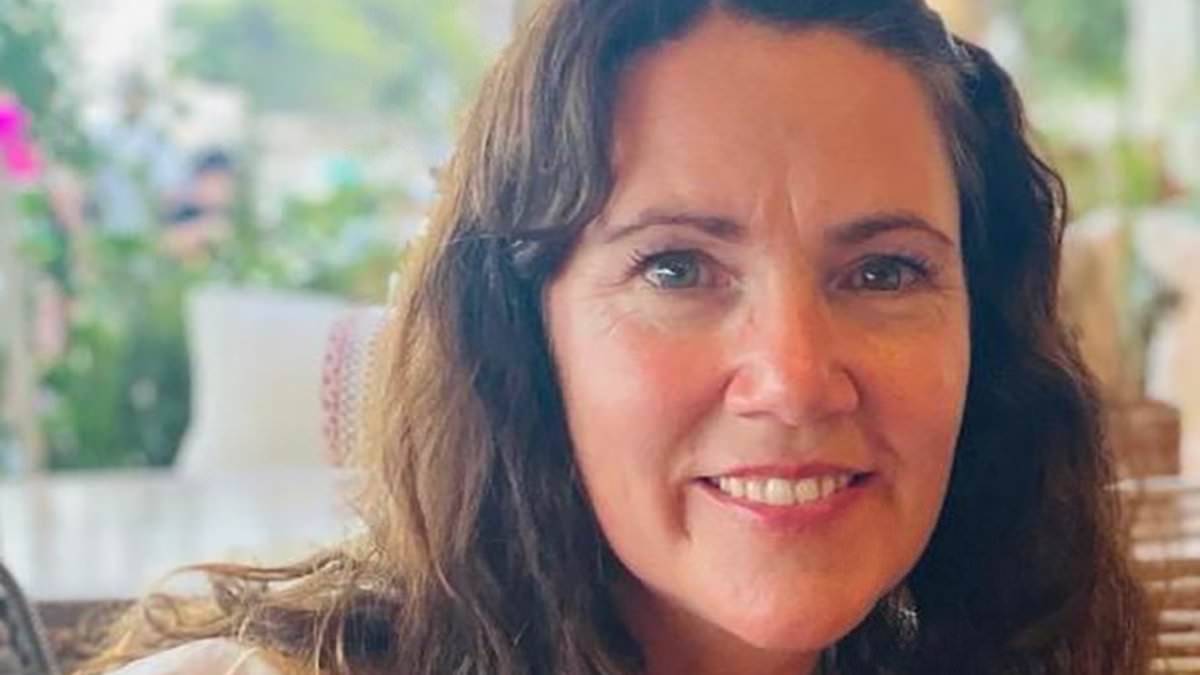

When Sarah Askwith began experiencing hot flashes in her mid-40s, she knew exactly what steps to take. As a physiotherapist and Pilates instructor, Sarah was well-informed about the remarkable benefits of hormone replacement therapy (HRT), a widely-used and effective treatment for alleviating menopause symptoms.
The mother of two promptly consulted her general practitioner, who wasted no time in prescribing the medication.
The treatment initially provided relief, but within two years, Sarah found herself battling the return of those uncomfortable hot flashes. Despite experimenting with various HRT types and adjusting dosages, the symptoms persisted stubbornly.
“I was really suffering,” recounts Sarah, who resides in Wimbledon, south-west London, with her husband Rob and their children, Lauren and Dylan.
“I experienced flushes throughout the day, and they intensified after meals or hot drinks. At night, I was constantly tossing and turning, feeling excessively warm,” she adds.
In addition to the physical discomfort, Sarah also faced significant anxiety and fatigue triggered by menopause.
Desperate for a solution, she signed up for a experiment called the Gut Health Challenge. Run by nutrition firm Zoe, it involved a gut health test and then a tailored diet for six weeks.
Sarah, sceptical at first, was told the diet may improve her symptoms. Remarkably, it did. By the end of the experiment, Sarah’s hot flushes – along with her fatigue and anxiety – had all but disappeared.
Experts say other women could experience the same improvements through diet changes. And, crucially, they say they do not necessarily need to sign up for diet programmes such as Zoe’s.

Sarah says that her menopause triggered intense anxiety and fatigue…

… but despite being sceptical about a dietary solution to the problem, her hot flushes – along with her fatigue and anxiety – have all but disappeared
‘What we eat absolutely affects menopause symptoms, from energy levels to hot flushes,’ says Professor Joyce Harper, an expert in reproductive science at University College London.
‘It’s not complicated either. If you eat rubbish food, you will feel worse. It’s important that, as women reach the menopause, they think about making fundamental changes to their diet.’
Alcohol and being overweight can also worsen menopause symptoms.
The need for better menopause treatments is clear. Most women will begin the menopause between the ages of 45 and 55. Periods stop and levels of the hormones oestrogen and progesterone fall.
Studies show that around a quarter of women will suffer with severe issues, including hot flushes as well as difficulty sleeping, reduced sex drive, and mood swings. This is why the NHS prescribes HRT to two million women a year. But for patients like Sarah, HRT alone can sometimes fail to help. It was for this reason that, earlier this year, she signed up for Zoe’s challenge.
The first step was a stool test to analyse the levels of so-called friendly bacteria in her gut. Research shows that this bacteria – also known as the microbiome – is connected to a wide array of physical and mental conditions.
Dr Federica Amati, lead nutritionist at Zoe, says Sarah’s gut health was found to be relatively good, but levels of certain friendly bacteria were low.
‘We assessed that Sarah wasn’t getting enough fruit, vegetables, seeds and pulses,’ she says. ‘Essentially, she was lacking variety and fibre.’
Fibre is a crucial nutrient found in fruit, vegetables, legumes, nuts, seeds and whole grains. In 2025, a study in the journal BMC Women’s Health found that women who follow a high-fibre diet have fewer menopause symptoms.
Looking back, Sarah says: ‘Breakfast was usually Marmite on toast. Lunch was a baguette with an egg or some sort of meat, and dinner was meat again.’ She insists she was ‘never much of a snacker’, but reached for easy food such as frozen pizza on busy days.
On the advice of Dr Amati and Zoe’s app, Sarah changed her diet.
‘I ditched the toast and swapped to yogurt with chia seeds and fresh fruit,’ she says. ‘Lunch became a salad or soup with fruit. I’d also bring snacks to work, like celery and cucumber sticks, to keep my energy up. I also cut back on meat.
‘If anything, I was eating more food than before – the difference is what I was eating was healthy.’
Within weeks Sarah began to see her symptoms improve. By week six her hot flushes had reduced by 95 per cent and her anxiety levels had fallen significantly. A test showed the friendly bacteria in her gut had markedly risen.
‘While my menopause symptoms haven’t disappeared completely, they’ve definitely eased,’ she says. ‘I’m sleeping better, my mood has improved and my energy is more consistent throughout the day.’


