
Share this @internewscast.com

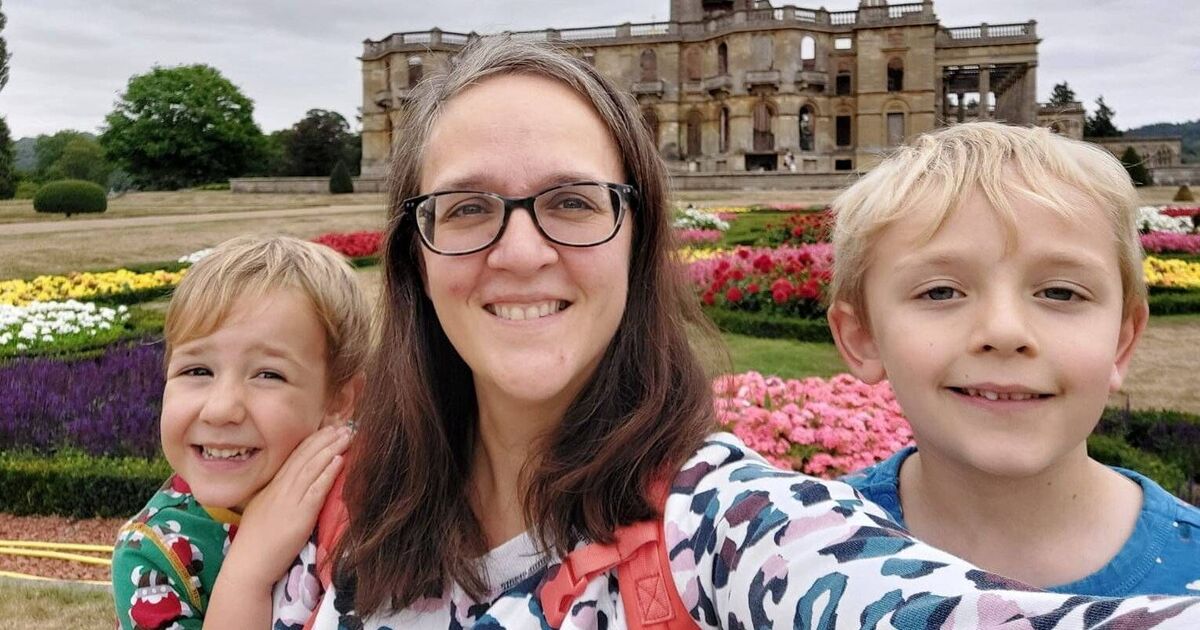
Emilia Shaw with her children, Henry and Felix (Image: Emilia Shaw/SWNS)
A nurse who was constantly “tired all the time” and attributed it to her demanding work schedule, was shocked to discover that her fatigue was actually a symptom of a rare form of cancer, necessitating a stem cell transplant. Emilia Shaw, a 41-year-old mother of two, found herself perpetually worn out throughout the summer, but assumed it was due to her early morning shifts.
Emilia Shaw, a dedicated nurse and mother of two, always thought her constant fatigue was just part of the job. Balancing early morning shifts with the demands of motherhood seemed a plausible explanation for her tiredness. However, the 41-year-old from Bromsgrove, Worcestershire, was in for a shock when her persistent exhaustion turned out to be a symptom of a rare and aggressive form of cancer.
What began as feeling “tired all the time” during the summer months soon escalated. Emilia found herself battling a relentless cough and a pervasive sense of being unwell. By the fall of 2025, her health took a worrying turn with the emergence of severe headaches, bleeding gums, and unusually heavy menstrual cycles. Concerned, she sought medical advice and underwent a blood test at her local GP in December.
Upon further investigation at Alexandra Hospital in Redditch, the results were alarming. Emilia’s blood transfusion revealed a dangerously high white blood cell count, coupled with a significant deficiency in red blood cells and platelets. On December 9, 2025, the diagnosis came: acute myeloid leukaemia, a fast-developing cancer that targets the blood and bone marrow.
Since then, Emilia has bravely completed her first round of chemotherapy at Worcestershire Royal Hospital. After a short break at home to recuperate, she is preparing to undergo her second round of treatment. Doctors have informed her that a stem cell transplant will be necessary, a critical procedure designed to replace her damaged blood-forming stem cells with healthy ones.
The diagnosis has been particularly challenging for her family. Emilia shares, “It’s been tough for my husband, Ben, who is 37, and our two boys. Just three years ago, Ben lost his mother to a swift battle with cancer. Earlier this year, in January, my own mother was diagnosed with breast cancer for a second time and had to undergo mastectomy and reconstruction surgery.”
Emilia Shaw, 41, noticed she was constantly exhausted over the summer (Image: Emilia Shaw/SWNS)
Read more: Scientists discover breakthrough that could lead to new cancer treatments
Read more: Virus cases spike with new warning as ‘it spreads easier than you think’
Read more: Scientists discover breakthrough that could lead to new cancer treatments
Throughout the summer months, Emilia began noticing persistent fatigue. She initially attributed this to early mornings for work and caring for her two young sons – Henry, six, and Felix, four.
However, her condition deteriorated and she also developed severe headaches, prompting her to arrange a blood test at her GP surgery in December.
“I was just so tired all the time,” Emilia recalled. “I would feel tired at the wheel and I’d even fallen asleep watching panto with my boys. So I went in and got my bloods checked on a Monday morning.”

Emilia noticed her symptoms had worsened and she was starting to get pounding headaches, bleeding gums and heavy periods (Image: Emilia Shaw/SWNS)
Following her doctor’s advice, Emilia went directly to Alexandra Hospital, where she received a blood transfusion. The next day, on December 9, 2025, Emilia was informed she had acute myeloid leukaemia and would require a stem cell transplant.
Emilia’s husband, Ben Shaw, who is employed in the automotive sector, recalled: “The first time I knew that Emilia had bad news was when she sent me a message to say I could visit her outside opening hours. I just crumbled when she told me what leukaemia she had.
“I was in the process of informing my family and I just couldn’t speak over the phone. I was in fear of Emilia dying as my mum died of cancer just 17 days after her diagnosis.”
Emilia is presently receiving chemotherapy treatment, with medical professionals advising that she will require a stem cell transplant. She is hopeful that one of her siblings will prove to be a suitable match, though this remains unconfirmed.
“I worked in the Queen Elizabeth Hospital, Birmingham, for years as a staff nurse and I’ve since been told that, if a matching donor is found for me, that’s where I’ll be going for my transplant,” Emilia explained. “It’s strange to go from nurse to patient, but I know they’ll look after me.”
Emilia and her relatives are now collaborating with blood cancer charity DKMS to urge more individuals to register as potential stem cell donors. Registration is straightforward, requiring only a handful of health-related questions and some cheek swabs.
Following registration, your samples will be analysed to determine whether you match a patient in need. At present, approximately 2,000 people across the UK are awaiting their match, yet merely 7 per cent of the eligible population have registered.
Registration is available through Emilia’s campaign online.