
Share this @internewscast.com
Today, new data reveals a ‘significant rise’ in the number of adults in the UK turning to prescription medication for attention deficit hyperactivity disorder (ADHD).
Research led by academics at Oxford has found that from 2010 to 2023, the use of ADHD medications in the UK has more than tripled.
The study examined electronic health records of over 198,000 individuals from Belgium, Germany, the Netherlands, Spain, and the UK over a 14-year period.
Throughout this time, the use of ADHD medication increased in every country involved in the study, with the UK seeing a more than threefold rise and the Netherlands experiencing a doubling in prevalence.
Professor Xintong Li, a data scientist and the study’s lead author, commented: “Our research shows a consistent rise in ADHD medication use throughout Europe, with the most notable increases among adults, particularly women.”
“These results likely indicate heightened awareness and diagnosis of adult ADHD, but they also highlight critical questions regarding long-term treatment practices and the need for comprehensive care,” she added.
The most pronounced increases were seen among adults aged 25 and older – with the difference between sexes narrowing steadily overtime.
In the UK, overall prevalence in this age group rose more than twenty-fold in women, and fifteen fold in men.

The use of ADHD medications has increased substantially across Europe with the steepest rises seen in women
Writing in The Lancet Regional Health journal, Professor Daniel Prieto-Alhambra, epidemiologist and study senior author, said: ‘Understanding how ADHD medications are being used in real-world clinical practice is essential for healthcare planning.
‘These data can help health systems anticipate demand and reduce the risk of future medication shortages, while also highlighting populations that may need closer monitoring.’
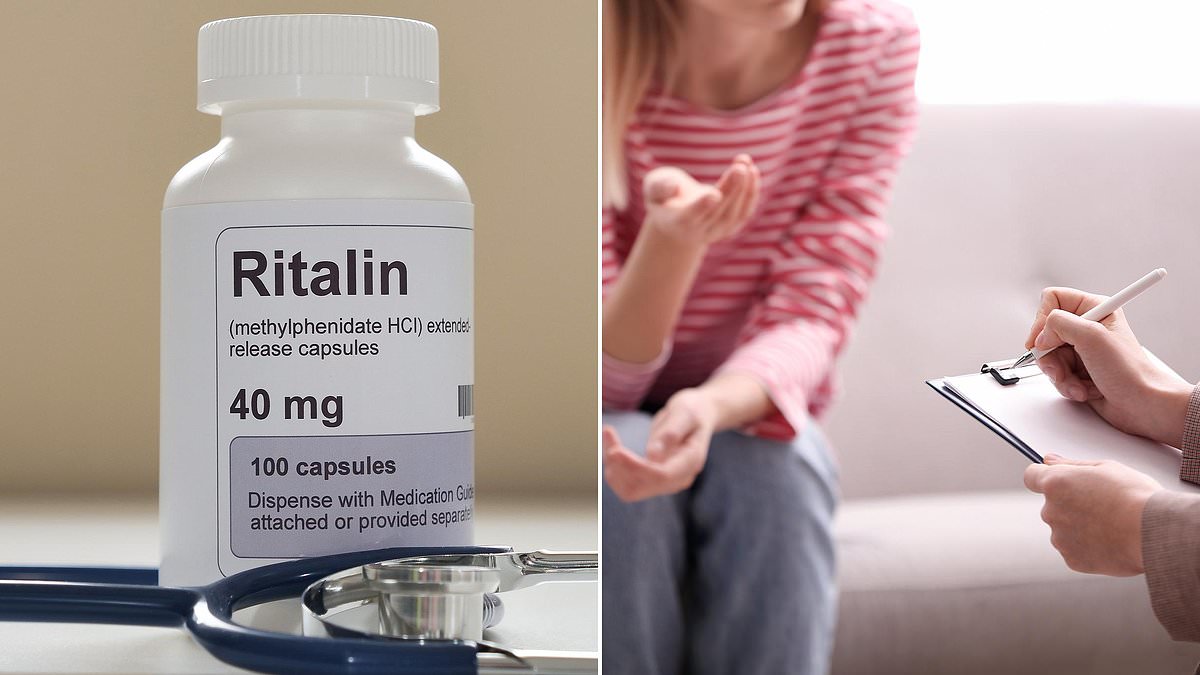
Methylphenidate, which has brand names including Ritalin, Concerta and Delmosart – remained the most commonly used ADHD medication across all countries while newer stimulants such as lisdexamfetamine showed steady uptake following market approval.
The researchers said use of ADHD medicines by adults reflected growing recognition of the attention-deficit disorder as a lifelong condition but warned that continuation of treatment after initiation remained relatively low.
They also cited an increasing online interest in ADHD – via social media platforms – as well as the impact of the pandemic, which fuelled a near-doubling in the number of prescriptions for ADHD meds.
But, they warned: ‘The prevalence of medication use remains substantially lower than the estimated prevalence of ADHD.’
Globally, ADHD is estimated to affect around 8 per cent of children and adolescents and 3 per cent of adults.
The researchers continued: ‘While it is true that not all individuals with ADHD require medication, our findings suggest that a substantial proportion may not be receiving pharmacological treatment.’

ADHD stimulant medications work by increasing activity in the brain, particularly in areas that help control attention and behaviour
They also noted that a substantial proportion of people who used ADHD medication also used antidepressants and psycholeptics – which have a calming effect on the central nervous system.
More than 70 per cent of adults aged 25-and over in the UK and Spain had received a prescription for antidepressants. Other common comorbidities prior to ADHD medication initiation included anxiety and asthma.
The prevalence of depression anxiety in females was around twice that observed in males, with men showing a higher prevalence of autism.
The researchers concluded that continuing to monitor usage patterns can help anticipate demand and help mitigate future shortages, which have been ongoing since September 2023 due to increasing demand and manufacturing challenges.
It comes following Health Secretary Wes Streeting’s announcement last December that he had launched an independent review into the rising demand for mental health, ADHD and autism services.
The review is expected to look at rates of diagnosis and what gaps in support exist.
NHS figures show rates of mental health problems and ADHD have increased significantly over the past two decades and the government believes there is some evidence of over-diagnosis, with some people being referred on to waiting lists who don’t need treatment.
Announcing the new review, Streeting said: ‘We must look at this through a strictly clinical lens to get an evidence-based understanding… that’s the only way we can ensure everyone gets timely access to accurate diagnosis and effective support.’

A significant proportion of people who used ADHD medication also used antidepressants. Rates of depression and anxiety were highest in individuals aged and 25 and over

Fascinating graphs show how ADHD prescriptions have risen over time, with the patient demographic shifting from children to adults with women in particular now driving the increase
ADHD is a neurodevelopmental condition in when the connections between different brain regions work differently to that of a neurotypical persons’, leading to issues with inattention, impulsivity and hyperactivity.
This can manifest a problems sleeping, an inability to focus and issues with executive functioning – which is crucial for forward planning and following instructions.
NHS Digital have estimated that around 2.5million people in England have ADHD, as of November 2025.
This includes those without a formal diagnosis and is based on data from the National Institute of Excellence (NICE) which suggests that around 4 per cent of adults and 5 per cent of children and young people.