
Share this @internewscast.com
Katie Newell, a 38-year-old Liverpool resident, was on a self-destructive path fueled by a diet dominated by ultra-processed, beige foods, and punctuated by indulgent snacks like chocolate biscuits and crisps.
Each day began with excessive eating for Newell, starting with a large bowl of sugary cereal and heavily buttered toast. Her lunch would typically consist of fast food from McDonald’s or Greggs, followed by a substantial evening meal.
“I hated myself,” Newell admitted.
She went to great lengths to avoid being in photos or videos, shunned mirrors, and struggled with feelings of worthlessness.
At her peak weight, Newell weighed an astonishing 25 stone (158 kg or 350 lbs), forcing her to wear oversized clothing in a UK size 28/30. Her health was in a precarious state, as she was unable to walk properly and was on the verge of developing diabetes.
Newell attributes her weight gain to a combination of mental and physical health challenges, compounded by the various medications she was taking.
Ms Newell has Loin Pain-Haematuria Syndrome (LPHS), a rare condition that affects only one in a million people and is characterised by severe flank pain and blood in the urine.
‘I was on medications renowned for weight gain,’ she said.

Katie Newell before undergoing a gastric bypass operation
‘But I was also a comfort eater. If I was sad, I’d eat. If I was happy, I’d eat more. I was an emotional eater and a secret eater.’
Ms Newell was under the supervision of the weight-loss team at Aintree Hospital in Liverpool, who originally prescribed Mounjaro, but when funding was withdrawn, doctors offered her surgery instead.
Before being approved, Ms Newell had to attend eight weeks of specialist weight-loss education classes.
She said: ‘I jumped at the chance.
‘They taught us everything, the different surgery options, what our diet would be like after, what we could and couldn’t do,’ she explains.
‘That included rules like not drinking with meals, and the “3 20 rule”– a 20p-sized bite, chew for 20 seconds, then wait 20 seconds before the next mouthful.’
After assessments, a surgeon recommended a One Anastomosis Gastric Bypass (OAGB), also known as a mini gastric bypass, based on her eating habits and medical history.
The procedure involves creating a small pouch from the stomach and connecting it to a portion of the small intestine through a single surgical connection, known as an anastomosis.

Ms Newell pictured after weight loss surgery in January 2025

Pictured looking visibly slimmer in October 2025
This method reduces the amount of food the stomach can hold and decreases calorie absorption by bypassing a significant portion of the small intestine.
The surgery was carried out on the NHS in a private hospital in Manchester.
In preparation, Ms Newell had to complete a strict liver reduction diet for two weeks, over Christmas, alongside pre-op blood tests. The diet is a low-carb, low-calorie diet designed to shrink the liver.
The surgery went ahead on January 18, 2025, and lasted around an hour and a half. Recovery was tough, and it took about three months before she felt fully healed.
‘It was painful for the first two to three weeks,’ she said.
‘The air they use to blow up your tummy is uncomfortable, but other than that, it was manageable.’
Since her surgery, Ms Newell has lost a remarkable 15 stone in just 12 months, now weighing 11st 6lb.
She believes that this transformation has saved her life, both physically and mentally – and is incredibly grateful that the NHS funded the procedure.
‘It’s expensive,’ she said.
‘I believe a gastric bypass can cost up to £21,000, which includes the surgery itself and follow‑up appointments with dietitians, psychologists, surgeons and nurses for up to three years.
‘I was incredibly fortunate to receive funding from the NHS’

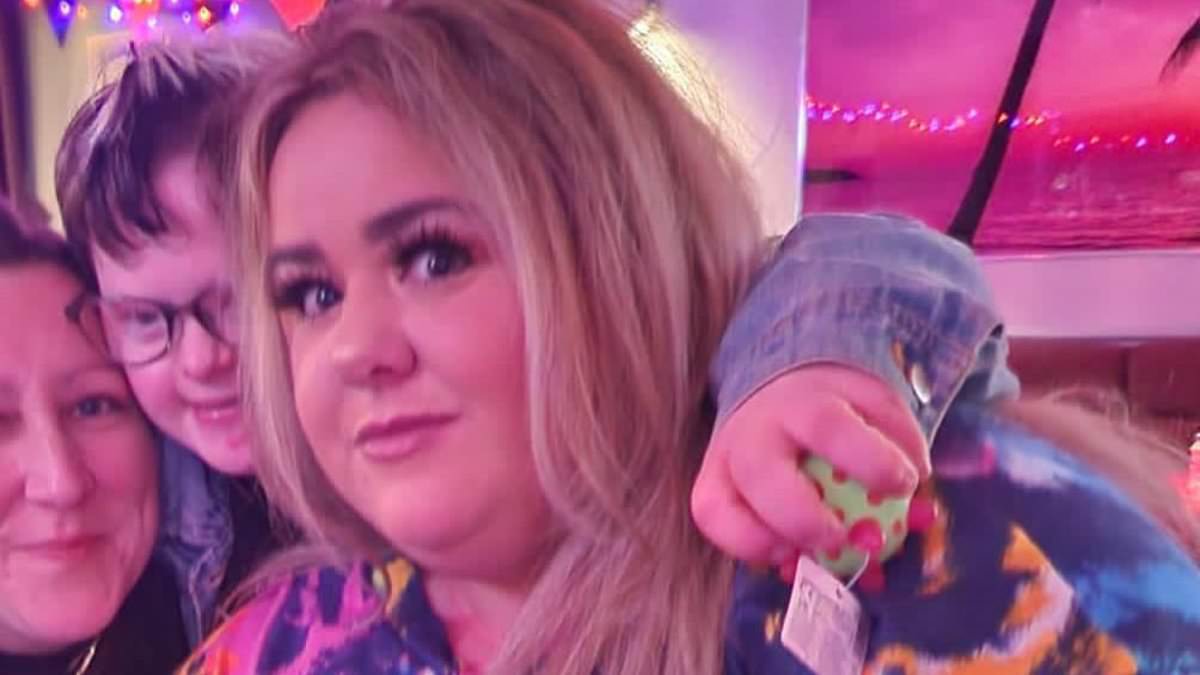
Ms Newell and her best friend pictured in December 2024
It was while she was on a family holiday to the Lancashire seaside town of Silverdale, that Ms Newell’s confidence collapsed.
Despite being hardened to unkind comments, she struggled with the dirty looks and gawping stares she received from members of the public when she went out to eat or visited to a dessert shop.
She said: ‘I could feel people staring.
‘I remember being on holiday with my nieces and nephews; we’d just bought ice creams and sat down.
‘An older man looked over at me with disgust, said something to his wife about my size and weight, and then the two of them got up and walked away.’
It wasn’t only Ms Newell’s confidence that was affected; she also started noticing her health deteriorating.
She said: ‘I could hardly walk. I became pre-diabetic. I was super depressed. I wouldn’t go out. I felt completely worthless.’
Since surgery, Ms Newell has faced difficult side effects, including severe vomiting.

Ms Newell with a friend in January 2026

Ms Newell, pictured in May 2022, weighed 25 stone at her heaviest

She is often forced to rely on a walker due to her health conditions
‘At one point, I was being sick up to 12 times a day,’ she revealed.
‘I had camera tests done to check everything, but it was just a side effect of the bypass.’
Although she still vomits occasionally, she says it’s far more manageable now.
Now, after losing nearly 15 stone in just 12 months, Ms Newell says she finally recognises herself again, and she’s ecstatic to know she no longer is pre-diabetic.
She began noticing a change on the scales after just two weeks – and noted that some of the aches and pains in her back and hips have gone.
Her diet is now completely different – mostly because the reduced size of her stomach means that she ‘physically can’t eat much’.
She said: ‘I have one small meal a day. If I eat more, I’m sick.’
A typical day now includes soup and fruit in the afternoon, and a small evening meal of meat and vegetables. Exercise is limited due to chronic pain, but she walks her dogs when she can.

Pictured on the day of her surgery in January 2025
‘You have to change your whole relationship with food. Whatever method you choose, it’s a tool, you still have to work at it.’
The transformation has shocked everyone around her, with her proud friends and family commenting that she looks happy.
‘A lot of people don’t even recognise me,’ she said.
‘I don’t mind having my photo taken anymore and I don’t avoid mirrors either.’
To anyone keen to start a weight loss journey of their own, Ms Newell advises that they speak to their doctor.
She said: ‘There are so many options, gym passes, slimming world, referrals to weight-loss teams, medication, and surgery.
However, there is one downside of weight loss surgery that people rarely speak about.
She said: ‘Nobody prepares you for how often you have to buy new underwear. It’s literally every other week.
‘I’ve spent at least £300 on new underwear.’