
Share this @internewscast.com
The United States is witnessing a rise in measles cases, and with the holiday travel season upon us, health experts are cautioning that the disease could spread more rapidly.
Recently, health authorities in Utah County revealed six additional cases of measles among children aged 18 and younger. With these new diagnoses, the state’s total number of cases has reached 142, according to the state health department.
Notably, there were no reported cases in Utah in 2024, and just a single case in 2023. Astonishingly, the state saw 15 new cases in just the past week.
Analysis of the data shows that out of those infected, 127 individuals were unvaccinated, while eight had received vaccinations, and the vaccination status of seven others remains unclear.
The age distribution of cases reveals that 85 of the infected individuals are under 18 years old, while 57 are adults. This year, 14 people have required hospitalization due to the illness.
Nationally, measles cases are on the rise again, despite the disease being declared eliminated in the US back in 2000. A significant outbreak earlier this year in Texas, primarily among an unvaccinated religious community, has significantly contributed to the resurgence.
Measles has now infected 1,958 Americans and killed three people this year. It’s the largest outbreak since 2,126 cases were reported in 1992 – and doctors are worried more cases will pop up.
Jodie Guest, senior vice chair of epidemiology at Emory University’s Rollins School of Public Health in Georgia, which has seen 10 cases this year, said: ‘Most of us, including viruses, are not contained by state lines. This is an incredibly transmissible virus. In our populations that are unvaccinated, we need to be very concerned.’

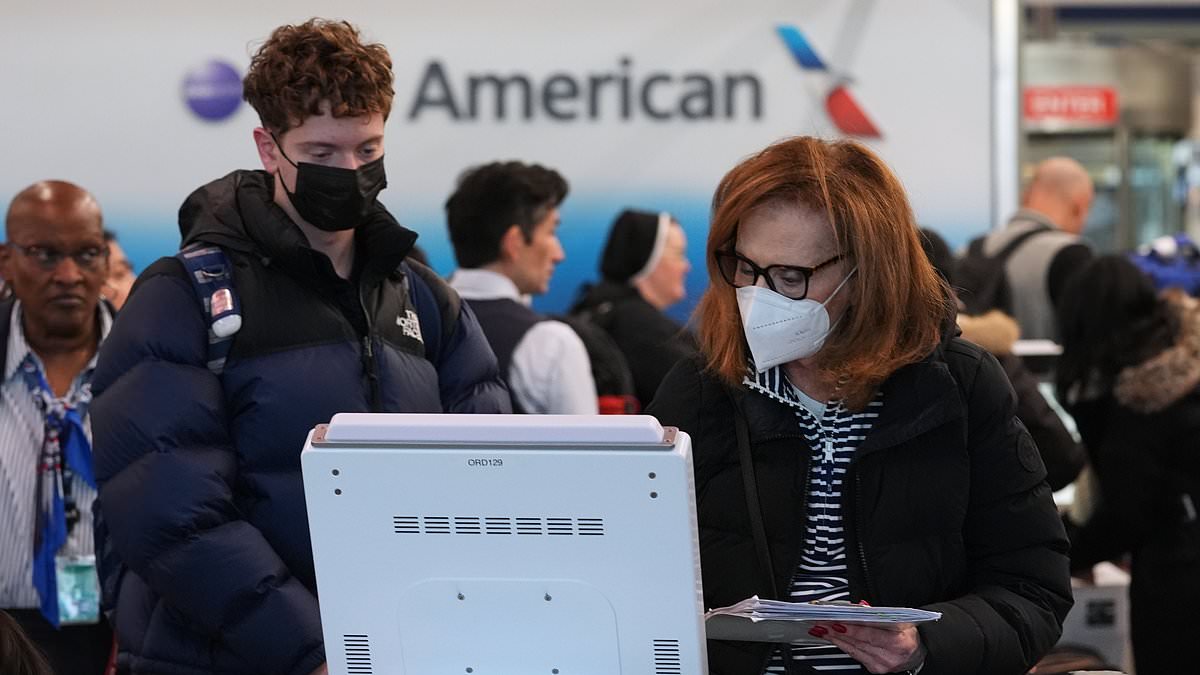
Millions of people will travel this holiday season, raising the risk of spreading measles (file photo)
Guest told The Atlantic Journal-Constitution that if you are planning to travel or host people from somewhere with an active outbreak, you should ask them about possible measles exposure.
She said: ‘We don’t want anyone to be fearful, and certainly if you’re vaccinated you are very, very unlikely to contract measles if you come in contact with anyone.’
However, if you aren’t vaccinated and traveling somewhere high-risk, ‘I would be very cautious about that,’ she added.
Last week, public health officials in Connecticut reported the state’s first measles case since 2021.
South Carolina also has 142 cases of the measles, according to the CDC. There was one case in 2024. Additionally, more than 250 people are being quarantined in the state due to the ongoing outbreak and possible exposure.
In Arizona, which saw five measles cases in 2024, a surge has led to 182 this year.
Dr Renee Dua, medical advisor to TenDollarTelehealth, previously told Daily Mail: ‘The current measles outbreaks in the US are a direct consequence of falling childhood vaccination rates.
‘Measles requires about 95 percent community immunity to prevent spread, and many regions are now below that threshold.’
Measles, mumps and rubella are prevented via the MMR vaccine. The nationwide MMR vaccination rate is 92.5 percent, but in Utah, just 89 percent of kindergartners were vaccinated for the 2023-2024 school year.
In South Carolina, that number is 92 percent, and it is 89 percent in Arizona.
The MMR is 97 percent effective in preventing infection for those who receive both doses, according to the CDC. One dose is 93 percent effective.
Dr Dua continued: ‘We are seeing real consequences: preventable outbreaks, hospitalizations, and deaths from diseases that were previously well controlled. These are measurable public-health failures.
‘Vaccines remain among the safest and most effective tools in medicine. Rebuilding trust through clear, evidence-based communication is now as critical as vaccine access itself.’
Measles is considered the world’s most infectious disease because people who are not vaccinated have a 90 percent chance of getting sick if they are exposed, even from sharing the same air, briefly or hours later, with someone who has measles.
Three in 1,000 people who contract measles will die.
Of the current cases, 512 are in Americans under 5 years old; 808 are in 5- to 19-year-olds; 625 are among Americans 20 and older; and 13 cases are in people of unknown age.
According to the CDC, 93 percent of cases are in people unvaccinated or have an unknown vaccine status. Three percent have received one dose of the MMR vaccine and four percent have received both doses.
Of those sickened in the US, 222, 11 percent, are hospitalized, with the majority of those, 20 percent, being children under 5.
Measles is caused by a virus that leads to flu-like symptoms, a rash that starts on the face and spreads down the body, and, in severe cases, pneumonia, seizures, brain inflammation, permanent brain damage, and death.
The virus is spread through direct contact with infectious droplets or through the air.
Patients with a measles infection are contagious from four days before the rash through four days after the rash appears.
Deaths typically occur from acute encephalitis, or brain swelling, when the virus travels to the central nervous system, or pneumonia if it migrates to the lungs.
Before the current two-dose childhood vaccine’s approval in 1968, there were up to 500 US deaths each year from measles, 48,000 hospitalizations and 1,000 cases of brain swelling.
Roughly three million to four million people were infected every year.