
Share this @internewscast.com
It is a household staple across Britain and is a fundamental part of many diets across the world.
But in an increasingly ‘low-carb diet’ society and differing viewpoints about its health benefits, bread has become somewhat of a divisive topic – particularly on the topic of whether you should eat it every day.
And with many different options available in supermarkets: white, wholemeal, sourdough, rye, but to name just a few, it can be overwhelming knowing which – if any – is the right one to choose.
But amid this rise in options, experts have now explained exactly happens to your body and the health benefits when you consume the fibre-packed food every day, and their tailored recommendations for if doing so.
Bread is full of nutrients like fibre, natural sugars, proteins, B vitamins such as thiamin, niacin and folate, as well as minerals like iron and zinc – but its high concentration of carbohydrates can sometimes leave you feeling hungry after eating a slice or two.
To beat that hunger, dietitian Kristi Ruth recommends wholegrain bread to help you feel full for longer, as just one slice contains around 7 per cent of the recommended daily fibre intake.
She told EatingWell: ‘As dietitians, we often recommend whole-grain bread because it traditionally contains more fibre, which aids in digestion and will help you feel full longer.’
If combined with high protein offerings such as sprouted grain breads, this is seen as the best way to stay full for longer and to stop reaching back into the bread bin.

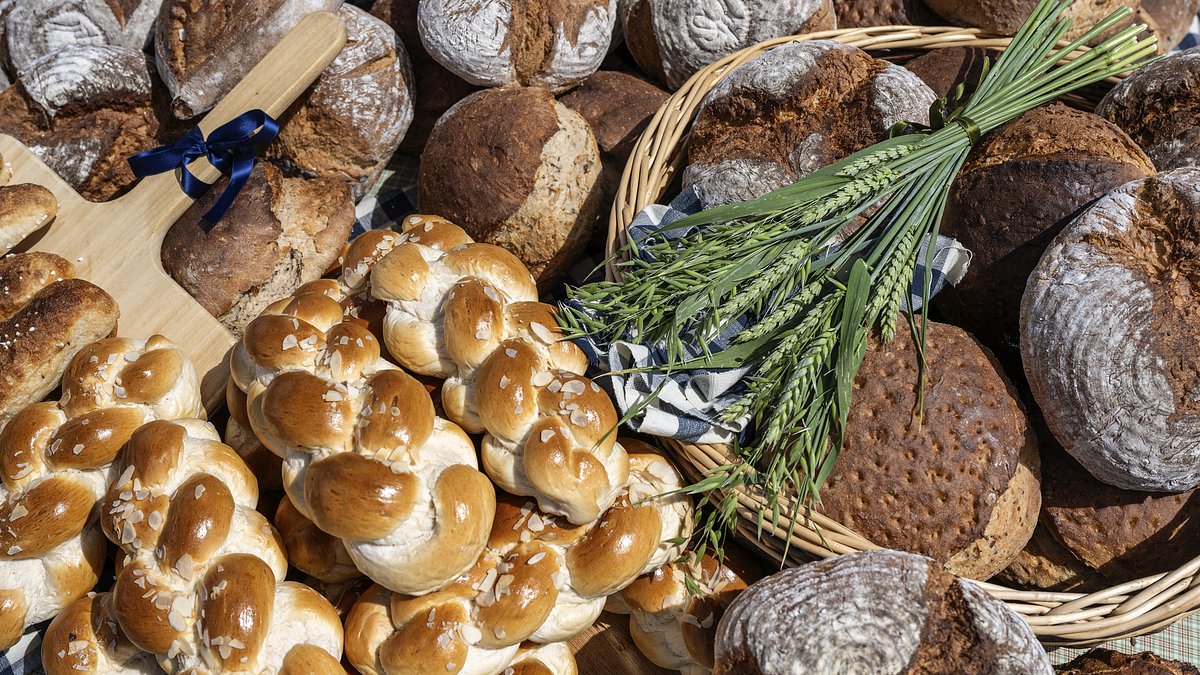
In an increasingly ‘low-carb diet’ society and differing viewpoints about its health benefits, bread has become somewhat of a divisive topic (Stock Image)

With many different options available in supermarkets: white, wholemeal, sourdough, rye, but to name just a few, it can be overwhelming knowing which – if any – is the right one to choose (Stock Image)

Bread is full of nutrients like fibre, natural sugars, proteins, B vitamins such as thiamin, niacin and folate, as well as minerals like iron and zinc – but its high concentration of carbohydrates can sometimes leave you feeling hungry after eating a slice or two (Stock Image)
Multi-grain breads also contain even more fibre than standard wholemeal, offering between five to seven grams per slice, compared to wholemeal’s two grams per slice.
And with high fibre intake associated with lowering the risk of heart disease, stroke, type two diabetes and bowel cancer, this is seen as an ideal way to improve your health.
Elana Natker from the Grain Foods Foundation explained: ’40 per cent of dietary fiber intake comes from grain foods. Cutting out grains [like bread] would take out fiber that people are needing and getting from grains.’
Ms Natker also told the website how it may support healthy pregnancies, with folate seen as an essential vitamin when bearing a child – with women recommended to have at least 400 micrograms per day.
She added: ‘[Child-bearing] women restricting carbohydrates are 30 per cent more likely to have babies with neural tube defects because they aren’t getting enough folic aid.’
For those looking to for energy if incorporating exercise in addition to their diets, official NHS guidance also recommends bread for those who don’t have an intolerance or wheat allergies.
The health service says bread is a ‘healthy choice to eat as part of a balanced diet’ and cites wholegrain, wholemeal and brown breads as the best sources of energy.
An extract from their website reads: ‘White bread also contains a range of vitamins and minerals, but it has less fibre than wholegrain, wholemeal or brown bread. If you prefer white bread, look for higher fibre options.’

With high fibre intake associated with lowering the risk of heart disease, stroke, type two diabetes and bowel cancer, multi-grain breads are seen as an ideal way to improve your health (Stock Image)

Official NHS guidance also recommends bread for those who don’t have an intolerance or wheat allergies (Stock Image)
In their guidance for heart attack prevention, the NHS also recommends including bread in your diet.
They say: ‘You should aim to follow a Mediterranean-style diet. This means eating more wholegrain bread, rice and pasta, and fruit, vegetables and fish, and less meat.
‘Eating a low-fat diet that includes lots of fibre – such as wholegrain rice, bread, pasta and plenty of fruit and vegetables – has been proven to help lower blood pressure. Fruit and vegetables also contain vital vitamins and minerals and help keep your body healthy.’
Despite these positives, nutritionists at EatingWell also warned of the risks of consuming bread as part of a daily diet, saying that many foods packed with fibre can cause uncomfortable pains such as bloating, flatulence and cramping.
One recommendation to beat such issues is to try white or sourdough bread as a way to ease into a high-fibre diet as these typically contain less dietary fibres than the alternatives.

Despite these positives, nutritionists also warned of the risks of consuming bread as part of a daily diet, saying that many foods packed with fibre can cause uncomfortable pains such as bloating, passing wind and cramping (Stock Image)
It was also highlighted that high carbohydrate foods such as bread also cause spikes in blood sugar, which for those with diabetes, may need to be offset with synthetic insulin.
Concluding her recommendations, Ms Ruth said she does not like labelling foods as ‘good or bad’ and encouraged consumers to read the nutrition labels to decide what works best for each individual person.
It was also added on the healthy eating site that bread is not a food that should be seen as being ‘bad for you’.
Instead, it should be viewed as a vehicle to provide your body with essential nutrients and can be used as a base for healthy fats such as avocado, or for proteins such as lean turkey and eggs.