
Share this @internewscast.com
With heart disease rates climbing across the nation, Americans are actively seeking ways to mitigate their risk.
Cardiovascular disease, encompassing conditions like high blood pressure, heart attacks, and strokes, stands as the leading cause of death in the U.S., responsible for nearly a million fatalities annually.
The rise in heart disease has been consistently linked to lifestyle factors such as diets high in fat and sodium, obesity, and sedentary habits. To counteract this trend, experts advocate for diets abundant in lean proteins, nutrient-rich vegetables, and whole grains.
Garlic has emerged as a valuable ally in this fight, praised for thousands of years for its anti-inflammatory properties and its ability to help lower blood pressure and cholesterol levels.
Despite its affordability—costing as little as $0.60 per bulb—garlic’s strong flavor and odor can be off-putting to some people.
In recent years, scientists have developed concentrated garlic supplements in the form of pills, capsules, and powders. These alternatives offer the health benefits of garlic without the potent smell or taste.
Costing anywhere from $4 to $25 per bottle, or $0.04 to $0.40 per serving, the supplements are often lauded for their convenience and odor control.
The latest science also shows they may pack a similar heart-healthy punch as standard table garlic.

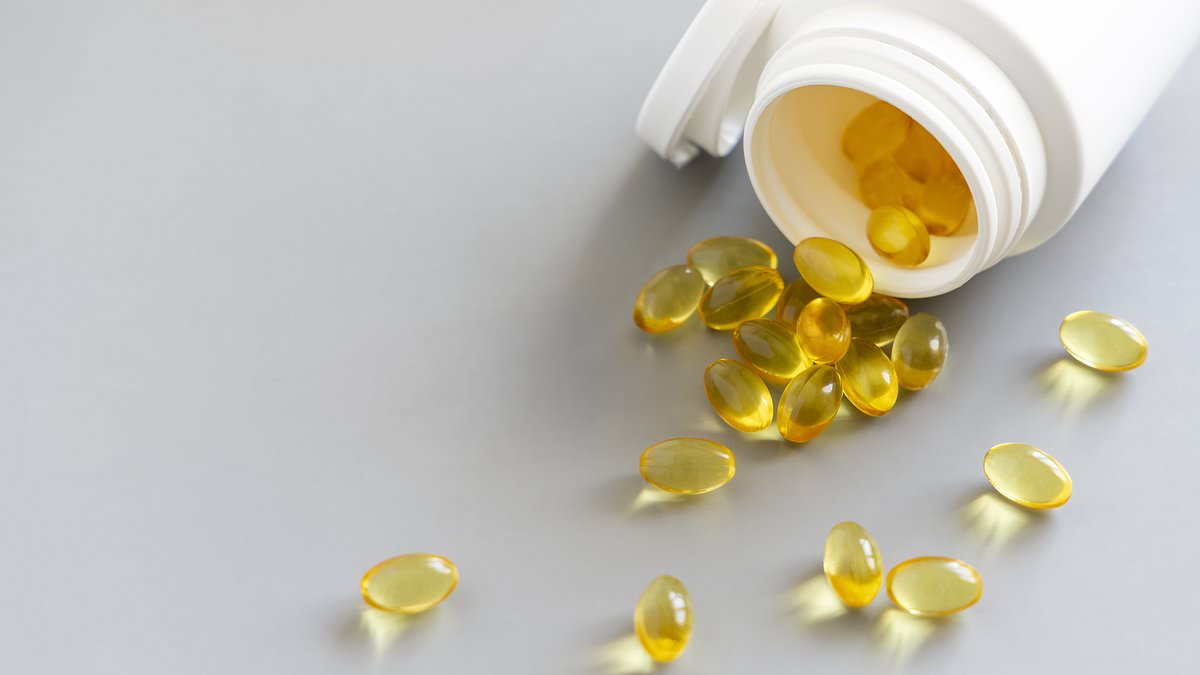
Garlic supplements contain concentrated amounts of garlic without the odor or taste, and many users laud them for convenience (stock image)
Garlic contains the bioactive compound allicin, which is what gives it its signature scent and strong taste.
The compound has been shown to relax blood vessels and limit the production of angiotensin II, a peptide hormone that constricts blood vessels and raises blood pressure. Relaxing those vessels, in turn, helps blood pressure naturally decrease.
Allicin also inhibits liver enzymes that produce harmful LDL cholesterol and reduces the oxidation of LDL, a process that triggers inflammation and drives atherosclerosis, which is caused by plaque building up in the arteries.
Garlic itself has also been shown to stimulate the production of nitric oxide, which helps vascular smooth muscle relax, and act similarly to blood pressure medications called ACE inhibitors.
While fresh garlic typically has higher levels of allicin, concentrated amounts of the compound are still found in supplements. One 2018 study found that allicin’s bioavailability, or the amount of a nutrient the body can absorb, in supplements ranges from 26 to 111 percent depending on the specific product.
‘Fresh garlic is surprisingly complex. The moment you crush a raw clove, a compound called allicin forms within seconds, and that’s largely responsible for garlic’s well-known cardiovascular and anti-inflammatory benefits,’ Dr Yoon Hang Kim, a Texas-based integrative medicine physician in private practice, told the Daily Mail.
‘Supplements, by contrast, come in meaningfully different forms — garlic powder, aged garlic extract, and garlic oil — and each one carries a distinct chemical profile with different levels of bioavailability.’
Exact doses vary, but many supplements contain 600mg of odorless garlic extract per pill, which is equivalent to one to two standard cloves.

Garlic supplements cost anywhere from $4 to $25 per bottle, or $0.04 to $0.40 per serving (stock image)
Recent research has suggested both standard and supplemental garlic have a range of heart health benefits. ‘The most credible data points to modest but measurable cardiovascular benefit,’ Kim said.
One 2026 meta-analysis of 108 studies found consuming raw, cooked or supplemental garlic improved LDL cholesterol, blood pressure and fats called triglycerides, especially in people at an elevated risk of heart disease.

Dr Yoon Hang Kim(pictured above), a Texas-based integrative medicine physician in private practice, told the Daily Mail that garlic and its supplemental form may carry heart health benefits
A 2016 study in the journal Integrated Blood Pressure Control looked at 88 patients taking either aged garlic extract or a placebo for 12 weeks. The study showed notable improvements in blood pressure and arterial stiffness, which is the loss of elasticity in artery walls caused by high blood pressure, diabetes, smoking and aging.
And one 2024 study showed aged garlic extract led to significant reductions in blood pressure after 12 weeks, which the researchers said was the equivalent to average vitamins B9 and B12 intake.
There were also improvements in stool consistency, which suggests the prebiotic fiber in the garlic helped feed healthy bacteria in the patients’ guts.
However, Kim also cautions that long-term data is ‘inconsistent across trials.’
‘No garlic supplement study has yet demonstrated a reduction in hard outcomes like heart attacks or strokes,’ he added. ‘And supplement quality varies widely, with essentially no regulatory oversight on how much active allicin a product actually delivers.’

While garlic supplements are convenient and have promising research backing them up, doctors told the Daily Mail it’s best to stick to the real thing (stock image)
Garlic and garlic supplements can also cause gastrointestinal issues because they contain fructans, a type of carbohydrate that can ferment in the gut. People with IBS are more likely to be sensitive to fructans and suffer abdominal pain, bloating, nausea and heartburn.
And in rare cases, garlic and its supplements have been linked to excessive bleeding because they can prevent clotting.
‘If you’re on blood thinners or heading into surgery, mention it to your doctor,’ Kim said. ‘And if you’re sensitive to sulfur compounds or following a low-sulfur diet, garlic in any form may not be the right fit for you.’
For those who are not sensitive to fructans or sulfur compounds, as well as those who are not averse to the odor or taste, Kim suggests sticking to the real thing rather than a supplement whenever possible.
‘It’s a whole food, it’s inexpensive, and it delivers the full spectrum of what garlic has to offer,’ he told the Daily Mail.