Share this @internewscast.com
Overwhelmed by persistent fatigue, weakness, and severe hair loss, Rose Stokes feared she was failing in her role as a mother.
The 38-year-old from Bath, Somerset, found her health issues were impacting her ability to care for her two young children and straining her marriage. Concerned, she decided to consult her doctor.
“I started to wonder if I was suffering from depression or if my postpartum weight gain was the reason behind my sluggishness,” she shared.
“I even questioned whether I was simply being lazy, which only deepened my sense of shame.”
“Doctors often dismissed my concerns, saying, ‘What do you expect with two young kids?'”
“I broke down in tears several times and felt gaslighted into thinking my situation wasn’t as severe as it truly was,” she added.
After multiple appointments – and lots of ‘back and forth gaslighting’ – Ms Stokes finally had an answer; it was due to an iron deficiency.
While the issue is quite common, affecting around 8 per cent of women in the UK according to the National Institute for Health and Care Excellence, it is often left untreated.

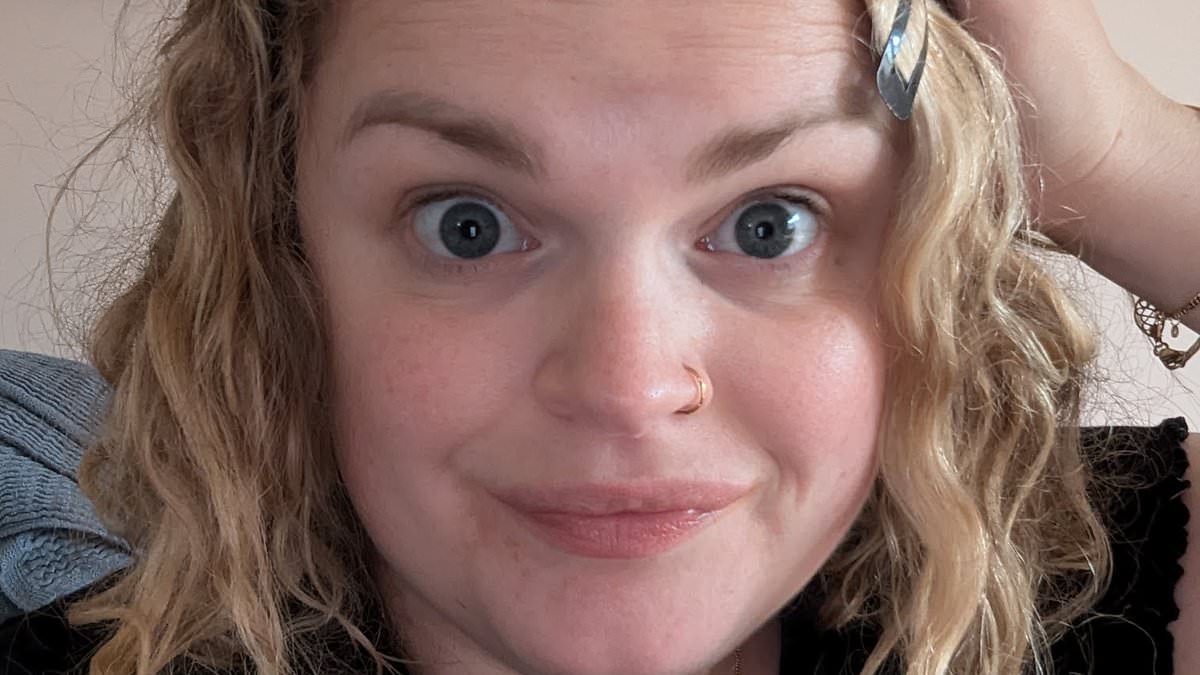
Rose Stokes suffered frequent dizzy spells while pregnant for the second time
Iron is vital for transporting oxygen around the body and keeps the immune system healthy, as well as reducing the risk of heart and lung conditions.
Without sufficient iron, our cells, tissues, and organs cannot function optimally as the body can’t make enough healthy red blood cells.
And too little can trigger anaemia, a potentially fatal condition if not treated.
According to the NHS, men aged 19 to 50 should consume 8.7 milligrams (mg) of iron per day and women in the same age bracket, 14.8mg.
Iron plays a role in the development and efficiency of the immune system and those with low iron status are more susceptible to infections than people with normal levels.
Ms Stokes hadn’t experienced any issues while pregnant – or after giving birth – with her first child.
While pregnant with her second, she had suffered frequent dizzy spells; though mistook this for a usual pregnancy symptom.
After giving birth in July 2024, however, her condition only worsened, with her hair falling out in clumps, as well as bouts of exhaustion never easing, even after a good night’s rest.

Ms Stokes’ symptoms have improved since being prescribed iron tablets by her GP
Other symptoms included breathlessness when walking up the stairs and a sore tongue covered with ulcers, as well as forgetfulness.
In a bid to carry on, Ms Stokes pushed herself to the hilt and ended up bed-bound often due to the lack of energy.
She eventually stopped leaving the house as much and wasn’t able to spend any quality time with friends, family or her husband.
Ms Stokes said: ‘It affected my self-worth hugely because I thought I was failing at motherhood some days.
‘My partner got used to me being dizzy, tired and anxious all the time.
‘I kept routinely blocking the drains with my hair; but it was the least of my problems.
‘I didn’t have it in me to care.’
In June 2025, Rose pushed doctors to find the cause and after the aforementioned treatment, got a diagnosis for being low in the protein ferritin.
It was a ‘validating’ response and she was later placed on iron tablets.
Sadly, the side effects took a significant toll and instead, she had an iron infusion in hospital.
Ms Stokes said: ‘I think as women we often blame ourselves before we look outward.
‘I assumed I was weak or that I wasn’t coping as well as I should have been with having two young kids.
‘It’s hard even without an iron deficiency.
‘Now I have been treated, I know there is a drastic difference.’
She hopes to share her story in a bid to raise awareness for other mums feeling a similar way to ensure they won’t be ‘dismissed’ like she was.
Ms Stokes added: ‘It was subtle at first, but I feel like me again now.
‘I can perform in the way I need to and I’m a much better parent to my kids, as well as a partner to my husband.
‘It’s the best I’ve felt in years. I make a point to eat a lot of red meat and other iron-rich foods.
‘If you feel like something isn’t right, keep pushing for answers.
‘I’m always banging on about this and happy to help so it doesn’t get ignored.’
Studies suggest that 36 per cent of UK women of child-bearing age may be iron-deficient – yet only one in four is formally diagnosed.
Iron is an essential mineral, vital for energy levels, cognitive function, digestion and immunity. While most people get sufficient amounts from food – particularly meat and leafy green vegetables – losses caused by heavy periods can quickly outweigh intake.