
Share this @internewscast.com
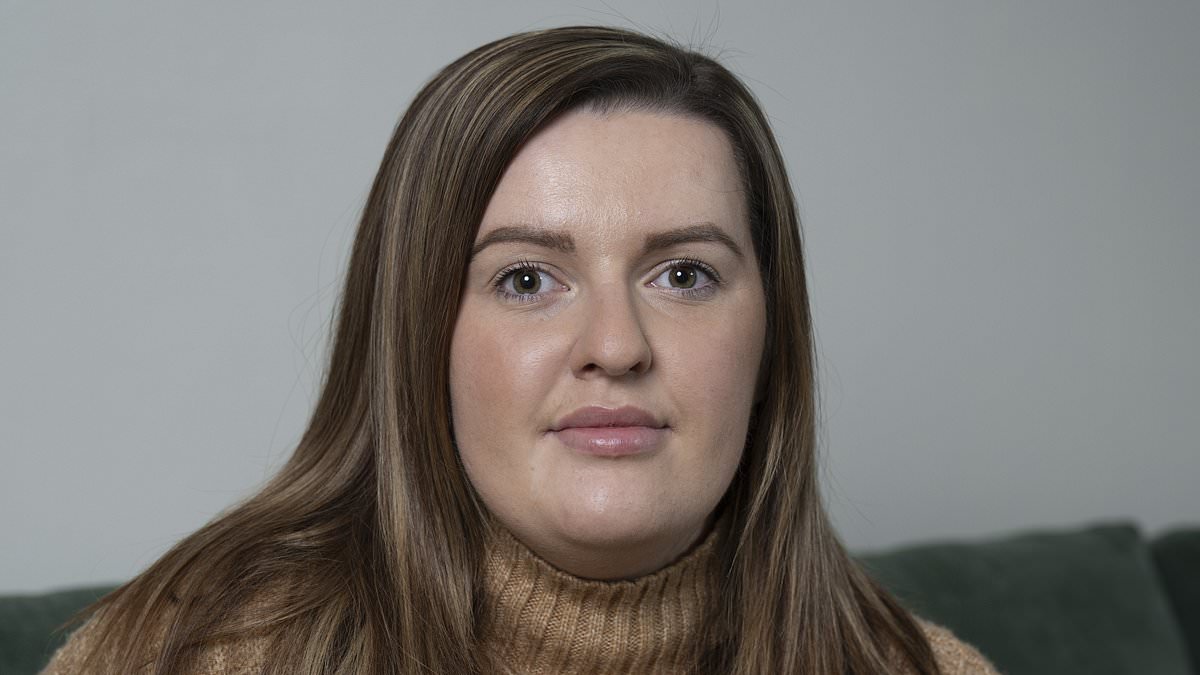
At just 23, Beth Muir was grappling with intense fatigue, significant bleeding, and debilitating abdominal pain. Her initial instinct was to suspect endometriosis.
This assumption was not unfounded. Endometriosis, a condition where tissue similar to the lining of the womb grows outside the uterus, affects approximately one in ten women in the UK. It also has a presence in her family history.
For six arduous months, Beth endured her symptoms, which were compounded by depression and brain fog, before deciding to consult her GP.
“I was experiencing relentless bleeding and felt so exhausted that functioning was nearly impossible,” recalls Beth, a nurse from Ayr, Scotland, now 26 years old.
“After work, I’d come home and sleep for the rest of the day. I felt like a zombie, utterly devoid of energy for anything else,” she explains.
Her GP, worried that Beth might be suffering from anemia due to her substantial blood loss, recommended a blood test. The doctor also acknowledged the possibility of endometriosis being the underlying issue.
‘The doctor said I was probably low on iron and that she would run a simple blood test just to be safe,’ recalls Beth.
But she avoided the temptation to take iron supplements, as many with suspected anaemia might do – and, looking back, she’s relieved she did.

Beth Muir struggled along with her symptoms – which included depression and brain fog – for six months before making an appointment to see her GP
For Beth now knows that this would have ‘made everything a thousand times worse’ – because rather than her being deficient in iron, her symptoms were in fact being fuelled by haemochromatosis. This silent condition causes the body to absorb too much iron from food, so it builds up over time – known as iron overload.
This can lead to unpleasant symptoms such as fatigue, abdominal discomfort and joint pain – and, left untreated, can have toxic, irreversible effects on the liver, pancreas, heart and joints.
Haemochromatosis is typically genetic, caused by mutations of the HFE gene, and is thought to affect 300,000 people in the UK (although one in ten are thought to be carriers of the HFE mutation, according to the British Liver Trust – both of your parents must be carriers for you to develop the condition).
It’s especially common in people whose families originate from Ireland, Scotland (as was true for Beth) or northern England – so much so that it’s sometimes called the ‘Celtic curse’, says Dr Alan Desmond, a consultant gastroenterologist at Mount Stuart Hospital in Torquay.
As many as one in 150 people (England and Wales), one in 113 people (Scotland) and one in ten (Northern Ireland) have the condition – but most are unaware that they do.
‘Haemochromatosis is one of the most under-recognised genetic conditions in the UK,’ says Dr Desmond.
The problem is that early symptoms may be vague or non-existent, making early diagnosis difficult.
Dr Desmond explains: ‘Many people have no symptoms early on, because the body can initially tolerate and store excess iron without obvious damage – while others experience vague issues such as tiredness, joint pain, abdominal discomfort, low mood or problems with hormones’, which are easy to dismiss or attribute to other conditions, he says.
But, over time, excess iron drives inflammation in tissues.
In the joints, this inflammation can result in arthritis which ‘some patients describe as a deep, persistent ache, as if the joints are rusting from the inside’, says Dr Desmond.
Abdominal pain can occur if the liver becomes inflamed or enlarged; the liver can also become scarred, leading to cirrhosis.
‘Iron overload can also affect the pancreas [which produces insulin], triggering diabetes – and damage the heart, leading to rhythm problems or heart failure,’ says Dr Desmond.
He adds: ‘Iron can also interfere with hormone regulation and brain function, which helps explain symptoms such as low mood, poor concentration and brain fog.’
But the good news is that this is all preventable, he says – and symptoms often resolve or improve dramatically once iron levels are under control.
‘With early diagnosis and treatment, patients can expect a completely normal life expectancy.’
To diagnose haemochromatosis, doctors begin with a blood test to measure iron levels and may request a genetic test to look for mutations in the HFE gene.
Dr Desmond explains: ‘Diagnosis relies on a blood test showing persistently raised ferritin (a protein that stores iron) together with a high transferrin saturation, which is the more specific marker that the body is genuinely absorbing too much iron. If this is elevated, a blood test for the HFE gene is checked.’
Typically, haemochromatosis symptoms become apparent in mid-adulthood. For men, this is often in their 30s to 50s. Women are often diagnosed post-menopause because menstrual bleeding, pregnancy and breastfeeding slow iron accumulation.
Dr Desmond adds: ‘Worryingly, people can sometimes mistake the symptoms for anaemia and start taking iron tablets, which only adds to the problem.’
He explains that it’s always safest to request a simple blood test to check your ferritin levels before starting a iron supplement.
Beth’s initial blood test found she did not have anaemia – but also didn’t flag high iron levels, likely due to her having lost iron because of her heavy periods.
She was referred to a gynaecologist but, while waiting for an appointment, her depression got worse and the heavy bleeding continued, despite her starting on contraceptive injections.

By removing red blood cells from the blood via venesection, the body is forced to use up iron stores to replenish them, helping to reduce excess iron
So, in early 2024, Beth returned to her GP, who now suspected haemochromatosis and ordered a blood test to check for the HFE gene. She was also referred for an ultrasound to look for endometriosis, but the results were clear.
A gastroenterology specialist she was sent to for further investigations was ‘dismissive’, she says, informing her that haemochromatosis normally starts to show later in adulthood.
Meanwhile, Beth’s symptoms continued to get worse, and she also had a new pain in her back – so she returned to her GP in October 2024.
‘The doctor opened my medical notes and said the blood tests I’d had done showed I have the gene for haemochromatosis – it had been confirmed, but the GP hadn’t been informed,’ she says.
The results showed her ferritin levels were 381mcg/L; normal levels are 11-310mcg/L for women and 24-340mcg/L for men.
Beth was referred back to the gastroenterology department and in January 2025 began venesection treatment, which is the most common way to deal with haemochromatosis. The process is similar to donating blood – iron is used to produce red blood cells, so by removing red blood cells from the blood, the body is forced to use up iron stores to replenish them, helping to reduce excess iron.
Venesection is an extremely effective treatment – ‘it’s essentially the body’s perfect “reset” mechanism‘, says Dr Desmond.
‘With regular treatment, most patients see their ferritin levels fall within weeks, and many notice improvements in energy, mood and mental clarity very quickly.
‘For most people, once the iron stores have been normalised, they only need occasional maintenance treatments a few times per year,’ he adds.
But after two venesection treatments, with three months between each, Beth’s ferritin levels continued to rise – at one point reaching a worrying level of 590. Doctors stepped up the treatments to every fortnight and they began to drop. She then finally experienced an improvement in her symptoms.
‘It was like someone had switched the lights back on,’ she says.
‘The fog began to lift, the exhaustion eased and my symptoms all but disappeared. I was only left with some pain, which was bearable.
‘Even as a nurse, I hadn’t heard of haemochromatosis, let alone knew it was a genetic condition.’
Since her diagnosis, both Beth’s parents have been tested for the HFE mutation. Her mother is a carrier and her father is awaiting his test results. Neither of them has symptoms.
‘That’s the scary thing,’ says Beth. ‘This condition can quietly pass through families without anyone knowing; sometimes it’s not flagged up until it’s too late’.
With hindsight, Beth believes she was probably struggling with haemochromatosis since 2020, aged 21, when her brain fog, joint pain and depression began.
She now realises her heavy periods were unrelated, and not only masked her other symptoms but helped to mitigate her iron overload.
‘Ironically, my heavy periods probably stopped things becoming worse, as I was losing excess iron in the blood,’ she says.
‘Women often get diagnosed later because bleeding protects them – but my symptoms were so bad I was begging for answers.’ She still receives contraceptive injections every three months to stop the excessive blood loss.

Doctors stepped up Beth’s venesection treatments to every fortnight and her ferritin levels began to drop, while her symptoms improved
‘Now I know the true cause of my symptoms was the iron overload,’ she says. ‘Thankfully, once I started the more frequent venesection treatment, the black cloud lifted. I’m grateful to feel normal again. I’m due to have another venesection in February.’
Beth’s ferritin levels are now a healthy 38, though she says she still battles bouts of tiredness, brain fog and pain.
Regular monitoring and careful diet changes, such as cutting down on red meat (which is high in iron) and avoiding vitamin C supplements (which increase iron absorption) have also helped stabilise her condition.
After sharing her experience on TikTok, Beth was shocked by how many people commented on her post saying that their GPs had also dismissed their symptoms.
She believes that anyone with unexplained fatigue or pain should be checked for the condition – if only to rule it out, and to prevent people automatically turning to iron supplements which could make matters worse.
Dr Desmond adds: ‘If you’re experiencing persistent fatigue, joint pain, abdominal discomfort or other unexplained symptoms, and particularly if you have a family history of haemochromatosis, it’s very reasonable to ask your GP for testing. Early diagnosis makes all the difference, and the tests are quick, cheap and potentially lifesaving.’
Beth says she feels like one of the lucky ones. ‘I’m grateful the condition didn’t have enough time to cause any serious damage.
‘If you have any symptoms, it’s important to speak to your doctor. It takes one blood test, and it could be a lifesaver.’
haemochromatosis.org.uk