
Share this @internewscast.com
Eating alone is a daily routine for millions of adults, yet a recent study highlights significant health concerns, particularly for the elderly.
According to findings published in the journal Appetite, dining solo is often associated with a less nutritious diet, weight loss, and increased frailty compared to those who share meals with others.
A team of researchers at Flinders University in Australia analyzed 24 studies conducted over the past 20 years, focusing on older adults who regularly eat alone. The results present a worrying trend.
The study concludes that individuals who frequently dine alone are at a heightened risk of developing frailty earlier than those who enjoy meals in company.
Specifically, adults over the age of 65 who do not have meal companions tend to have poorer eating habits and consume fewer nutritious foods.
This issue is particularly concerning for women, as it can contribute to the development of osteoporosis, a condition characterized by thinning bones.
A researcher said: ‘The nutrient shortfalls add up too. Studies documented that solo diners consumed less protein, potassium, and other key nutrients. One analysis showed that as people ate alone more frequently, their protein intake dropped from 58 grams to 51 grams daily’
Health experts recommend that we should be eating five servings of fruit and vegetables daily to maintain a healthy, sustainable lifestyle, and 30g of protein.

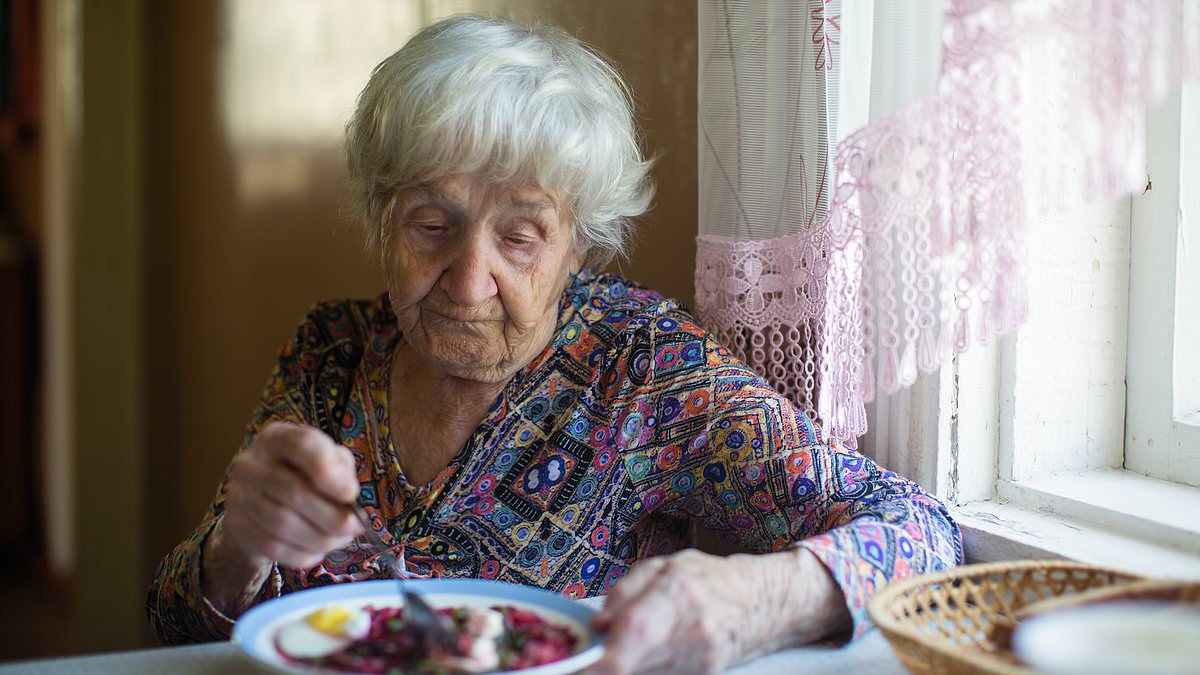
Those who ate alone faced a higher risk of becoming frail before their peers who had company
Researchers said: ‘The difference was especially clear with fruits and vegetables.
‘In Taiwan, men eating alone ate vegetables about twice a day, while those sharing meals ate them nearly two and a half times daily.’
Eating fruit and vegetables everyday can significantly reduce adult frailty, whilst also lowering blood pressure and providing essential nutrients.
The study also found older adults dining solo in Sweden were four times more likely to opt for a ready meal, compared with those eating with others.
These meals often contain a higher salt content, raise blood sugars and add to higher blood pressure.
Elderly frailty isn’t just about feeling weak. Researchers said: ‘It’s a medical syndrome where someone loses strength, endurance, and resilience.
‘Once [it] sets in, older adults become vulnerable to falls, disability, and losing the ability to live on their own.’
Eating with someone can create a strong social bond, improve our mental health and have a positive impact on us when we are eating food.
The researchers added: ‘Preparing nutritious meals seems less worthwhile for one person. Social cues that normally prompt us to eat more and try different foods disappear. And the psychological weight of isolation takes its own toll.’
Eating alone not only causes frailty, but can lead to significant weight loss in elderly people.
Unintentional weight loss can cause a myriad of problems from accelerated muscle loss leading to a lack of independence.
They may develop serious health issues, facing higher risks of death.
To prevent frailty creeping up, the researchers advised that ‘doctors and nurses should routinely ask older patients about their mealtime habits when checking.
‘For families with aging parents or relatives living alone, the message is practical. Regular family dinners or lunch dates may matter as much as what’s actually on the plate’
They also suggested community programs ‘offering group meals’ could help tackle several health risks at once, including frailty.
Frailty is a leading cause of elderly deaths in the UK, with frail individuals having double the mortality rate of healthy adults.

Social isolation may have the potential to cause the brain to shrink in volume
Furthermore, it puts people at a higher risk of developing cardiovascular disease, cancer, and respiratory illness.
Being too frail to exercise comes with its own health risks, but furthermore, a lack of social contact means people miss out on the brain stimulation which comes from conversation.
Both of these lifestyle factors have been previously linked to dementia.
The British Geriatric society said: ‘Frailty is generally not managed well—too often, early signs of frailty are not recognised, resulting in missed opportunities for early intervention contributing to higher numbers of older people presenting in crisis.’
Previous studies have also linked loneliness to dementia because social isolation may have the potential to cause the brain to shrink in volume.
A landmark study last year also suggested almost half of all Alzheimer’s cases could be prevented by tackling 14 lifestyle factors—including loneliness.
Alzheimer’s Disease is the most common form of dementia and affects 982,000 people in the UK.
It is thought to be caused by a build-up of amyloid and tau in the brain, which clump together and from plaques and tangles that make it harder for the brain to work properly.
Eventually, the brain struggles to cope with this damage and dementia symptoms develop.
Memory problems, thinking and reasoning difficulties and language problems are common early symptoms of the condition, which then worsen over time.
Alzheimer’s Research UK analysis found 74,261 people died from dementia in 2022 compared with 69,178 a year earlier, making it the country’s biggest killer.