
Share this @internewscast.com
On Monday, the cause of death for Catherine O’Hara was disclosed, just over a week after her unexpected passing sent ripples through Hollywood.
O’Hara, whose memorable performances in the holiday favorite “Home Alone” and the acclaimed series “Schitt’s Creek” earned her widespread admiration, died at the age of 71 on January 30.
According to a report from the Los Angeles County Medical Examiner’s Office, accessed by TMZ, the actress died due to a blood clot in her lungs.
While the primary cause of death was identified as a pulmonary embolism, the report also highlighted rectal cancer as an underlying condition. This revelation marks the first public acknowledgment of O’Hara’s battle with cancer.
Rectal cancer, which differs from colon cancer but is part of the broader category of colorectal cancers, originates in the rectum, the final section of the large intestine.
The incidence of this disease is increasing among younger individuals, who often experience symptoms that can be subtle and are frequently overlooked or misdiagnosed.

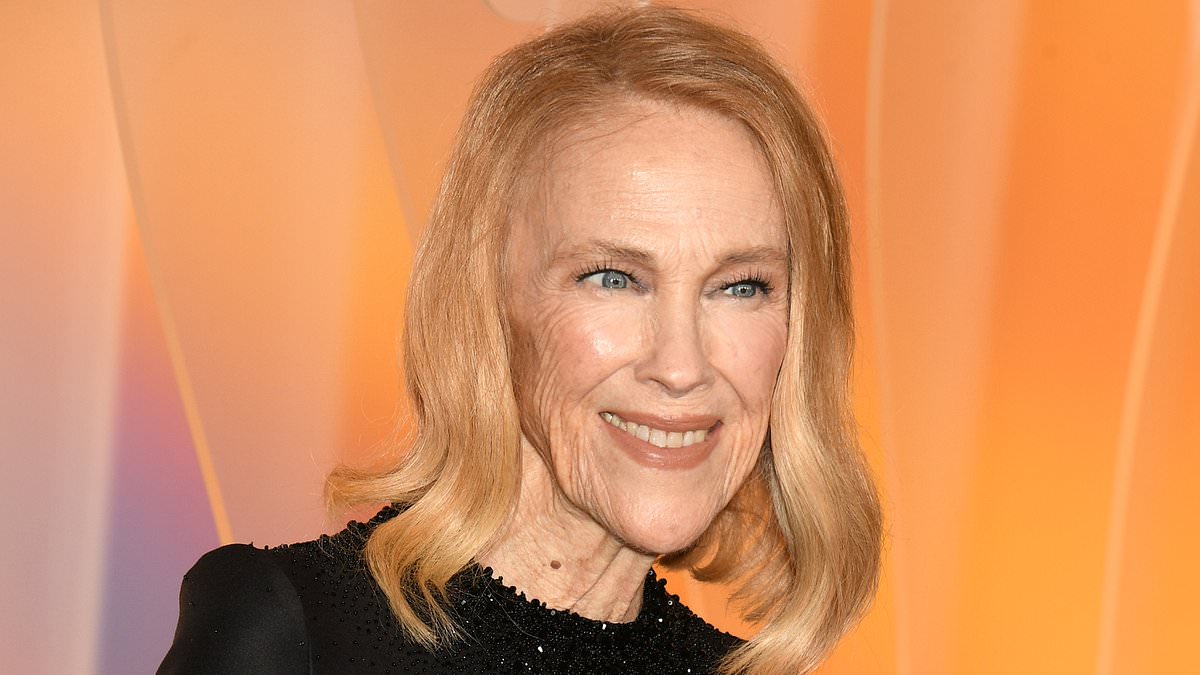
Catherine O’Hara’s cause of death was revealed on Monday. The actor suffered from a blood clot in her lungs, according to the Los Angeles County Medical Examiner’s Office report obtained by TMZ.
Among those new young CRC patients is Marissa Peters, who was diagnosed with stage 3 rectal cancer in 2021, aged just 39.
Peters first visited the doctor after noticing specks of blood on toilet paper when she used the bathroom.
Having recently given birth to her son, doctors assumed the new mom had hemorrhoids, a common condition for pregnant and post-partum women.
But the blood didn’t stop. It changed from tiny flecks to thick ribbons in her stool, and would then ‘gush out of me filling the toilet bowl.’
Peters’ stool became shaggy and ‘smelled putrid, like rotting flesh.’
She visited multiple doctors dozens of times over five years from when her symptoms began. She said, however, she was continuously told that it was related to her pregnancies and births (She had her second child in 2017 and third in February 2020).
Eventually, Peters saw a gastroenterologist and when she described her symptoms in detail, the doctor ‘was deeply concerned from the get-go’.
However, both Peters and her doctor then made a crucial mistake: The physician asked her if she ‘wanted’ a colonoscopy and Peters pushed back, instead choosing to do an at-home stool test, which came back with positive colorectal cancer markers.
She then had to have a colonoscopy anyway to confirm the diagnosis and wishes she just had one in the first place to save time.
‘I didn’t know anything about the rise of colorectal cancer [in] young people. I wasn’t educated on that topic at all,’ Peters said.

Marisa Peters, pictured here, was diagnosed with stage 3 rectal cancer at age 39 after five years of her symptoms being brushed off. She is now teaching other young patients how to avoid a similar fate

Peters, pictured here with her husband, is now cancer free and has started a foundation called Be Seen to increase access to screening for young colorectal cancer patients
When treating patients with symptoms like blood in the stool and abdominal pain, doctors need to say, ‘you need to have [a colonoscopy] done rather than it being a choice,’ Peters told the Daily Mail.
According to the American Cancer Society (ACS), nearly 50,000 Americans are expected to be diagnosed with rectal cancer in 2026. Estimated deaths this year are around 55,200.
Rates of CRC have, when accounting for all ages, been on the decline for decades. In 2022, the latest data available from the National Cancer Institute, the rate of incidence was 35 cases per 100,000 people and the death rate was 12.8 per 100,000 people.
A decade earlier, the figures were 37.8 cases per 100,000 people and 14.8 deaths per 100,000 people.
However, cases of colon and rectal cancer in young people are on the rise.
According to the ACS, between 2013 and 2022, CRC rates rose about three percent per year in people under 50.
Similarly, while deaths overall are declining, that progress is confined to older adults. Death rates in people under 55 have increased by about one percent per year since the mid-2000s.
‘The numbers bring a new level of urgency to the issue of early-onset colorectal cancer and screenings, as colon cancer is a treatable disease when caught early,’ Dr Ryan Moore, a colon and rectal surgeon at Hackensack University Medical Center in New Jersey, told Daily Mail.

Peters is pictured here with her husband and three sons. In her advocacy work, she has met younger colorectal cancer patients. One was just 10 years old. ‘That terrifies me as a mom with these three young boys,’ she said
He said that historically ‘symptoms in younger adults might have been attributed to more benign conditions,’ but now there is a ‘lower threshold to investigate for colorectal cancer.’
Symptoms to watch for, according to Moore, include persistent changes in bowel habits – diarrhea, constipation, narrower stools – rectal bleeding or blood in stool, abdominal pain and/or cramping, fatigue and unexplained weight loss.
The average five-year survival rate for rectal cancer from 2015 to 2021 was 67 percent, which is up from 62 percent in the period spanning 1995 to 1997.
However, that rate ranges depending on whether your cancer has spread. If it is still local, the survival rate is 90 percent; 74 percent if it has spread to nearby organs or tissues; and 18 percent if it has spread to far-reaching areas of the body.
It is not known what stage of rectal cancer O’Hara had.
Factors such as diet, lack of exercise and sedentary lifestyle have all been blamed for the rise in colorectal cancer, though these causes fail to explain why physically fit people like Peters – who has spent most of her life on stage, dancing up to eight hours a day and singing on Broadway – have increasingly been diagnosed.
Moore told Daily Mail there are several factors that can increase the risk of CRC, including age, family history of the disease, inflammatory bowel disease and lifestyle factors.
‘More research shows an association between lifestyle factors, including a diet low in fiber and high in fat, a sedentary lifestyle, obesity, smoking, and heavy alcohol use are all associated with a higher risk of colorectal cancer,’ Moore added.
New research from April suggested childhood exposure to a toxin released by E. coli bacteria could increase the risk of colorectal cancer by triggering inflammation and altering the balance of the gut microbiome.
Marijuana has also been linked to colorectal cancer, as it is thought to block tumor-suppressing cells.
However, experts are still working on identifying specific causes for Americans with no known risk factors.
Peters thinks the answer is likely far from simple.
‘I personally don’t believe there will be one single silver bullet that says, “This is it.” I think there are a combination of factors that are causing this,’ she said.
Peters started the first of six rounds of chemotherapy about 10 days after receiving her diagnosis and then had 28 days of radiation while also taking an oral chemotherapy pill.
A month later, she had a full rectal reconstruction – a seven-hour surgery to restore her bowel function – and then another six rounds of chemotherapy.
Now, she is cancer free – and urging others to advocate for their own health.
‘Don’t stop being relentless until you’re heard, until your concerns are addressed and solved,’ she said. ‘It’s so important.’