
Share this @internewscast.com
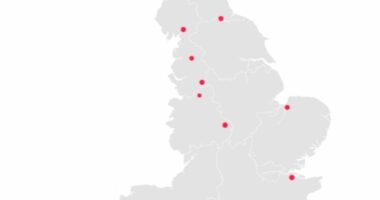
In a recent revelation, Blackpool in Lancashire has been identified as the unhealthiest town in the UK, with projections indicating the highest number of preventable deaths by 2026. This concerning forecast comes from private healthcare provider Numan, which highlights a bleak outlook for the town’s future health.
Statistics show that Blackpool is expected to lose 54.86 years per 1,000 residents due to preventable health issues. These issues, largely stemming from lifestyle choices, vaccine accessibility, and infections, could result in 6,485 preventable deaths by 2026. The lifestyle factors contributing to this grim forecast include smoking, obesity, and Type 2 diabetes. Compounding these issues, 765 deaths are anticipated due to inadequate vaccine coverage against diseases like COVID-19, influenza, and pneumonia.
Following closely behind is Gateshead in Tyne and Wear, where 42.37 years are projected to be lost per 1,000 residents due to mostly avoidable health issues. Gateshead is expected to see a troubling 7,628 deaths linked to lifestyle choices by 2026.
In third place, Cumberland also faces significant challenges, with an expected 41.91 years of life lost per 1,000 people because of preventable health factors. The town has the highest projected number of preventable lifestyle-related deaths, with 10,423 anticipated by 2026. While the forecast for vaccine-preventable deaths is lower at 351, this figure is still double the national average of 186.
Addressing these startling statistics, Zoe Griffiths, Vice President and behavioral medicine expert at Numan, emphasizes the importance of equitable access to health and preventative care. “A long and healthy life shouldn’t cost you a fortune. Regardless of socio-economic background, people should have equal access to health and preventative care,” she asserts.
To support a healthier lifestyle, Griffiths suggests five cost-effective strategies to enhance longevity at home. She highlights the importance of regular movement, noting that gentle mobility can significantly improve circulation, joint health, and mood.
For diet, Griffiths recommended reducing alcohol and processed food intake, focusing instead on hydration and whole foods. She added that sleep and stress management are crucial, supporting immune function, memory and hormone balance.
And finally, the importance of social and mental stimulation. Social connection and lifelong learning, such as hobbies, reading groups, and community activities, are linked with lower dementia risk and better emotional wellbeing.