
Share this @internewscast.com
Researchers have identified a new variant of a significant virus in England, according to the UK Health Security Agency (UKHSA). The agency has warned that those infected might experience a severe form of the illness.
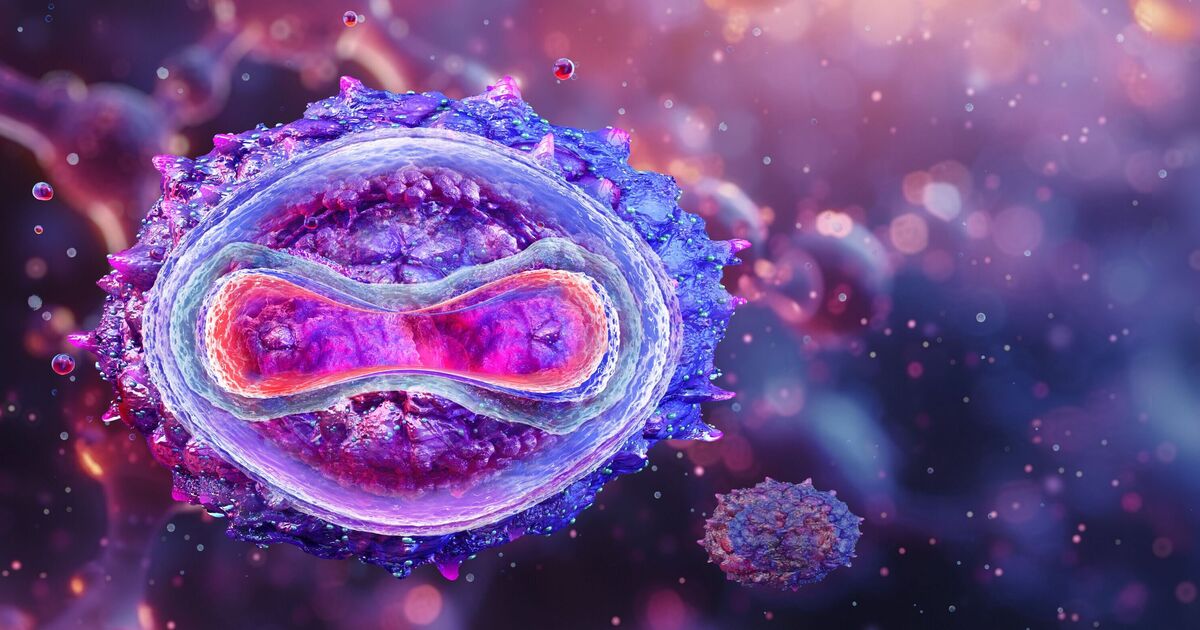
The UKHSA recently discovered a novel recombinant mpox virus in an individual from England who had traveled to Asia. Genomic sequencing revealed that this mpox variant combines elements from clades Ib and IIb.
While the UKHSA noted that the emergence of such a strain is not entirely unexpected given the circulation of both clades, it underscores the ongoing potential for the mpox virus to evolve. The agency emphasized the crucial role of continuous genomic monitoring and stated that they are analyzing the strain to understand its implications further.
Dr. Katy Sinka, who leads the Sexually Transmitted Infections division at UKHSA, commented, “Our genomic testing has allowed us to detect this new mpox strain. It’s normal for viruses to evolve, and further studies will provide us with more insights into how mpox is changing.”
She added, “While many cases of mpox are mild, the infection can be severe. Vaccination is a proven method to protect against serious illness, so eligible individuals should ensure they are vaccinated.”
Dr. Sinka also advised vigilance: “It’s important to stay aware of the risks associated with this unpleasant illness. If you suspect you have mpox, please reach out to NHS 111 for guidance.”
The UK has a routine mpox vaccination programme in place for eligible groups, including those who have multiple sexual partners, participate in group sex, or visit sex-on-premises venues. Studies show the vaccine is around 75% to 80% effective in protecting against mpox.
UKHSA has shared its findings with relevant international partners, including the World Health Organization (WHO), to support global monitoring efforts.
Dr Michael Brady, national advisor for LGBT Health at NHS England, and consultant in Sexual Health and HIV at Kings College Hospital in London previously said: “Mpox (previously known as monkeypox) is a rare infection most commonly found in parts of central and east Africa. Mpox can be passed on from person to person through any close physical contact with mpox blisters or scabs.
“Once infected with mpox, it usually takes between five and 21 days for the first symptoms to appear.”
“The first symptoms of mpox include a high temperature, headache, muscle aches and backache, swollen glands, shivering, exhaustion and joint pain,” says Brady. “A rash usually appears one to five days after the first symptoms and can be on any part of the body.”
Mpox can develop into more serious conditions, particularly in certain immunocompromised individuals because they are more likely to experience severe symptoms and complications.
“While most cases of mpox are mild, individuals with weakened immune systems, pregnant people, or those with underlying health conditions are at higher risk for severe complications,” says Dr Bruno Silvester Lopes, lecturer in microbiology at Teesside University, and researcher in pathogen spread and molecular epidemiology. “Potential complications include secondary infections, where bacterial infections can occur in lesions or blisters due to scratching or improper care.
“And, in rare cases, the infection can lead to systemic complications like sepsis.”
Symptoms
If you get infected with mpox, it usually takes between five and 21 days for the first symptoms to appear, the NHS says.
The first symptoms of mpox include:
- A high temperature (fever)
- A headache
- Muscle aches
- Backache
- Swollen glands
- Shivering (chills)
- Exhaustion
- Joint pain
A rash usually appears one to five days after the first symptoms. It can be on any part of the body, including the palms of the hands, soles of the feet, mouth, genitals and anus. You may also have anal pain or bleeding from your bottom.
The rash is sometimes confused with chickenpox. It starts as raised spots, which turn into sores (ulcers) or small blisters filled with fluid. The blisters eventually form scabs which later fall off.