
Share this @internewscast.com
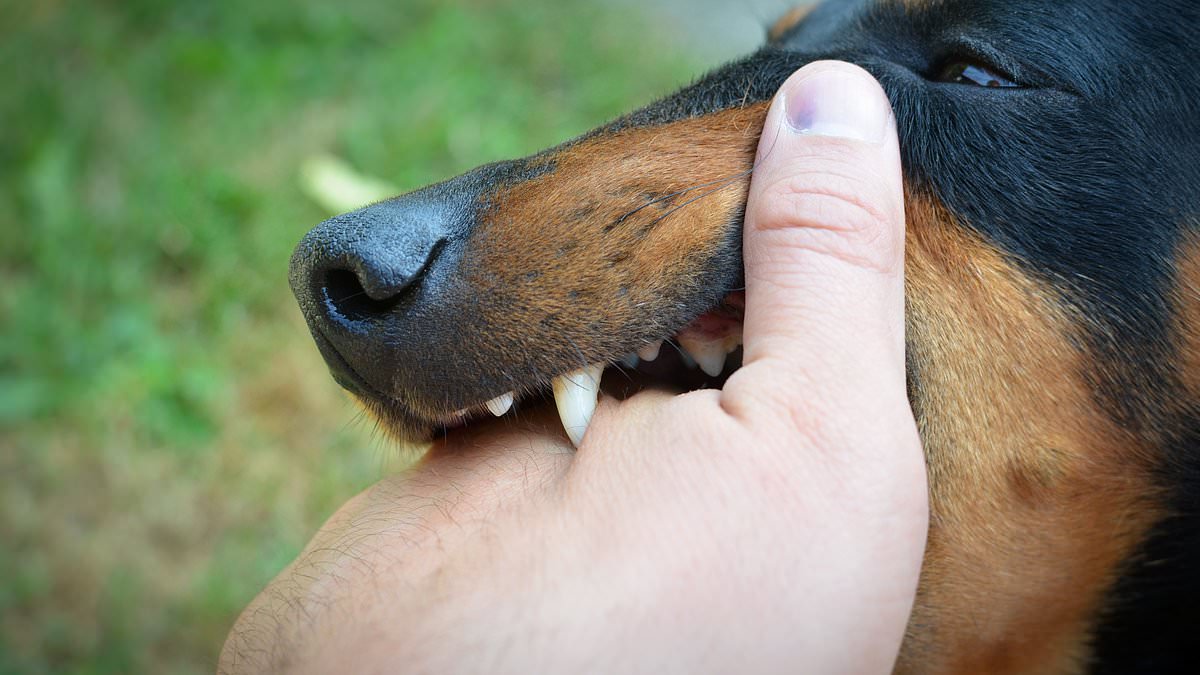
Britain was today rocked by fresh rabies fears after a woman died after catching the virus while on holiday in Morocco.
Health officials revealed the unnamed individual contracted the illness following contact with a stray dog.
But it was only after they returned to Yorkshire that they were diagnosed with the virus.
UK Health Security Agency (UKHSA) bosses are now racing to get in touch with any close contacts of the woman.
There have been less than 10 cases of human rabies associated with animal exposures abroad reported in the UK since 2000.
However, the UKHSA today stressed there was ‘no risk to the wider public’ given there is ‘no documented evidence of rabies passing between people’.
The UK has been rabies-free since 1922, when the last indigenous non-fatal case was recorded, with the exception of rabies-like viruses in some wild bat species.
The last bite death caused by rabies in a UK animal—other than bats— was in 1902, but was brought back to Britain in animals returning with soldiers from the First World War.

Officials revealed the unnamed individual contracted the illness following contact with a stray dog. But it was only after they returned to Yorkshire and The Humber that they were diagnosed with the virus

In humans who have been infected, symptoms of rabies appear one to three months after exposure and rapidly develop into hallucinations, delirium and hydrophobia, or fear of water, closely followed by death
Dog licensing, euthanasia of stray dog and quarantining were credited with killing off the virus.
Western Europe is now considered low risk by the World Health Organisation (WHO), while countries in Eastern Europe are listed as ‘moderate risk’ and African and Middle Eastern countries are ‘high risk’.
Popular tourist destinations like Egypt, Tunisia, Morocco and Turkey all carry a high risk of dogs transmitting rabies to people.
The unnamed individual was reportedly diagnosed at Barnsley Hospital and was from the local area, according to the Barnsley Chronicle.
Dr Katherine Russell, head of emerging infections and zoonoses, at the UKHSA said: ‘I would like to extend my condolences to this individual’s family at this time.
‘If you are bitten, scratched or licked by an animal in a country where rabies is found then you should wash the wound or site of exposure with plenty of soap and water and seek medical advice without delay in order to get post-exposure treatment to prevent rabies.
‘There is no risk to the wider public in relation to this case.
‘Human cases of rabies are extremely rare in the UK, and worldwide there are no documented instances of direct human to human transmission.’

Popular tourist destinations like Egypt, Tunisia, Morocco (pictured) and Turkey all carry a high risk of dogs transmitting rabies to people

Omar Zouhri, 58, of Aylesbury, was bitten by the rabid animal while he was on holiday with his family in August 2018. This is the last photo of him in hospital shortly before he died
Once a person begins showing signs and symptoms of rabies, the disease is nearly always fatal.
The first symptoms of rabies can be similar to flu, while later symptoms include fever, headache, nausea, vomiting, agitation, anxiety, difficulty swallowing and excessive saliva.
People may develop fears around things like swallowing drinks and can suffer hallucinations and paralysis.
However, it is possible to save a patient who has contracted rabies if they can begin treatment before the virus enters their immune system.
The course of treatment for rabies is four doses of the vaccination for rabies and human rabies immunoglobulin (antibodies) applied over a 21-day period.
According to the UKHSA, people should take immediate action to wash the wound or site of exposure with plenty of soap and water, if they’ve been bitten or scratched by an animal while abroad in a country with rabies.
They should also follow the same advice if an animal has licked their eyes, nose or mouth, or licked a wound they have.
British bats have also been known to carry rabies.

Once a person begins showing signs and symptoms of rabies, the disease is nearly always fatal. Pictured, rabies virus microscopic cells
However, as people can only catch rabies by manually handling bats directly, the risk to the public is considered to be low.
But people who have been bitten or scratched by a bat in Britain are still advised to contact their GP urgently or call the NHS on 111 due to the potential risk.
The last recorded rabies death in the UK was in 2018, when Omar Zouhri, a 58-year-old kebab shop worker, was bitten by a cat while visiting family in Mehdya, Morocco.
The same rabid cat is believed to have also bitten a young girl in the area, but she was treated locally for the nip and made a full recovery.
An inquest in Oxford heard that Mr Zouhri had contracted rabies on August 31 2018, but it was not until as late as October 28 that ‘the die was cast’ when he started to report symptoms of ‘furious rabies’.
This included itching, pain and muscle twitches—which showed the virus had already entered his central nervous system, rendering treatment ineffective.
Mr Zouhri, from Aylesbury in Buckinghamshire, died in hospital in Oxford on November 4, 2018.