
Share this @internewscast.com
An expert has named the exact number of steps people should be taking in order to help lower their risk of developing dementia. While many people regularly aim to try and squeeze 10,000 steps into their day, the actual number needed to reduce dementia risk could be even lower. Scientists also believe that walking with more intensity can reduce the risk of developing dementia.
The study, published in the JAMA Network, came to the conclusion after analysing adults using wrist-worn accelerometers. It led to Dr Courtney Conley, a physician specialising in foot and gait mechanics, saying people should be aiming for 9,800 steps a day to lower their dementia risk.
Speaking on the Diary of a CEO podcast, she said: “When you look at step counts, if that’s going to be our baseline, 9,800 steps per day can reduce the risks of dementia. But what I think is the cool part of that is that 3,800 steps, you get 50 per cent of the maximal benefit.
“So, if you were to, let’s call it 4,000, shoot for 4,000 steps then you’re going to get a 50 percent benefit. Some of my favourite research on looking at that population with walking is relationship walking.
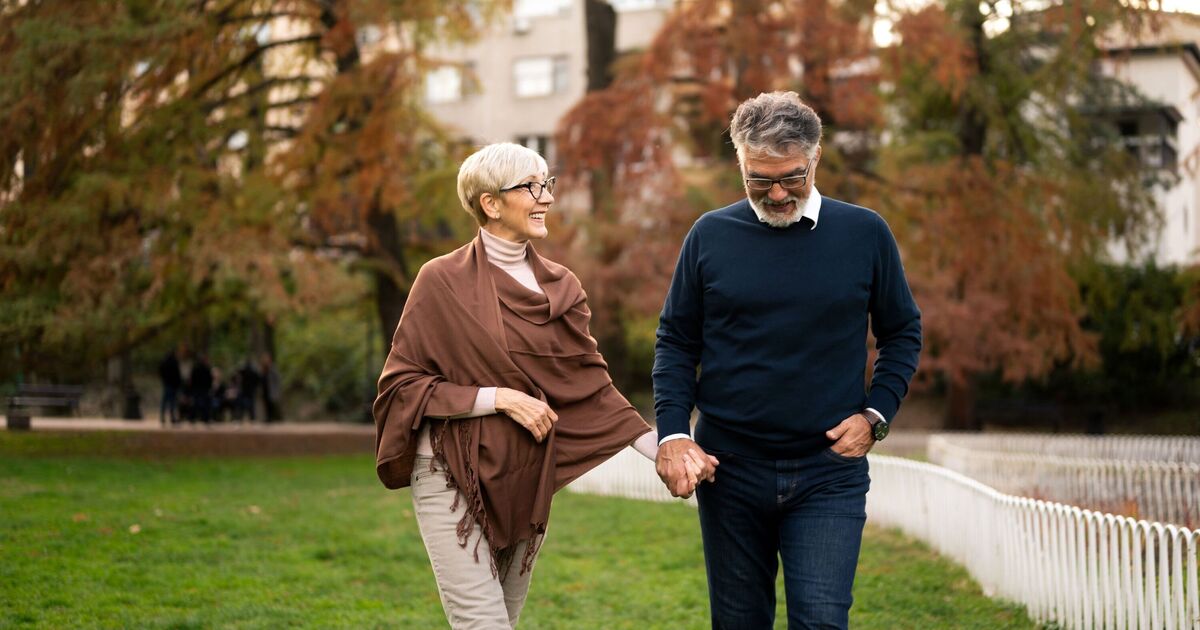
“There’s really cool studies looking at walking in groups for the elderly population and how that has a social connection and improves their emotional health and combats loneliness and isolation and that’s the beauty of a walk.”
The 2022 study into walking and dementia risk said other studies have found that 4,400 steps is when your risk of developing the condition starts to decrease. It added: “Both purposeful steps and peak 30-minute cadence (ie, an indicator of overall best natural effort in a free-living environment) were associated with lower risks of dementia.”
The Alzheimer’s Society says a lack of physical activity is one of the main factors for developing dementia. It says that studies have shown the effect of exercise in middle-aged or older adults have reported improvements in thinking and memory, and reduced rates of dementia.
The charity suggests around 20 to 30 minutes of aerobic exercise – activity that increases the heart rate. It says this can include things like brisk walking, cleaning or gardening.
What does the NHS say about exercise and dementia?
The NHS says a lack of physical exercise can increase your risk of cardiovascular disease. While becoming overweight and having type 2 diabetes can lead to a higher risk of developing dementia.
Older adults who do not exercise are also more likely to have problems with their memory or thinking. The NHS suggests at least 150 minutes of moderate-intensity physical activity each week.
The health service suggests activities such as brisk walking, cycling or dancing. It also recommends activities such as strengthening exercises twice a week.
This, the NHS reports, could also include activities such as gardening or yoga. It says it is important to get up and move around regularly. This can include taking the stairs, walking up escalators and standing up while taking phone calls.
How to get an NHS check
The NHS offers free check-ups to people aged between 40 and 74. These can look for other issues like coronary heart disease, diabetes, and kidney disease.
If you are over 65 then your doctor should tell you what to look out for regarding dementia. If you have not been invited for your health check-up, the NHS says to contact your GP.