
Share this @internewscast.com
A woman has revealed how quitting multitasking helped tackle the chronic stress that she feared would be the death of her.
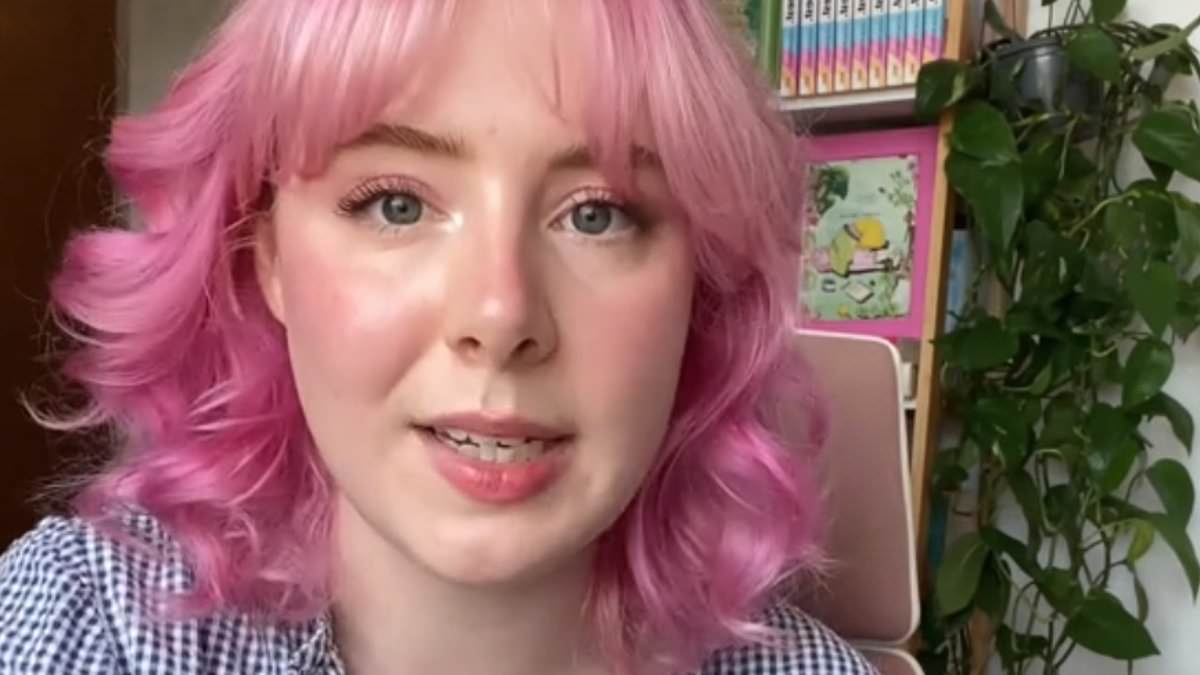
Milly Evans, a sex educator based in Margate, England, recently shared a personal experience on her TikTok account @itsmillyevans, revealing that she was once ‘clinically stressed’.
Her condition deteriorated to the point where she had to take sick leave from her job and developed several ‘multiple disabling chronic illnesses’, as she explained in a video that has garnered over 500,000 views.
‘To be honest I was convinced that stress was going to be the thing that one day killed me,’ she said.
But now she says she’s ‘one of the calmest’ people she knows, in large part thanks to stopping multitasking.
‘I understand that people’s lives are incredibly hectic and there’s a constant drive to be more efficient, but multitasking is far more detrimental to your brain than most realize,’ she remarked.
It’s asking your brain to do too many things all at once ‘and it just can’t process that’, she explained.
She cautioned that many people engage in multitasking without even noticing, such as using two screens simultaneously, like scrolling through a phone while watching a movie.
Experts have warned of the dangers of ‘media multitasking’ that can even include internet browsing while listening to music.
Previously scientists worryingly found multi-tasking can shrink the part of the brain that processes emotion.
Research indicates that those who frequently use multiple media devices at once tend to have less ‘grey matter’ in their brains, which is crucial for functions like movement, memory, and emotions.
Nevertheless, hundreds of social media users commented on the video, saying they are reluctant to give it up.
One user wrote: ‘What if it’s multitasking you enjoy? I like to colour in while I watch TV or listen to audio books while cleaning.’
But another said they’ve ‘stopped multitasking when cooking’, now ‘slowly getting all the ingredients ready’ and ‘felt a huge difference’.
In fact, slowing down was the very next tip she gave to tackling chronic stress in the following video in the series.
Milly advised: ‘You should make an effort to physically decelerate your activities. This doesn’t mean cutting down on what you do; keep at your tasks, just try to accomplish them a bit more slowly.’

‘You might think like I did that doing everything quickly is just being efficient and we often get praised for it, especially at school and work occasionally even on social media.
‘But it’s one thing to do some things quickly and another thing to rush through every moment of your day.
‘When you’re always in a rush, always in a hurry, from the moment you wake up to when you go to bed you are constantly telling your body there is this urgency.’
For example, she says in the past she’d rush everywhere rather than ‘slowing down’ and ‘taking in the surroundings’.
Her second example was food. ‘I love food, I look forward to it all day, it’s a moment of enjoyment and yet I often rush through it like so many of us do,’ she said.
And finally, she said slowing down to get ready in the morning and for bed in the evening helped her feel much calmer.
In the comment section, social media users shared they related to feeling this stressful sense of urgency.
One user commented: ‘I call it “false sense of urgency” and I work really hard not to fall into the trap of thinking it’s real. It’s tough.’