
Share this @internewscast.com
My left arm sporadically goes numb and tingles. An ECG of my heart was clear and my GP says we should monitor it for now.
John Atha, West Yorkshire.
I suspect you are worried that there is a problem with your heart, but it seems to me your symptoms are more likely to be nerve related.
This can easily be confirmed by checking your pulse the next time your left arm goes numb.
If you press about 3cm back from the base of the thumb you should easily be able to feel blood pulsing through it, a sure sign that blood is pumping down your arm (helped by the heart) as it should.

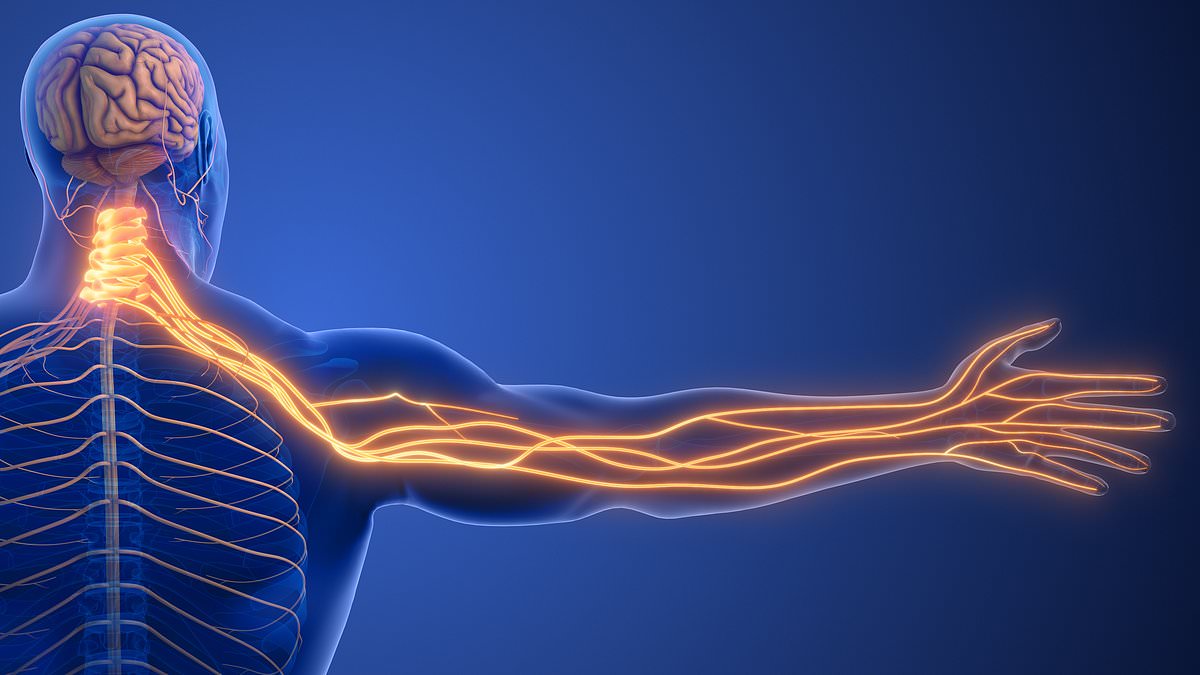
Your symptoms are most probably due to the root of one of the nerves in your neck being compressed,says Dr Scurr
Your symptoms are most probably due to the root of one of the nerves in your neck being compressed. There are several possible causes – the likeliest being foraminal stenosis, when one of the small openings through which nerves leave the cervical spine (bones in the neck) becomes narrowed by osteoarthritis.
Compression of the brachial plexus (a network of nerves in the armpit) is another possibility, however, this would cause your arm to appear blue/purple and mottled.
One other possibility is cervical ribs which means there is an extra bone (or even bones) that has been in your neck since birth. Usually symptomless, it can sometimes cause intermittent tingling in the arm.
I suggest you ask your GP to refer you to an orthopaedic specialist, who can order a chest X-ray to check for cervical ribs, which can be surgically removed.
If you don’t have cervical ribs, an MRI scan can check for nerve root compression. Physiotherapy is normally successful and so surgery is rare.
I do hope you soon receive the reassurance – and treatment – you need.
I shout in my sleep and don’t remember anything about it in the morning but it annoys my husband so much I’ve moved into the spare room. What do you suggest?
Name and address withheld.
Dr Martin Scurr replies: I suspect you have a rapid eye movement sleep behaviour disorder (RBD), where vivid dreams are acted out vocally and often physically. Such episodes take place during rapid eye movement sleep, one of the main sleep stages, during which brain activity increases and dreams occur – sometimes several times a night. It can be distressing to witness.
In contrast, the person enacting or shouting out in dreams typically cannot be roused and will have no recollection next morning. Indeed, in your longer letter you describe yourself as sleeping ‘very well’.
RBD is most common in men aged over 50 but can occur in women as well. It is part of group of disorders, called parasomnias, which cause unusual behaviour while asleep – such as talking, shouting and sitting up.
Those affected may appear slightly awake and rather confused, before falling back to sleep.

I suspect you have a rapid eye movement sleep behaviour disorder (RBD), where vivid dreams are acted out vocally and often physically, writes Dr Scurr
There are a number of possible causes for your RBD – it can, for example, occur as a side effect of certain medication, such as antidepressants.
However, as you describe yourself as ‘very fit’, I suspect there is no obvious underlying cause in your case.
I understand your wish to sleep alongside your husband without disturbing him so suggest you ask your GP to refer you to a sleep disorders clinic.
One final point: RBD can be an early sign of Parkinson’s disease and so, if you have any symptoms you haven’t mentioned here, you should ask your GP to refer you to a neurologist.
TV presenter Davina McCall says that having gone through frightening surgery for a brain tumour she no longer fears death – a useful mindset to adopt but one which many struggle to achieve.
In fact, during my years of work in palliative care, I have looked after many people – including priests, an occasional Rabbi and medical colleagues who, you might expect, would approach the end of their lives calmly.
Yet many display anxiety. Part of the aim of palliative care is to settle old regrets and help people depart life without fear. With sufficient resources, palliative care teams do this well.
But there may be another option. A number of studies investigating the effects of hallucinogenic drugs, particularly psilocybin (the active ingredient in magic mushrooms) on patients in the late stages of terminal illness have found that a single dose can reduce anxiety and fear.
Studies are ongoing but I suspect this approach will, in time, become mainstream and be used with, or even in place of, opiates and sedatives, which ease many sensations but also risk reducing alertness, communication and clearheadedness which, for some, is so important.